What’s the difference between a curry house and a modern Indian restaurant?
A curry house and a modern Indian restaurant serve fundamentally different food experiences. A curry house typically offers Anglicised versions of Indian dishes, developed over decades to suit British tastes, while a modern Indian restaurant focuses on the food actually eaten in Indian homes and on Indian streets. The difference is not just about recipes. It is about philosophy, ingredients, and intent. The questions below break down exactly what sets them apart.
What kind of food does a curry house actually serve?
A curry house serves a style of Indian food developed largely in Britain during the mid-twentieth century, adapted by South Asian immigrants to suit local palates. The dishes are recognisable: tikka masala, korma, balti, vindaloo. These are rich, sauce-heavy, and built around a small set of base gravies that get adjusted with different proteins and spice levels. They are not inauthentic in a dishonest sense, but they are not what most people in India eat at home.
The curry house menu is a product of its time and context. It was designed to be approachable, filling, and consistent. Dishes tend to be creamy, sweet, or intensely spiced, leaning on heavy sauces, cream, and ghee. Portion sizes are generous, and the food is designed to satisfy rather than to surprise. Naan, poppadoms, and pilau rice are the expected accompaniments. For a generation of British diners, this was the definition of Indian food, and it shaped expectations for decades.
That is not a criticism. Curry houses played a vital cultural role in British food history. But they represent one narrow interpretation of a cuisine that spans an entire subcontinent, dozens of regional traditions, and thousands of years of cooking.
How is a modern Indian restaurant different from a curry house?
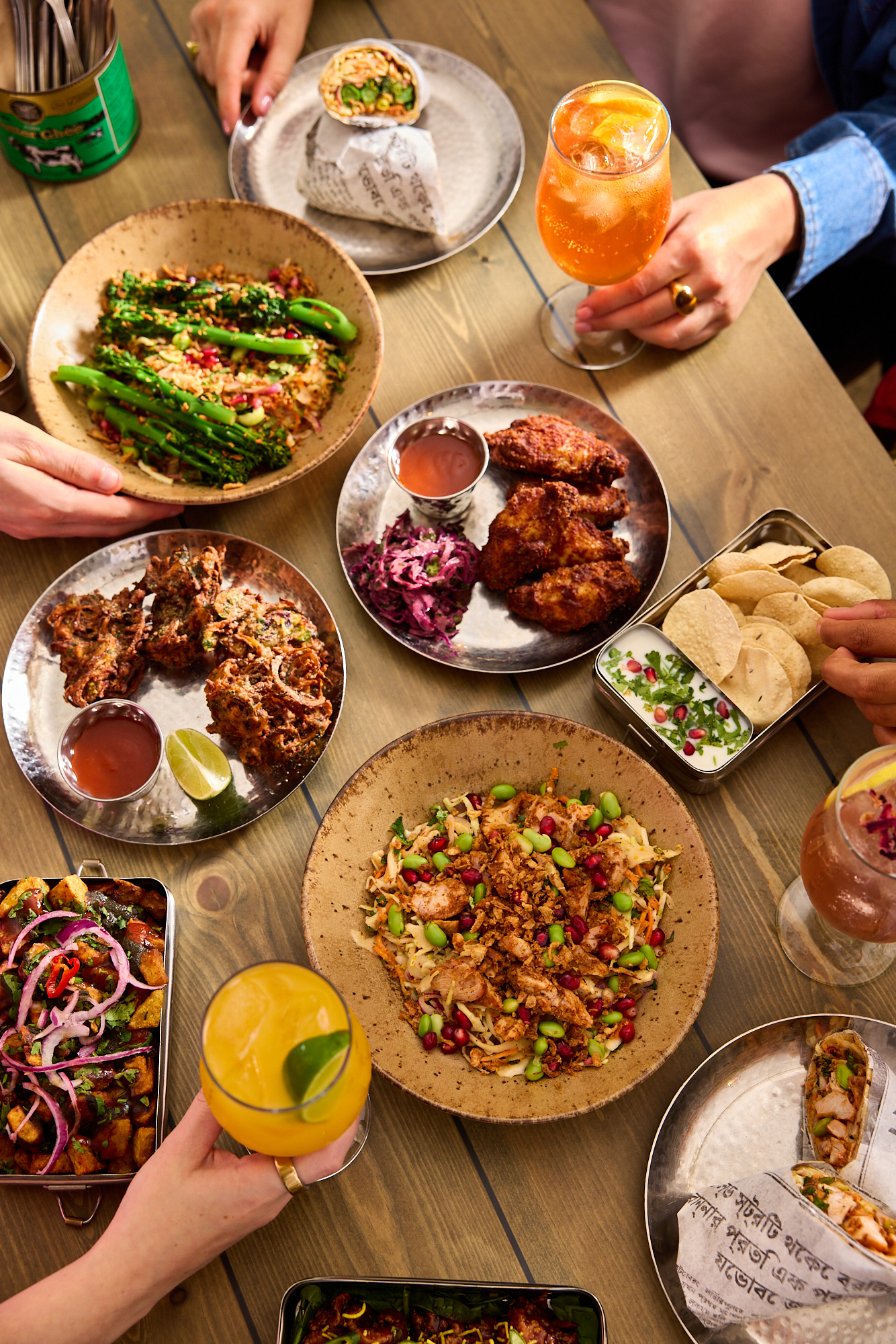
A modern Indian restaurant draws on the full breadth of Indian culinary tradition rather than the Anglo-Indian canon. The focus shifts from heavy, sauce-led dishes to lighter, more varied cooking: street food, regional recipes, home-cooked dishes passed down through families. The food is fresher, more vegetable-forward, and less reliant on cream and oil as the primary carriers of flavour.
The difference shows up most clearly in the menu structure. Where a curry house offers a long list of familiar names in different sauce combinations, a modern Indian restaurant tends to feature dishes with specific regional or cultural roots. You might find chaat from the streets of Mumbai, dal recipes that vary by region, or slow-cooked heirloom curries that reflect a particular family or community tradition.
Cooking methods also differ. Many modern Indian restaurants prepare food fresh each day rather than working from pre-made base sauces. The spicing is more precise and purposeful, using whole spices, fresh herbs, and layered aromatics rather than standardised spice blends. The result is food that tastes brighter, more specific, and more varied from dish to dish.
Is modern Indian food actually healthier than curry house food?
In general terms, yes. Modern Indian cooking, particularly the kind rooted in home cooking and street food traditions, tends to use less cream, less oil, and fewer heavy sauces than the Anglo-Indian dishes served in traditional curry houses. Many dishes are naturally light, built around pulses, vegetables, and spices rather than rich gravies.
This does not mean curry house food is unhealthy by default. But the structural difference matters. A tikka masala or korma gets much of its body from cream and butter. A bowl of Temple Dal, made from red lentils simmered with toasted cumin, coriander, and lemon, delivers depth of flavour through spicing and slow cooking rather than added fat. The calorie count and nutritional profile look very different.
Street food dishes like chaat are typically low in calories and high in flavour, relying on fresh herbs, tamarind, yoghurt, and spice combinations that have nothing to do with heaviness. The idea that Indian food is inherently rich or indulgent is largely a legacy of the curry house tradition. Real Indian home cooking tells a very different story, one where food is genuinely healthy without trying to be.
Why is so much authentic Indian food vegan or vegetarian?
Vegetarianism is deeply embedded in Indian culture for religious, philosophical, and practical reasons. Hinduism, Jainism, and Buddhism all have traditions that encourage or require plant-based eating, and India has the largest vegetarian population of any country in the world. This means that a huge proportion of Indian culinary tradition, developed over centuries, contains no meat at all.
Dal, rice, flatbreads, vegetable curries, pickles, chutneys, and street snacks like bhel puri or pani puri are all naturally vegan or vegetarian. These are not concessions or alternatives. They are the main event in millions of Indian households. The spicing traditions of Indian cooking are so sophisticated that vegetables and pulses carry extraordinary complexity without any need for meat to provide flavour or satisfaction.
When a modern Indian restaurant leans into this tradition honestly, the vegan and vegetarian options are not an afterthought. They are central to what the menu is about. That is a significant shift from the curry house model, where vegetarian dishes often felt like secondary options sitting alongside the meat-based mains.
What is Indian street food and how does it differ from restaurant food?
Indian street food is the food sold by vendors on street corners, at market stalls, and from roadside carts across India. It is fast, bold, and intensely flavoured, designed to be eaten on the move or standing up. Dishes like pani puri, bhel puri, vada pav, and various chaats are the everyday food of millions of people, not special occasion cooking.
The difference from restaurant food is one of texture, pace, and intention. Street food is designed to deliver an immediate hit of flavour: sharp, sour, spicy, fresh. It relies on contrast, layering crispy elements against soft ones, sweet against sour, cool yoghurt against hot spice. Restaurant food, even in India, tends towards slower, more composed dishes that develop over time.
When Indian street food appears on a restaurant menu in the UK, the best versions stay true to that original energy. The food should feel alive and immediate rather than refined or polished into something unrecognisable. A good chaat should still have that smash and grab quality: bright, light, and full of competing flavours that somehow work together perfectly.
How do you know if an Indian restaurant is serving authentic food?
A few practical signals are worth looking for. Authentic Indian cooking tends to show regional specificity: dishes named after particular places, communities, or family traditions rather than generic curry house categories. The menu will often include dishes you do not immediately recognise, and the vegetarian and vegan options will be as interesting as the meat dishes, not an afterthought.
Fresh preparation matters too. Food cooked from scratch each day, using whole spices and fresh herbs, tastes noticeably different from food built on standardised base sauces. If the menu describes how dishes are made rather than just what they contain, that is usually a good sign.
Portion size and presentation can also tell you something. Authentic Indian food is often designed to be shared, reflecting the way food is actually eaten in Indian homes and at street food stalls. A menu built around sharing plates, with a mix of small dishes, dal, breads, and curries, is closer to the Indian eating tradition than a menu of individual mains with set accompaniments.
Finally, the spicing should be specific and varied. Each dish should taste distinct. If everything tastes like a variation of the same base, you are probably looking at the curry house model rather than something rooted in genuine regional cooking.
How Mowgli brings real Indian cooking to the UK high street
Mowgli was built specifically to close the gap between what most British diners knew as Indian food and what Indian food actually is. Every element of the restaurant reflects that purpose:
- Dishes are cooked fresh each morning, not assembled from pre-made sauces
- The menu spans street chaat, heirloom curries, and home-cooked recipes rooted in real family traditions
- Vegan and vegetarian dishes are central to the menu, not secondary options
- Sharing plates reflect the way food is genuinely eaten across India
- Lighter options like the 600-calorie Tiffin make it easy to eat well without compromising on flavour
If you are looking for an Indian restaurant near me that serves food closer to what people actually eat in India, Mowgli has 27 locations across the UK. Find your nearest one and swing by.
Related Articles
- Where Can You Find Indian Street Food Near Bold Street in Liverpool?
- Where Can You Book a Group Meal Near Ecclesall Road in Sheffield?
- Where Can You Find Indian Street Food in Preston City Centre?
- What is the food scene like in Manchester right now?
- What is the best way to experience Indian street food in the UK?