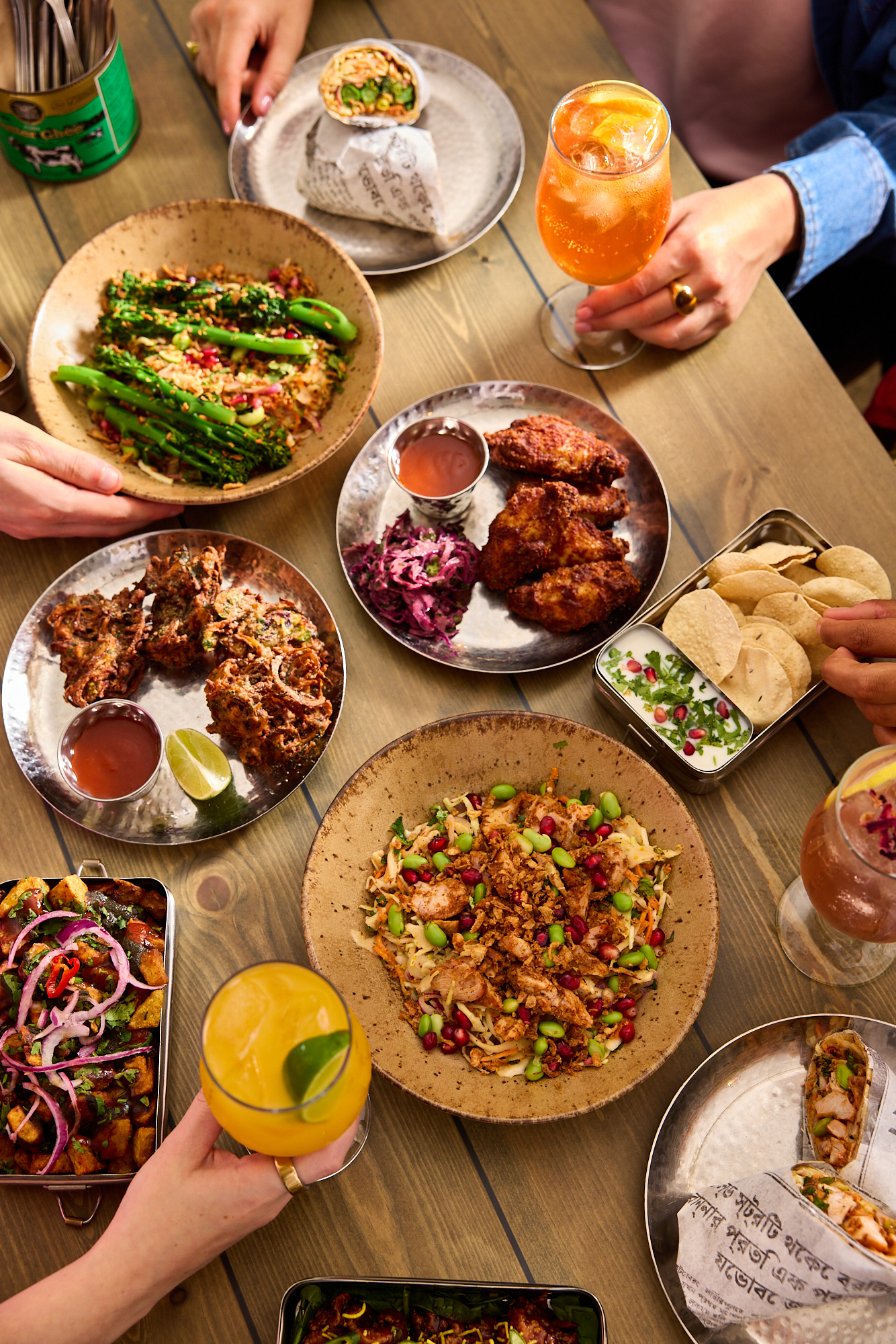
What makes Indian food so shareable and social?
Indian food is so shareable and social because it was never designed to be eaten alone. Traditional Indian meals are built around multiple dishes served simultaneously, with everyone at the table reaching in, passing plates, and eating together from a shared spread. This communal approach is not a trend or a restaurant gimmick; it is simply how Indian families have eaten for generations. The questions below unpack exactly why that is, and what makes Indian food such a natural fit for group dining.
Why is Indian food traditionally eaten communally?
Indian food is traditionally eaten communally because the culture and philosophy behind Indian cooking centres on hospitality, generosity, and togetherness. A meal is not considered complete unless there is abundance on the table and company around it. Sharing food is an expression of care, and the act of eating together carries genuine social and spiritual significance across many Indian traditions.
In Indian households, meals are rarely plated individually. Instead, several dishes arrive at once — a dal, a vegetable dish, a curry, some bread, a chutney — and everyone helps themselves from the centre of the table. This style of eating means conversation flows naturally, portions are flexible, and no one is locked into a single flavour for the whole meal. You eat a little of everything, and the experience is richer for it.
Hospitality in Indian culture is deeply tied to food. Feeding a guest generously is considered an honour, and the idea of offering a visitor something small or singular would feel unusual. This instinct to pile the table high and feed people well is baked into the tradition, which is why Indian restaurants naturally lend themselves to group occasions and celebratory meals.
What makes Indian dishes naturally suited to sharing?
Indian dishes are naturally suited to sharing because they are designed to complement one another rather than stand alone. A single curry is good. A curry alongside a dal, a chaat, a raita, and some fresh bread is a complete experience. The variety of flavours, textures, and spice levels across a spread means every person at the table finds something they love, and the combination of dishes creates something greater than any one plate could.
The structure of Indian cooking plays a big part in this. Dishes tend to be rich in sauce or depth, making them ideal for scooping, dipping, and sharing. Bread like naan or roti is built for tearing and dipping. Street food bites like chaat are designed to be passed around and eaten quickly. Even the slower, heavier dishes — a slow-cooked lamb, a buttery dal simmered for hours — are made in quantities that assume more than one person is eating.
There is also a balance of flavours at work. Indian cooking layers sour, sweet, salty, spicy, and earthy notes across different dishes, so a shared spread naturally creates contrast and variety. You might have something bright and tangy alongside something rich and warming, and both are better for sitting next to each other on the table.
How does Indian street food culture encourage social eating?
Indian street food culture encourages social eating because it has always existed in public, communal spaces. Street food in India is eaten standing up, shared between strangers, passed between friends, and consumed in the middle of busy markets and city lanes. It is fast, flavourful, and built for movement and conversation — not quiet, solitary dining.
The format of street food itself makes it inherently social. Small bites, bold flavours, and quick turnaround mean you try one thing, pass it along, and reach for the next. Chaat, for example, is tangy, crunchy, and layered with different textures — it is the kind of food that prompts an immediate reaction and a natural impulse to say “try this.” That shared moment of discovery is built into the food itself.
Street food also removes the formality that can sometimes make dining feel stiff or structured. There are no courses, no waiting, no rigid order to proceedings. You eat what you want, when you want it, alongside whoever is there. That looseness is what makes it such a natural fit for groups — it keeps things light, fun, and genuinely social rather than ceremonial.
What’s the difference between Indian sharing plates and Western set meals?
The key difference between Indian sharing plates and Western set meals is that Indian food is designed for simultaneous sharing, while Western set meals are typically structured around individual portions served in a fixed sequence. In a Western set meal, each person orders their own dish and eats it independently. In an Indian sharing spread, multiple dishes arrive together and belong to everyone at the table.
This changes the entire dynamic of the meal. With individual plating, your experience is largely determined by the single dish in front of you. With a shared spread, you build your own plate from whatever is on the table, trying combinations and adjusting as you go. It is a more active, engaged way of eating — and a more social one, because it gives people something to do together beyond simply waiting for their own food.
Western tasting menus have moved in a more communal direction in recent years, but the underlying logic is still chef-led and sequential. Indian sharing is guest-led and simultaneous. You decide what to eat and in what combination, and the table shapes its own experience rather than following a prescribed path. That sense of agency and participation is a big part of why group meals at Indian restaurants tend to feel so lively and enjoyable.
Why are vegan and plant-based Indian dishes so popular on sharing menus?
Vegan and plant-based Indian dishes are so popular on sharing menus because Indian cooking has always been rooted in vegetables, pulses, and spices rather than meat. Many of the most celebrated dishes in Indian cuisine — dals, chole, saag, aloo dishes, chaat — are naturally vegan or vegetarian, and they have been for centuries. Plant-based eating is not an adaptation of Indian food; it is a core part of its identity.
This makes Indian food an easy choice for groups with mixed dietary preferences. When a table includes meat-eaters, vegetarians, and vegans, Indian sharing plates solve the problem without anyone having to compromise. A spread of dishes that happens to be mostly plant-based still feels abundant, varied, and genuinely satisfying — not like a reduced or alternative option.
There is also a practical reason for the popularity of plant-based Indian dishes in shared settings: they tend to be lighter and brighter in flavour, which makes them easier to eat across a long, sociable meal. A rich, slow-cooked meat dish is wonderful, but a table that also includes a bright dal, a fresh chaat, or a spiced vegetable dish has more range and keeps the meal feeling energetic rather than heavy. That balance is exactly what makes Indian food work so well for groups.
How can you recreate the Indian sharing experience when dining out in the UK?
To recreate the Indian sharing experience when dining out in the UK, the key is to order more dishes than you think you need and put them all in the centre of the table rather than treating each dish as one person’s meal. Aim for variety across the spread — something rich and slow-cooked, something light and fresh, something with a bit of heat, and some bread to pull everything together.
A few practical tips for getting it right:
- Order two or three dishes per two people, rather than one dish each, so there is genuine variety on the table.
- Mix textures — include something saucy alongside something crisp or fresh.
- Include at least one plant-based dish to keep the spread feeling light and balanced.
- Add bread or rice as a base that everyone can share rather than ordering sides individually.
- Let people build their own plates rather than dividing dishes up before anyone has tasted them.
The setting matters too. A lively, relaxed restaurant where the atmosphere encourages conversation and the menu is genuinely built for sharing makes a real difference to how the experience feels. The best group meals happen when the food, the format, and the room are all pointing in the same direction.
How Mowgli brings the Indian sharing experience to life
Mowgli Street Food is built around exactly this kind of eating. The menu is designed for sharing, with dishes that span street chaat, slow-cooked curries, and plant-based staples like Temple Dahl — red lentils simmered with toasted cumin, coriander, and lemon. Everything is cooked fresh each morning, and the format encourages tables to order widely and eat together in the true Indian tradition. For groups looking for a genuinely social meal, Mowgli also offers event hire options across its restaurants, from full venue hire to private dining rooms, making it easy to bring a crowd together. Here is what makes Mowgli a natural fit for group dining:
- A menu built for sharing, with dishes designed to complement each other across the table.
- Full vegan and gluten-friendly options, so every guest is genuinely catered for.
- Fresh, bold flavours that reward variety and encourage trying a little of everything.
- Event hire across multiple locations, from intimate private rooms to full venue takeovers.
- Restaurants in cities across the UK, from Manchester and Leeds to London, Bristol, and Edinburgh.
If you are looking for Indian restaurants near me for a group meal or a special occasion, find your nearest Mowgli and come hungry.
Related Articles
- Where Are the Best Places to Eat While Shopping at Bridgend Designer Outlet?
- Why are spice-inspired cocktails trending in 2026?
- How to plan a work Christmas party that everyone will enjoy
- What are the must-try dishes when dining out in Edinburgh?
- Can you eat well on a budget when dining out in UK cities?