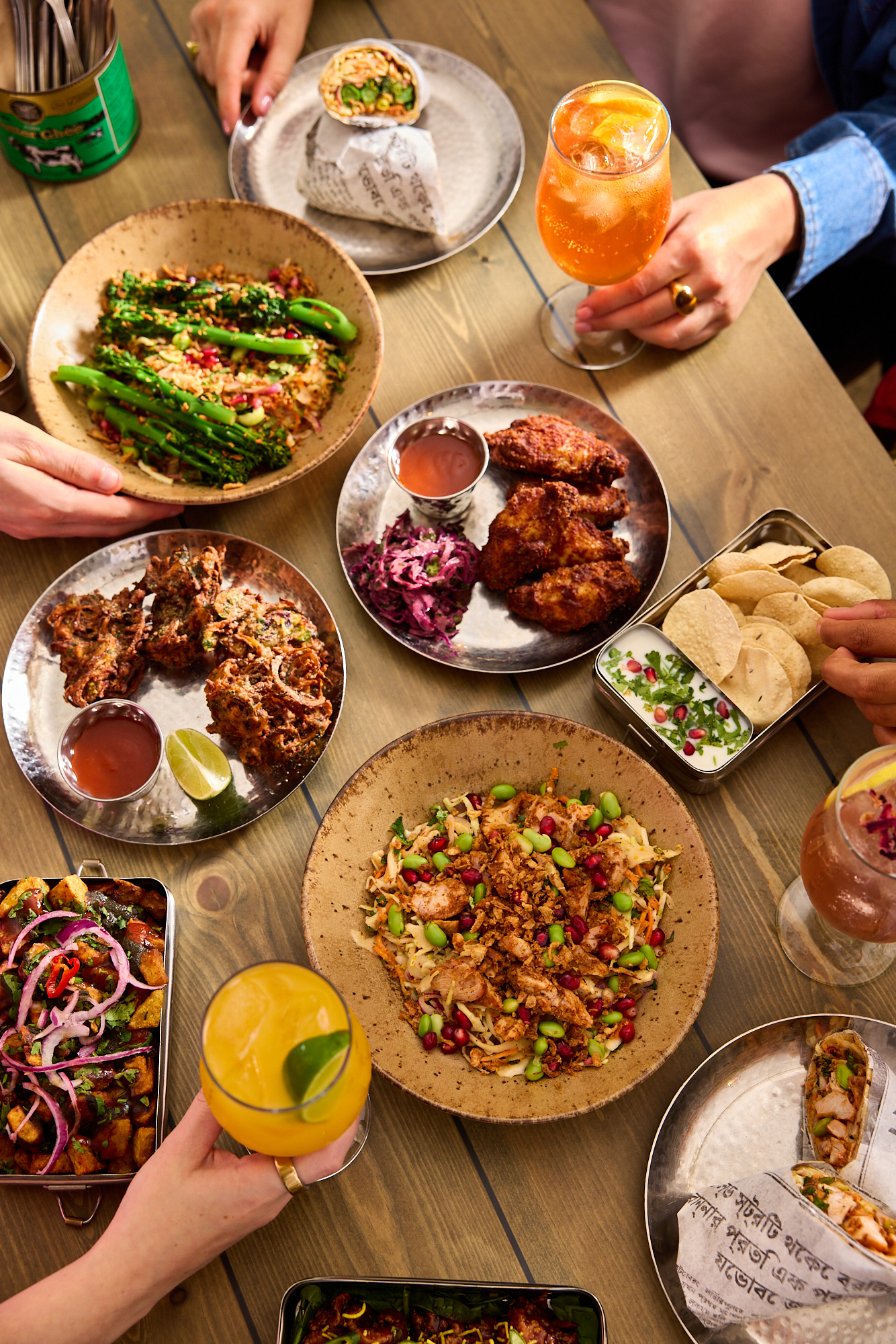
The perfect evening of Indian food and cocktails comes down to balance: matching bold, aromatic flavours with drinks that either cool them down or amplify them. Think citrus-forward cocktails alongside chaat, something smoky with slow-cooked lamb, and a refreshing mocktail or lassi to reset between bites. The questions below break down exactly how to pull it all together, from what to drink first to how to plan a night out for a group.
What cocktails pair best with Indian street food?
The cocktails that pair best with Indian street food are citrus-based, lightly spiced, or ginger-forward drinks. The brightness of lemon or lime cuts through rich, buttery dishes, while ginger and cardamom echo the spice notes already in the food. A mango lassi-style cocktail, a gin and tonic with a lime squeeze, or a rum-based drink with tamarind all work beautifully alongside street food plates.
Indian street food tends to be layered rather than one-dimensionally hot. A plate of chaat carries sweet, sour, salty, and spiced notes all at once. That complexity means you want a cocktail that can hold its own without fighting the food. Overly sweet or heavy drinks get lost; something sharp and lively keeps your palate awake.
Some reliable pairings to consider:
- Gin and tonic with lime and cucumber alongside tandoori-spiced dishes
- Dark rum with ginger beer and lime next to slow-cooked, warming curries
- Mango or passionfruit cocktails with lighter chaat and street snacks
- Whisky sours or citrus-forward bourbon drinks with rich, buttery sauces like a tomato and yogurt base
The key is contrast or complement: either echo the spice with a drink that has warmth of its own, or cool things down with something fresh and acidic.
How do you structure the order of dishes and drinks across an evening?
Start light and build. Begin with a refreshing, lower-ABV drink or something citrus-forward alongside snacks and chaat. Move into richer cocktails as the main dishes arrive, and finish with something sweet, creamy, or warming. Structuring the evening this way stops your palate from getting overwhelmed early and makes each dish and drink feel like its own moment.
Think of it the way a good meal naturally flows. Chaat and street snacks are designed to be bold and bright, so they work best with drinks that share that energy. As you move into heirloom curries, slow-cooked lamb, or a butter chicken, the food becomes deeper and more enveloping. That is the moment to shift to something with a little more body or warmth in the glass.
A rough structure that works well for a relaxed group evening:
- Arrival drinks: Something light and refreshing, a spritz, a gin-based cocktail, or a soft drink with good acidity
- With the street food and chaat: Citrus-forward cocktails or cold lager-style beer
- With the main dishes: Richer cocktails, a glass of wine, or a ginger-spiced drink
- To finish: A chai-inspired cocktail, a sweet lassi, or simply a pot of masala tea
Pacing matters as much as pairing. Leaving space between rounds means the food stays at the centre of the evening, which is exactly where it belongs.
Should you choose wine, beer, or cocktails with Indian food?
All three can work, but cocktails and beer tend to be the most forgiving matches for Indian food. Beer, particularly lager or wheat beer, refreshes the palate between bites without competing with spice. Cocktails give you more control over flavour pairing. Wine works well when chosen carefully, but a heavy red or an oaky white can clash with aromatic spicing.
If you are choosing wine, lean towards off-dry whites such as Riesling or Gewurztraminer, which have enough sweetness and fragrance to sit alongside bold spicing without being overwhelmed. A light, chilled red like a Pinot Noir can work with milder dishes. Avoid anything too tannic or heavily oaked.
Beer is genuinely one of the best companions for a spread of Indian street food. The carbonation lifts the palate, the bitterness of a good lager cuts through richness, and it does not compete with the food for attention. Wheat beers and pale ales work particularly well.
Cocktails win when you want the drinks to be part of the experience rather than just a backdrop. A well-made cocktail with Indian-inspired flavours, think tamarind, cardamom, rose, or mango, adds another dimension to the evening without overshadowing the food.
What makes a cocktail work with spicy food?
A cocktail works with spicy food when it either cools the heat or complements it. Dairy-based drinks, citrus-forward cocktails, and lightly sweetened serves all reduce the intensity of chilli heat on the palate. Alcohol itself can amplify heat, so very high-ABV spirits can make spicy food feel more intense rather than less, which is worth keeping in mind.
The science behind this is straightforward. Capsaicin, the compound that creates heat in chillies, is fat-soluble and slightly alcohol-soluble. A creamy cocktail with coconut or yogurt will genuinely soothe the burn. Citrus and sweetness distract the palate and provide contrast. Cold carbonated drinks, including beer and sparkling cocktails, offer temporary physical relief.
What tends not to work is a very dry, high-ABV drink with no sweetness or acidity to balance it. A straight spirit alongside something genuinely spicy can make the heat feel sharper rather than more manageable.
Practical choices for spicy dishes:
- Coconut-based cocktails for genuine heat relief
- Lime and soda-based serves for freshness and contrast
- Mango or passionfruit cocktails for sweetness that offsets heat
- Cold wheat beer or lager as the most reliable all-rounder
How do you plan an Indian food and cocktail evening for a group?
Planning a group evening around Indian food and cocktails works best when you think about sharing. Choose a spread of dishes that covers different flavour profiles, some fresh and bright, some rich and slow-cooked, so there is something for every drink pairing across the table. Agree on a loose drinks structure in advance rather than everyone ordering independently from the start.
For groups, event and private hire options at restaurants like Mowgli make the logistics much simpler. A semi-private or full venue hire means you can move at your own pace, share plates freely, and order rounds without the usual constraints of a busy dining room.
A few things that make a group evening genuinely work:
- Order a mix of dishes rather than individual plates; Indian food is designed to be shared
- Agree on two or three cocktail options the table can rotate between, rather than everyone choosing something completely different
- Build in a non-alcoholic option from the start so no one has to ask separately later
- Pace the rounds with the food rather than ahead of it
- Choose a venue with a relaxed, social atmosphere where lingering over the table is genuinely welcome
The best group evenings around Indian food are unhurried. The food comes in waves, the conversation picks up, and the drinks keep things moving without taking over. That rhythm is worth planning for.
Are there non-alcoholic options that work just as well with Indian food?
Yes, and in some cases they work even better. Lassi, mango juice, tamarind-based drinks, and spiced lemonade all have a long history alongside Indian food for good reason. They are built around the same flavour principles as the food itself: sweet, sour, cooling, and aromatic. A good non-alcoholic option is never an afterthought at a well-run Indian restaurant.
Lassi is probably the most natural companion to a spread of Indian dishes. The yogurt base genuinely soothes chilli heat, the sweetness balances spice, and the creaminess works alongside rich, slow-cooked dishes in a way that a lot of alcoholic drinks cannot match. Mango lassi alongside a butter chicken or a house lamb curry is a combination that has stood the test of time.
Beyond lassi, some options worth considering:
- Spiced lemonade or nimbu pani for something sharp and refreshing with street food
- Tamarind-based sodas for a sweet-sour contrast that echoes chaat flavours
- Mango or passionfruit juice with lighter dishes
- Masala chai as a warm, aromatic finish to the evening
- Sparkling water with lime as a palate-cleanser between richer courses
Non-alcoholic drinks are also genuinely useful for pacing a long group evening. Having something refreshing and flavourful to sip between rounds means the meal stays central and no one feels out of step with the table.
How Mowgli helps you plan the perfect food and drinks evening
Mowgli is built for exactly this kind of evening. Whether you are after a relaxed table for two or a full group night out, the food is designed to share and the atmosphere is made for lingering. Here is what makes it work:
- Fresh dishes cooked every morning, from Temple Dahl and Mowgli House Lamb to Mother Butter Chicken and Mowgli Wings
- Full and semi-private hire options across all locations, with swing seats, fairy lights, and a genuinely social setting
- A menu that spans vegan, gluten-friendly, and lighter options alongside the classics
- Restaurants in cities across the UK, from London and Manchester to Edinburgh, Bristol, and beyond
If you are looking for Indian restaurants near you, find your nearest Mowgli and start planning your evening.
Related Articles
- Where Can You Book a Celebration Meal in Nottingham’s Lace Market?
- Why is Indian dining becoming the go-to for younger diners?
- What should you eat when visiting Glasgow for the first time?
- How do you choose between casual dining and fine dining in the UK?
- The Leeds Food Scene: Markets, Food Halls and Where to Eat