The Leeds Food Scene: Markets, Food Halls and Where to Eat
Ask anyone who’s watched Leeds change over the last fifteen years and food will come up early in the conversation. A city that used to be known mainly for shopping and a big night out has quietly built one of the most interesting food scenes outside London, driven by independent operators, a genuinely diverse range of cuisines, and a public that’s become noticeably more adventurous about what it eats on a normal Tuesday, never mind a special occasion. Here’s a proper look at how Leeds eats now, and where to point yourself if you want to eat well.
It starts with the market
You can’t really understand food in Leeds without starting at Kirkgate Market. Opened in its current form in 1904 and still one of the largest indoor markets in Europe, it’s where Marks & Spencer began life as a penny bazaar stall back in 1884, and it remains a genuinely working market rather than a tourist recreation of one. Butchers, fishmongers, greengrocers and specialist stalls sit alongside a growing number of street food traders, and it’s this mix of old and new that sums up Leeds’ food identity pretty well — deep-rooted trading traditions that have made room for whatever’s new and interesting without losing what made the place work in the first place.
The rise of the food hall
If Kirkgate Market represents the old guard, Leeds’ food halls are very much the modern version of the same idea: bring a load of different traders under one roof and let people build their own meal from whatever they fancy. Trinity Kitchen, inside the Trinity Leeds shopping centre, was one of the earlier examples in the city and rotates its street food vendors regularly, meaning the options change throughout the year rather than settling into a fixed menu. Similar setups have sprung up around the Corn Exchange and in converted spaces like Assembly Underground, part of a wider trend that’s turned “grabbing something to eat” into an actual outing rather than a quick stop.
What’s driven this isn’t just fashion. Leeds has a big student population, a growing number of young professionals, and a public that’s travelled more and eaten more widely than previous generations, and food halls suit that appetite for variety in a way that a single restaurant with one fixed menu can’t. It’s a low-commitment way to try something new, which has quietly done a lot to broaden what Leeds diners are willing to order on a normal night out.
Waterside dining and The Calls
Leeds’ relationship with its own river has changed a lot too. The Calls, once a fairly unglamorous stretch of old mills and warehouses along the River Aire, has been steadily redeveloped into one of the city’s more atmospheric places to eat and drink, particularly in the warmer months when the outdoor seating along the water fills up. Brewery Wharf and Leeds Dock, a little further along, follow a similar pattern — industrial buildings that once had nothing to do with food now housing some of the city’s better restaurants and bars, with the water doing a lot of the work in terms of atmosphere.
A genuinely international city, on a plate
What’s most noticeable about eating out in Leeds now is just how broad the range is. Within a short walk of the city centre you can find proper Italian cooking, Thai food built around genuine regional dishes rather than a watered-down menu, Spanish-style tapas and charcuterie bars, and a strong, long-established Indian food scene that spans everything from traditional curry houses to modern street food kitchens serving Punjabi, Gujarati and South Indian dishes. Leeds’ international student population and its history as a trading city have both played a part in that — there’s long been a reason for people from all over the world to end up in Leeds, and the food scene has benefited from it for decades.
Independent cafés have had their own quiet boom too, particularly around areas like Call Lane, the Corn Exchange and further out in Headingley, where a strong student population supports a genuinely good spread of coffee shops, brunch spots and casual all-day dining that didn’t really exist in the same way a decade ago.
New openings keep the scene moving
Leeds’ food scene doesn’t sit still. New restaurants and food concepts continue to open across the city centre most years, from bakery chains and wine bars through to entirely new cuisines finding their first Leeds home, and it’s part of why the city has built a reputation as somewhere worth returning to rather than a place you’ve “done” after one visit. That pace of change is a genuinely good sign for a food city — it means real competition, which tends to push quality up rather than let anyone coast.
Eating out with dietary requirements in mind
One of the more practical shifts in the Leeds food scene has been how seriously most kitchens now take dietary requirements. Vegetarian and vegan options have moved from an afterthought to a genuine focus for a lot of restaurants, and non-gluten diners generally have far more choice across the city than they would have a decade ago. It’s worth checking ahead with any specific restaurant, but Leeds is a reasonably easy city to eat out in if you or someone in your group has dietary restrictions.
How to actually plan a food-led day in Leeds
If food is the main reason for your visit, it’s worth pacing yourself. Start at Kirkgate Market in the morning, when the stalls are at their busiest and freshest, then use the afternoon to wander between the Corn Exchange and the Victorian arcades, where independent cafés make a natural stop. Save the evening for a proper sit-down meal somewhere like the Calls or the city centre itself, when restaurants are at their best and the riverside spots have their outdoor seating in full use. Leeds is compact enough that you can genuinely string a full day of eating together without much travel time between stops.
The neighbourhoods worth knowing
Food in Leeds isn’t confined to the city centre, and it’s worth knowing where to look if you’re willing to travel a little. Headingley, a student-heavy suburb north of the centre, has its own dense cluster of cafés, casual restaurants and takeaways built around a young, budget-conscious crowd, and it punches well above its weight for variety given its size. Chapel Allerton, a little further out, has developed a reputation as one of Leeds’ more food-focused residential areas, with a strong run of independent restaurants and bars along its main street. Closer to the centre, Kirkstall Road has become something of a destination in its own right, home to a cluster of well-regarded restaurants spread along what used to be a fairly unremarkable arterial road. None of this is necessary to enjoy a day in the city centre, but it’s worth knowing if you’re staying longer or living locally and want to branch out.
A city that eats out often
Part of what’s driven the growth of the Leeds food scene is simply how often people here eat out. With such a large student and young professional population, Leeds has built up a genuine culture of casual, regular dining rather than eating out being reserved for special occasions, and that everyday demand is exactly what’s allowed such a wide range of cuisines and formats to establish themselves and survive. It’s a useful thing to know if you’re visiting and want an authentic sense of how the city actually eats, rather than just the version aimed squarely at tourists — a Tuesday night in Leeds looks a lot like a Friday night in plenty of other cities.
Frequently asked questions about eating in Leeds
What is Leeds known for food-wise? Leeds doesn’t have one single defining dish, but it’s known for a genuinely broad and increasingly ambitious food scene, built around Kirkgate Market, a strong run of food halls, and a long-established, well-regarded Indian food scene alongside a growing spread of international cuisines.
Is Leeds a good city for food compared to other UK cities? Yes, particularly relative to its size. Leeds has built a reputation as one of the best food cities in the north of England, helped by a large student population, a strong independent café and restaurant scene, and steady investment in areas like the Calls and Leeds Dock that have turned old industrial buildings into genuinely good places to eat.
Where should I eat if I only have one meal in Leeds? It depends what you’re after, but somewhere central and easy to get to, with a format built around sharing and trying a few different things rather than committing to one large dish, tends to give the best overall sense of how Leeds eats — and it’s a format the city has particularly leaned into over the last decade.
Where we’d point you
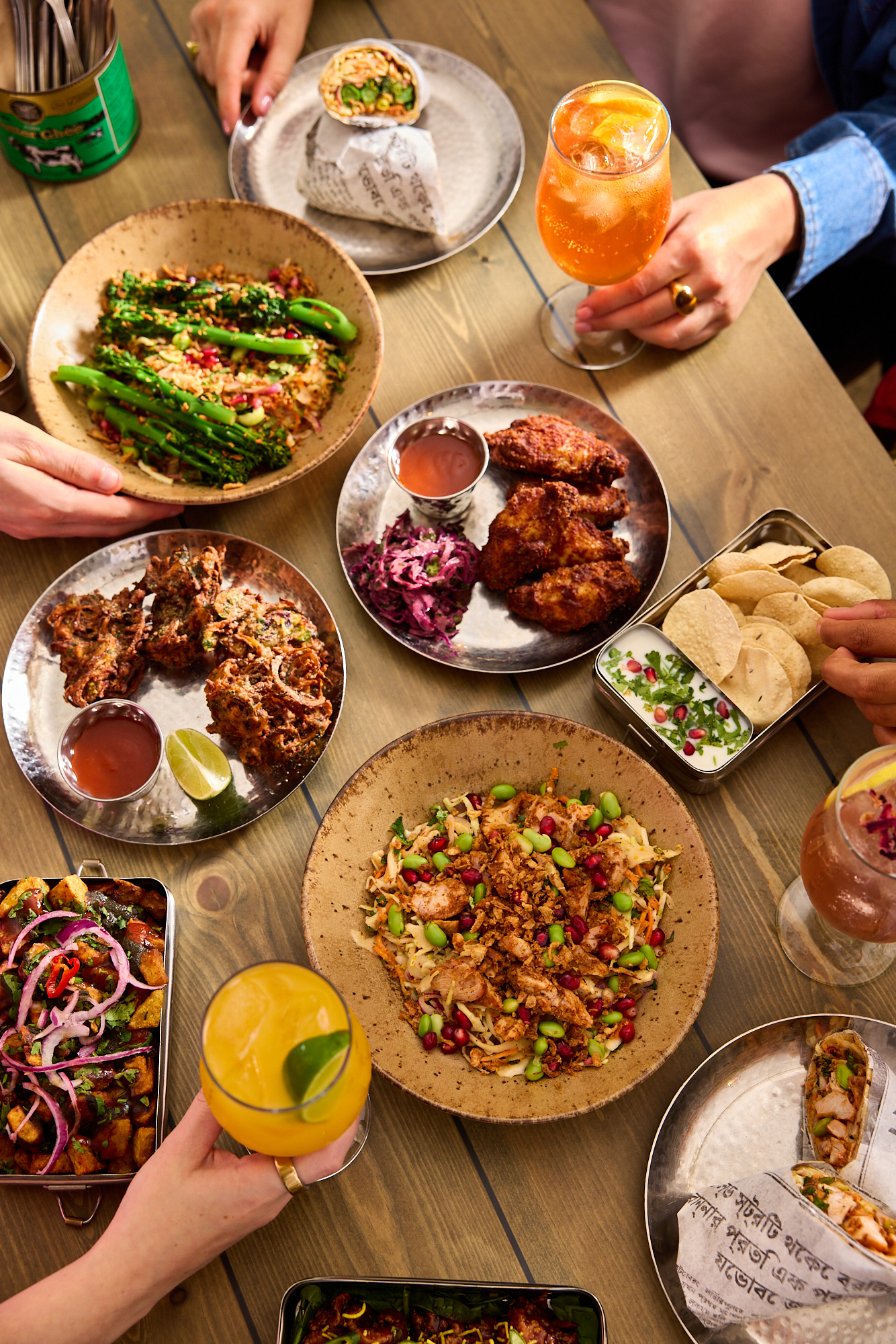
With so much choice across the city, it’s worth reminding yourself what Leeds does best: bold, sociable, sharing-style food that doesn’t take itself too seriously. Mowgli Street Food on Boar Lane, right in the heart of the city centre, is built around exactly that idea — Indian street food served as sharing plates, with vegetarian, vegan and non-gluten options throughout the menu, in a warm, informal setting a five-minute walk from the train station. If this guide has left you hungry, book a table at Mowgli Leeds and see what all the fuss is about.
Related Articles
- Where can you find spicy snacks that go perfectly with drinks?
- How do you pick the best Indian dishes for sharing with cocktails?
- Why is sharing plates the best way to eat Indian food with friends?
- Why Indian street food is a great Christmas party alternative
- How do locals find the best places to eat in Liverpool?