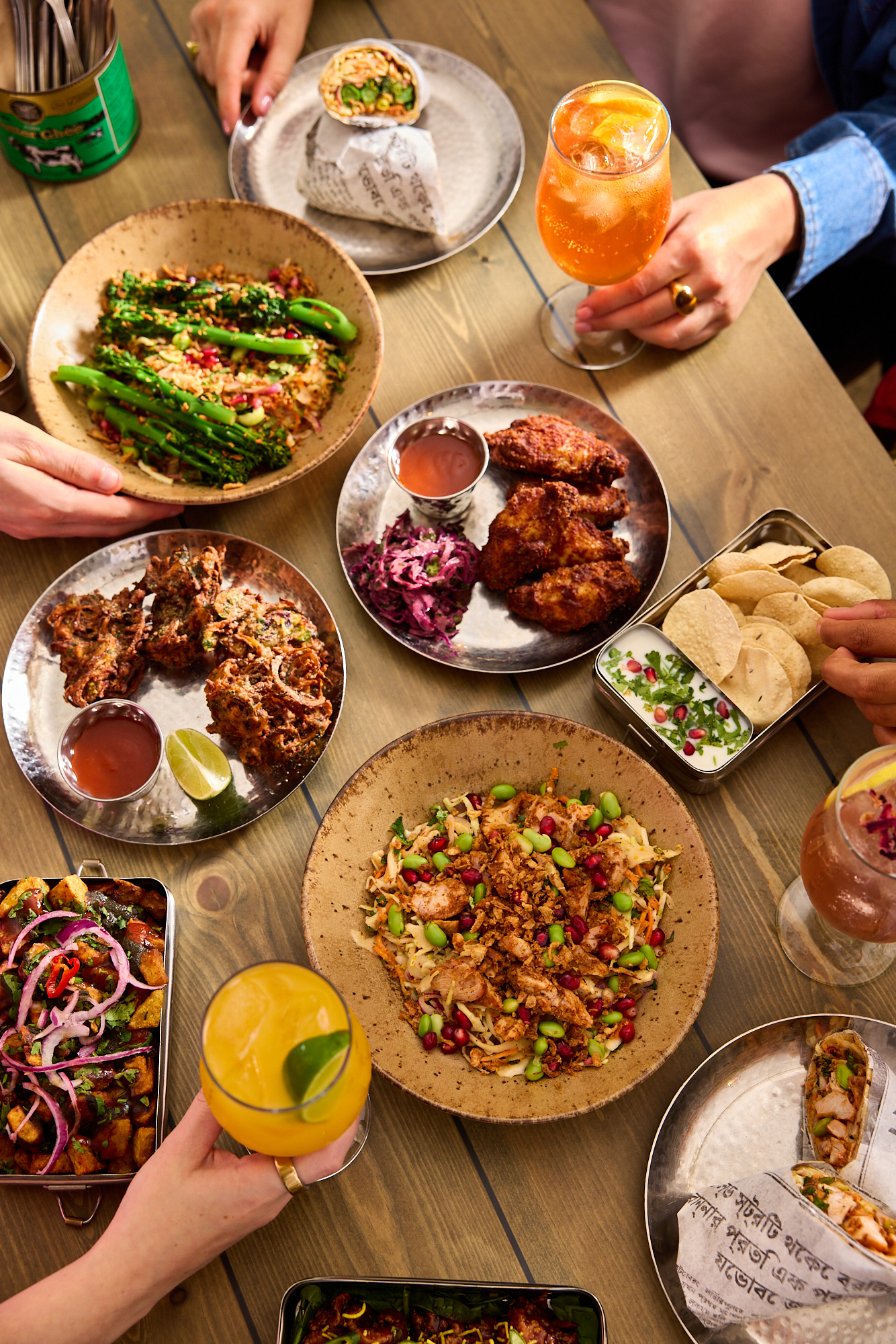
Pick a menu for a fun Indian feast with friends by building across textures and flavour profiles rather than ordering more of the same thing. A good spread mixes light, bright street food bites with one or two richer, slow-cooked dishes so the table feels generous without becoming heavy. The questions below walk through everything from how many dishes to order to where to start.
What kinds of dishes work best for a shared Indian spread?
The dishes that work best for a shared Indian spread are ones that contrast each other in texture, spice, and weight. Think crisp chaat alongside something slow-cooked and saucy, a dal for comfort, and a fresh, tangy side to cut through the richness. Variety across the menu is what makes a shared Indian meal genuinely fun rather than just filling.
A well-built spread tends to include something from each of these categories:
- Street food bites that are easy to share and eat quickly, like chaat or small plates with bold, immediate flavour
- A dal or lentil dish for warmth and depth, something that holds the spread together
- A centrepiece curry, ideally slow-cooked, that rewards the table’s attention
- Something fresh or pickled to lift the palate between richer bites
The real joy of Indian food eaten this way is that no single dish carries the whole meal. Everything shares the load, and guests can keep returning to the dishes they love most.
How many dishes should you order for a group Indian feast?
For a group Indian feast, a reliable rule is to order slightly fewer dishes than the number of people at the table. For four people, three to four dishes plus sides is usually plenty. For six, four to five works well. Indian food is designed to be shared, and dishes go further than they look when eaten across the table.
It is easy to over-order, especially when the menu is exciting and everyone wants to try something different. A better approach is to start with a considered selection and add a dish or two if the table is still hungry. Arriving at the end of a meal with half the food untouched is a common outcome of enthusiasm rather than restraint.
If the group includes people with very different appetites or dietary preferences, lean toward more dishes with smaller portions of each rather than fewer large ones. That way, everyone gets to eat what suits them without anyone feeling overlooked.
What’s the difference between street food and restaurant curry dishes?
Street food dishes are typically lighter, faster, and built around bold, immediate flavour, while restaurant curry dishes tend to be slower, richer, and more layered in their spicing. Street food is the smash and grab of Indian eating: bright, punchy, and eaten on the move. Curries reward patience, both in the cooking and in the eating.
In practice, this means street food plates like chaat are tangy, textured, and designed to wake the palate up. They are often vegan, frequently gluten-friendly, and low in calories without feeling like a compromise. A dish like Temple Dahl, made from red lentils simmered with toasted cumin, coriander, and lemon, sits somewhere between the two: simple and grounded, but deeply satisfying.
Curry dishes like slow-cooked lamb simmered with onion, plum, and chickpeas, or a Mother Butter Chicken finished with butter and yoghurt, carry a different kind of weight. They take time to build and they show it. For a group feast, the smartest approach is to order across both categories rather than committing entirely to one.
How do you balance spice levels when ordering for a mixed group?
Balance spice levels for a mixed group by anchoring the spread with a couple of milder, crowd-friendly dishes and adding one or two bolder options for those who want more heat. Never build the whole order around the spice tolerance of the most adventurous person at the table, or the most cautious one. Meet somewhere in the middle and let people navigate the spread themselves.
A few practical ways to manage this:
- Choose one rich, mild centrepiece dish that everyone can come back to; something creamy or slow-cooked tends to work well
- Add street food bites that are flavour-forward rather than heat-forward, so guests who are spice-shy still get a genuinely exciting meal
- If someone at the table loves heat, order one dish that delivers it rather than making the whole spread fiery
- Raita or a cooling yoghurt side is always worth ordering when the group is mixed
Real Indian food is not defined by heat. It is defined by complexity, freshness, and the layering of spice. A meal with no chilli can still be one of the most flavourful things on the table.
Should you choose a set menu or order à la carte for a group?
For most groups, ordering à la carte produces a better, more personal spread than a set menu. It lets the table build something that reflects exactly what everyone wants, mixing street food bites with a couple of richer dishes, skipping things nobody is excited about, and adding extras if the mood takes you. Set menus are convenient, but they trade personalisation for simplicity.
That said, set menus have a genuine case for certain situations. If the group is large, indecisive, or unfamiliar with Indian food, a set selection removes the pressure of navigating an unfamiliar menu and guarantees a balanced spread. They also make splitting the bill straightforward, which matters more than people admit.
For a fun, relaxed feast with friends who are curious about food, à la carte almost always wins. Half the enjoyment of a shared Indian meal is the conversation around what to order.
What are the best Indian dishes to start a feast with?
The best Indian dishes to start a feast with are light, flavour-packed plates that open the appetite rather than close it. Street chaat, small plates with tamarind or yoghurt, and fresh, bright bites work well at the beginning of a meal. They set the tone for what follows and give the table something to pick at while the bigger dishes arrive.
A few strong openers to consider:
- Chaat: crisp, tangy, and immediate, these are the quintessential Indian street food starter and a reliable crowd-pleaser
- Temple Dahl: a bowl of red lentils with toasted cumin and lemon is simple enough to eat early in the meal without weighing anyone down
- Wings or small fried plates: easy to share, easy to eat, and they give the table something to do while the rest of the order comes through
Avoid starting with the richest, heaviest dish on the menu. Save the slow-cooked lamb or the butter chicken for the middle of the meal, when the table has found its rhythm and people are ready to settle in.
How Mowgli helps you plan a group Indian feast
Mowgli Street Food is built for exactly this kind of meal. The menu moves from street chaat to heirloom curries, with plenty of vegan and gluten-friendly options woven through, so ordering for a mixed group is straightforward rather than stressful. Here is what makes it work for a group:
- Dishes are designed to be shared, not plated individually, so the table eats together in the true Indian tradition
- The menu spans light street food bites and slow-cooked centrepiece dishes, making it easy to build a balanced spread
- Full venue hire, semi-private hire, and private dining rooms are available for groups who want a more dedicated space
- Restaurants are open across more than 25 UK cities, from Manchester and Leeds to London, Edinburgh, Bristol, and beyond
Whether you are planning a casual catch-up or something a little more considered, find your nearest location and book a table at Mowgli to get the feast started.
Related Articles
- What makes modern Indian dining more exciting than a traditional curry night?
- How do you plan a fun evening around Indian food and drinks?
- What Indian dishes work best for late-night snacking?
- How do you find hidden gem restaurants in Nottingham?
- How do you choose between casual dining and fine dining in the UK?