What is the most underrated food city in the UK right now?
The most underrated food city in the UK right now is Birmingham. It has one of the most diverse and exciting dining scenes in the country, yet it rarely gets the national attention it deserves when food conversations happen. Cities like Leeds, Newcastle, and Bristol are also quietly building reputations that far outpace their coverage. This article works through the questions food lovers are actually asking about where to eat well beyond London.
Which UK cities are quietly leading the food scene?
Birmingham, Leeds, Manchester, Bristol, and Newcastle are the UK cities most quietly leading the food scene right now. Each has developed a genuinely distinctive dining culture built on independent restaurants, strong immigrant food traditions, and a growing appetite among locals for something more adventurous than the high street chains. These cities are not imitating London. They are doing something of their own.
Birmingham deserves particular attention. It has more Michelin-starred restaurants per head than any other UK city outside London, and its Balti Triangle remains one of the most important culinary landmarks in the country. The city’s South Asian food heritage runs deep, and that shows up in the quality and variety of restaurants near you if you happen to be visiting or living there.
Leeds has transformed its food scene over the past decade. Kirkgate Market, the largest covered market in Europe, sits at the heart of a city that now supports a serious independent restaurant culture. Bristol brings its own energy through a strong commitment to ethical sourcing and a notably creative approach to plant-based cooking. Newcastle punches well above its weight for a city of its size, with a tight-knit dining community that locals are fiercely proud of.
What makes a food city ‘underrated’ in the first place?
A food city is underrated when the quality and diversity of its dining scene consistently outpace its national reputation. This usually happens when media coverage concentrates on London, leaving genuinely exciting food cultures in other cities without the audience they deserve. Underrated does not mean undiscovered locally. It means the wider conversation has not caught up with what residents already know.
There are a few patterns that tend to define underrated food cities. Strong immigrant communities often drive the most interesting cooking, bringing techniques and recipes that have been refined over generations rather than adapted for a perceived mainstream audience. Markets and street food scenes tend to thrive before the restaurant press notices. And word of mouth among locals builds a loyal dining culture that does not need national validation to sustain itself.
The risk with calling any city underrated is that the label quickly becomes outdated. Birmingham, for example, has received significantly more food media attention in recent years. But the gap between what locals experience day to day and what gets written about nationally remains wide enough that the term still applies.
How does Birmingham’s food scene compare to London’s?
Birmingham’s food scene compares very favourably to London’s in terms of diversity, value, and depth of culinary heritage, even if it operates at a smaller scale. The city’s South Asian food culture in particular rivals anything London offers, and in some respects surpasses it. The Balti Triangle, the independent curry houses of Sparkhill, and the growing number of modern Indian restaurants across the city centre represent a food tradition that is genuinely world-class.
Where London has the edge is in sheer volume and variety. The capital’s size means more international cuisines, more experimental concepts, and more competition driving innovation. But that scale also brings noise. Finding something genuinely good in London requires more effort than it does in Birmingham, where the food community is tighter and recommendations travel faster.
On value, Birmingham wins clearly. A meal that would cost a significant amount in central London is often available for considerably less in Birmingham without any drop in quality. For anyone interested in Indian street food in the UK specifically, the city offers some of the most authentic and varied options anywhere in the UK.
Why is street food culture thriving outside London?
Street food culture is thriving outside London because lower operating costs, strong local communities, and a genuine appetite for informal, flavour-led eating have created the right conditions in cities across the UK. Markets in Manchester, Bristol, Leeds, and Edinburgh have become serious food destinations in their own right, drawing traders who might once have felt London was the only viable option.
The shift has also been driven by changing expectations among diners. The formal restaurant experience has become less central to how people want to eat. Sharing plates, quick service, bold flavours, and a lively atmosphere have become the preference for a large part of the dining public. Street food formats deliver all of that without the overhead of a full restaurant operation.
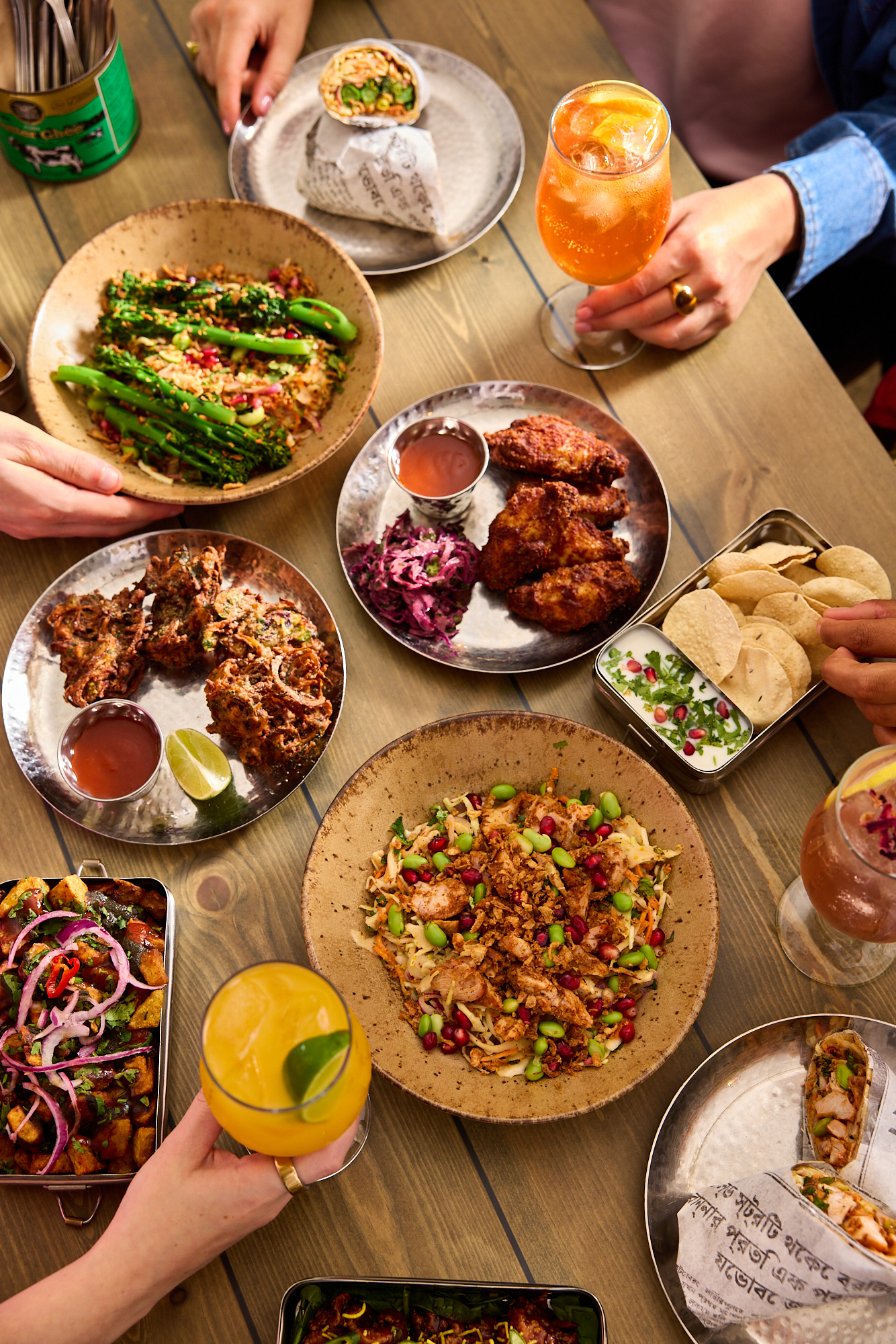
Indian street food has been a particularly significant part of this shift. The way Indians eat at home and on their streets, with small dishes, fresh spices, and food designed to be shared, translates naturally into the street food format. Cities like Manchester, Liverpool, and Edinburgh now have strong Indian street food cultures that reflect this, with restaurants serving the kind of food that feels nothing like the traditional Anglo-Indian curry house.
What types of cuisine define the UK’s emerging food cities?
The cuisines defining the UK’s emerging food cities are South Asian, Middle Eastern, West African, and East Asian cooking, alongside a strong and growing plant-based food culture. These are not trends imported from London. They reflect the communities that have shaped each city’s food identity over decades, and they are now being celebrated and built upon rather than hidden in side streets.
South Asian cuisine in particular is having a significant moment outside London. The best Indian restaurants in Manchester, Leeds, Edinburgh, Glasgow, Nottingham, and Liverpool are moving well beyond the curry house format, serving food that reflects how people actually eat in India rather than how British diners once expected Indian food to taste. That means lighter dishes, fresh herbs, bold spicing, and menus built around sharing.
West African food is emerging strongly in cities with significant Nigerian and Ghanaian communities. Middle Eastern and Levantine cooking has taken root in cities with large student populations and a dining culture that values fresh, vegetable-forward food. These cuisines are not niche. In the cities where they thrive, they are mainstream.
Should you travel to a UK city specifically for its food?
Yes, travelling to a UK city specifically for its food is absolutely worth doing, and several cities make a compelling case for exactly that kind of trip. Birmingham, Manchester, and Bristol in particular offer enough culinary depth to build a full weekend around eating well. The food alone justifies the journey, and the cost of doing so is significantly lower than a comparable trip to a European capital.
A food-focused trip works best when it combines a few different types of eating. A market visit in the morning, a long lunch at an independent restaurant, and an evening meal somewhere with a strong sharing menu gives a genuine sense of what a city’s food culture is actually like. Sticking only to the most prominent or reviewed restaurants misses a lot of what makes a city interesting to eat in.
For anyone drawn to Indian street food specifically, cities like Liverpool, Edinburgh, Glasgow, Newcastle, and Nottingham all offer dining experiences that are worth making a trip for. The food scene in each of these cities has its own character, and the best meals you will find there are not trying to replicate anything. They are doing something genuinely their own.
How Mowgli Street Food connects you to the UK’s best food cities
Mowgli Street Food brings Indian home cooking and street food culture to some of the UK’s most exciting food cities. If you are exploring the dining scene beyond London, Mowgli is a good place to start, with restaurants in:
- Birmingham, Manchester, Leeds, Liverpool, and Bristol
- Edinburgh, Glasgow, Newcastle, Nottingham, and Sheffield
- Cardiff, Oxford, Brighton, and beyond
The menu is built around dishes cooked fresh each morning, with bold spicing, sharing plates, and full vegan options that reflect how food is actually eaten in India. It is a long way from the curry house stereotype, and that is the point.
Find your nearest location and book a table at Mowgli to see what Indian street food really tastes like.