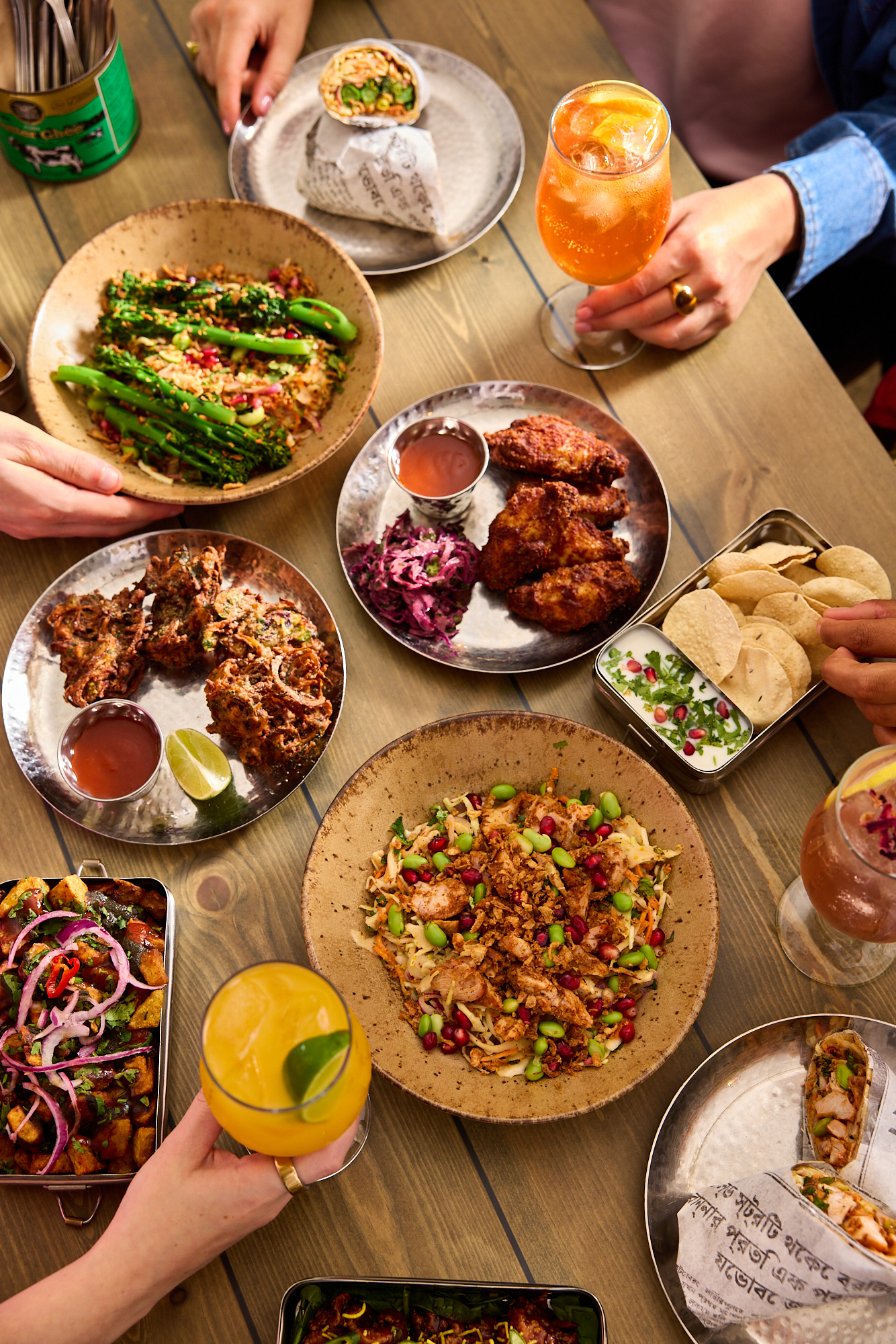
Modern Indian dining is more exciting than a traditional curry night because it moves beyond the narrow Anglo-Indian menu most people grew up with and brings the real, varied, and vibrant food that Indians actually eat at home and on the street. Where a classic curry house tends to offer rich, heavy sauces built around a handful of familiar dishes, modern Indian restaurants serve fresh, light, and layered food that reflects the true breadth of the subcontinent’s cooking. The questions below unpack exactly what has changed, what to eat, and where to find it.
How has Indian restaurant culture changed in the UK?
Indian restaurant culture in the UK has shifted significantly over the past decade, moving away from the heavy, Anglicised curry-house format towards menus that reflect the diversity of actual Indian cooking. The traditional curry night, built around rich kormas, tikka masalas, and pilau rice, was never really representative of how people eat in India. A new wave of restaurants has recognised that gap and filled it with something far more interesting.
The change has been driven partly by diners who travel more, cook more adventurously at home, and ask more questions about where their food comes from. There is also a growing appetite for meals that are lighter, plant-forward, and built around fresh ingredients rather than heavy cream-based sauces. Indian food, at its most authentic, fits that profile naturally. Street food, regional home cooking, and temple-style vegetarian dishes have all found their way onto UK menus as a result.
The shift is also cultural. Indian chefs and restaurateurs have become more confident in presenting their own food on their own terms, rather than adapting it to a perceived British expectation. That confidence has produced restaurants that feel genuinely different from anything that came before them.
What is Indian street food and how does it differ from curry?
Indian street food refers to the snacks, small plates, and quick dishes sold at roadside stalls and markets across India, typically bold in flavour, light in texture, and designed to be eaten on the move or shared between people. It differs from curry in that it prioritises freshness, acidity, and spice over slow-cooked richness, and it covers a far wider range of ingredients, techniques, and regional traditions.
Where a curry is usually a slow-simmered sauce dish served with rice or bread, street food spans crispy chaat topped with tamarind and yoghurt, lentil dishes finished with toasted cumin and lemon, tandoori-cooked meats wrapped in soft flatbread, and dozens of other formats. The variety is enormous, and the flavours tend to be brighter and more immediate.
Street food is also inherently social. In India, eating at a street stall is an everyday act, not a special occasion, and that informality translates well to the kind of relaxed, shared dining that many people now prefer when they go out. It is food built around energy and flavour rather than ceremony, which is a big part of why it has connected so strongly with UK diners looking for something more alive on the plate.
Is modern Indian food healthier than a traditional curry?
Modern Indian food, particularly dishes rooted in street food and home cooking traditions, tends to be significantly healthier than the traditional British curry-house format. Classic Anglo-Indian dishes were often adapted to include more cream, butter, and oil than their original counterparts, producing meals that were heavier and more calorie-dense than authentic Indian cooking typically is.
Real Indian food relies on spices, pulses, vegetables, and legumes as its foundation. Lentil dishes, chickpea-based curries, and vegetable preparations cooked with aromatic spices are naturally high in protein and fibre, low in saturated fat, and full of micronutrients. Many dishes are vegan without any effort or substitution. The spices used across Indian cooking, including turmeric, cumin, coriander, and ginger, have long been associated with anti-inflammatory and digestive benefits in traditional food culture.
Modern Indian restaurants have also responded directly to health-conscious diners. Lighter tiffin-style menus, calorie-conscious options, and clearly labelled vegan dishes have become more common, making it easier to eat well without compromising on flavour. The idea that Indian food is indulgent or heavy is largely a product of the Anglo-Indian adaptation, not the original cuisine.
What dishes should you try at a modern Indian restaurant?
At a modern Indian restaurant, the dishes most worth trying are those that move away from the standard curry-house menu and reflect either street food culture or regional home cooking. These tend to be the dishes that show the real range and depth of Indian cuisine.
- Temple dahl: Red lentils simmered until tender and finished with toasted cumin, coriander, and lemon. Simple, nourishing, and full of clean flavour.
- Street chaat: Crispy, tangy, layered snacks typically topped with tamarind chutney, yoghurt, and fresh herbs. A good chaat is one of the most flavour-packed things you can eat.
- Slow-cooked lamb: Dishes like Mowgli House Lamb, where the meat falls apart after long, gentle cooking with onion, plum, and chickpeas, represent the heirloom recipe tradition at its best.
- Mother Butter Chicken: A classic done properly, with tandoori chicken pieces simmered in a spiced tomato and yoghurt sauce finished with butter. Rich but balanced.
- Tandoori wraps: Freshly cooked flatbreads wrapped around spiced fillings, closer to what you would find on an Indian street than anything on a traditional curry-house menu.
The general principle is to order dishes you have not seen before. Modern Indian menus reward curiosity, and the less familiar something looks, the more likely it is to be the most interesting thing on the table.
Why do modern Indian restaurants focus on sharing plates?
Modern Indian restaurants focus on sharing plates because that is how Indian food has always been eaten in India. The idea of ordering one dish per person and eating it alone is a Western dining convention. In Indian homes and at street food stalls, food is placed in the middle of the table and everyone takes from everything, which produces a richer, more varied meal and a more connected experience around the table.
Sharing also suits the style of food. Indian dishes are designed to complement each other, with different textures, temperatures, and flavour profiles working together across a spread. A creamy dahl alongside a bright, acidic chaat alongside a smoky tandoori dish creates a meal that is more than the sum of its parts. Ordering one dish per person means missing most of that.
There is a social dimension too. Sharing food is a natural way to relax, to talk, and to spend time with people you like. The format encourages longer, more leisurely meals and makes group dining feel genuinely communal rather than just a series of individual orders placed at the same table. It is one of the reasons modern Indian restaurants have become a popular choice for group dining and celebrations.
Where can you find authentic modern Indian dining in the UK?
Authentic modern Indian dining is now available across most major UK cities, with a growing number of restaurants moving away from the traditional curry-house model in favour of menus built around street food, regional home cooking, and fresh, daily-prepared dishes. The best places to look are city centres and vibrant urban neighbourhoods where independent and small-chain restaurants have taken root.
When looking for an Indian restaurant near me, it is worth checking whether the menu goes beyond the standard tikka masala and korma lineup. Restaurants that list lesser-known dishes, offer strong vegan options, and describe their food in specific rather than generic terms tend to be the ones doing something genuinely different. Freshness is another good signal. Dishes cooked each morning rather than prepared in bulk and reheated produce noticeably better food.
Cities including Manchester, Leeds, Birmingham, London, Bristol, Edinburgh, Glasgow, Sheffield, and Liverpool all have strong modern Indian dining scenes in 2026, reflecting how far the category has developed beyond its curry-house origins.
How Mowgli helps you discover modern Indian dining
Mowgli Street Food was built specifically to answer the question of what real Indian food looks and tastes like. It is a good place to start if you want to move beyond the traditional curry night and eat something closer to the food Indian families actually cook and share.
- Dishes are cooked fresh in each restaurant every morning, not prepared in bulk.
- The menu spans street chaat, slow-cooked heirloom curries, and tandoori dishes, with strong vegan and gluten-friendly options throughout.
- All food is designed to be shared, in the tradition of how Indian meals are eaten at home.
- Mowgli has locations across the UK in cities including Manchester, Leeds, London, Birmingham, Bristol, Edinburgh, Glasgow, Sheffield, Cardiff, Nottingham, Newcastle, Oxford, and more.
- Private and semi-private dining options are available for groups, celebrations, and events.
If you are looking for fun restaurants near you that serve food with genuine character, swing by your nearest Mowgli. Find your closest restaurant and see what is on the menu.