What is the best way to experience Indian street food in the UK?
The best way to experience Indian street food in the UK is to seek out restaurants that cook from scratch daily, serve dishes designed for sharing, and draw directly from the home-cooking traditions of India rather than the Anglo-Indian curry house format. Authentic Indian street food is lighter, fresher, and more herb-driven than most people expect, and finding the right place makes all the difference. Below, we answer the most common questions people ask before they go.
Where can you find authentic Indian street food in the UK?
Authentic Indian street food is now available across the UK in major cities including London, Manchester, Birmingham, Edinburgh, Glasgow, Leeds, Liverpool, Bristol, Newcastle, and Nottingham. The key is finding restaurants that cook dishes fresh each morning and build their menus around the way people actually eat in India, not around the expectations of a traditional British curry house.
City centres are your best starting point. Urban areas with a strong independent food culture tend to attract restaurants that take Indian street food seriously. Look beyond the high street staples and explore areas like the Northern Quarter in Manchester, Corn Street in Bristol, or Charlotte Street in London, where smaller, more characterful dining spots tend to cluster. Indian street food restaurants in these areas often prioritise freshness, bold spicing, and menus built around sharing rather than individual plated meals.
If you are searching for vibrant restaurants near you, it is worth checking whether the restaurant cooks on-site daily, offers a menu that changes with the seasons, and serves dishes that reflect regional Indian cooking rather than a generic curry menu.
What dishes are considered true Indian street food?
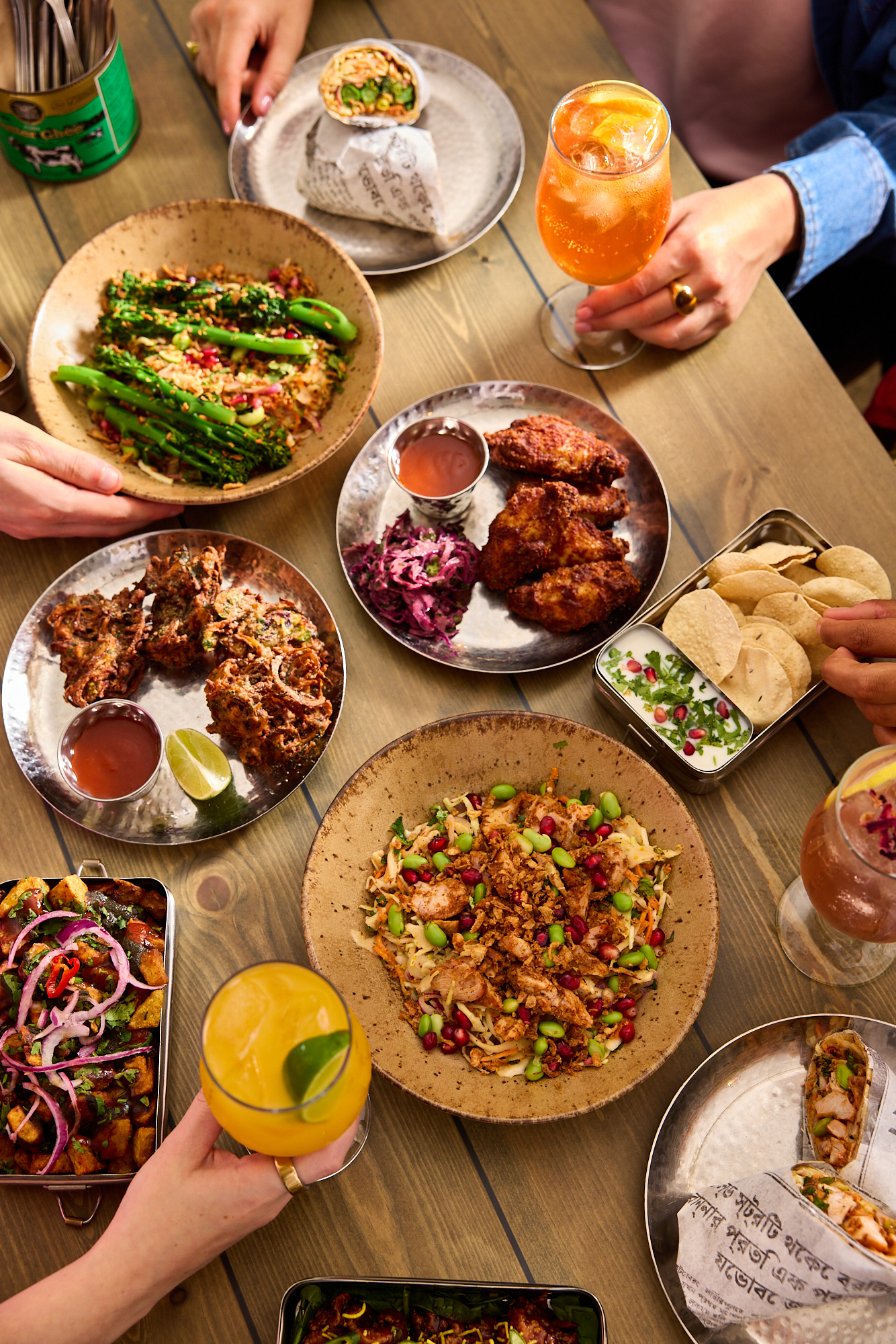
True Indian street food includes chaat, dahl, tandoori wraps, slow-cooked lentil dishes, spiced chickpea preparations, and small sharing plates built around fresh herbs, tamarind, yoghurt, and aromatic spices. These dishes are eaten standing at roadside stalls or in homes across India, and they bear little resemblance to the heavy, sauce-forward dishes most associated with British Indian restaurants.
Some of the most iconic examples include:
- Chat — a broad family of tangy, spiced snacks made with puffed rice, chickpeas, potatoes, or lentils, dressed with tamarind chutney and yoghurt
- Dahl — slow-simmered lentils finished with tempered spices such as cumin and coriander; Temple Dahl, made from red lentils with toasted cumin, coriander, and lemon, is a classic example
- Tandoori wraps — flatbreads filled with spiced meats or vegetables cooked in a clay oven
- Heirloom curries — slow-cooked family recipes such as lamb simmered with onion, plum, and chickpeas, or butter chicken finished with yoghurt and spiced tomato
- Tiffin plates — small, balanced portions served in the tradition of the Indian lunchbox, designed to nourish without overwhelming
What unites these dishes is their emphasis on freshness, balance, and layered spicing rather than richness or heat alone.
Is Indian street food healthy?
Indian street food is generally very healthy. Many dishes are naturally plant-based, low in saturated fat, and built around ingredients such as lentils, chickpeas, fresh herbs, yoghurt, and spices that carry genuine nutritional value. The perception that Indian food is heavy or calorie-dense comes from the Anglo-Indian restaurant tradition, not from how Indians actually eat.
Traditional Indian street food relies on cooking methods like slow simmering, tandoor roasting, and light tempering rather than deep frying or heavy cream sauces. A bowl of Temple Dahl, a chaat plate, or a tiffin selection can be both deeply satisfying and genuinely light. Some menus now offer specific options designed with calorie-conscious diners in mind, such as a 600-calorie Lite Tiffin, which demonstrates that flavour and wellbeing are not in competition.
Vegan and gluten-friendly options are also abundant in authentic Indian street food, making it one of the more naturally inclusive cuisines for people with dietary preferences or requirements. If you are health-conscious but unwilling to compromise on taste, Indian street food is one of the most rewarding choices available.
What’s the difference between Indian street food and a traditional curry house?
The key difference is that Indian street food reflects how people in India actually eat, while the traditional British curry house evolved to suit British tastes in the mid-twentieth century. Street food dishes are lighter, fresher, and more herb-driven. Curry house menus tend to centre on rich, sauce-heavy dishes that were adapted over decades to meet local expectations rather than reflect Indian home cooking.
In practical terms, the differences show up across the entire dining experience:
- Dishes: Street food menus feature chaat, dahl, tiffins, and wraps alongside curries. Curry house menus are typically built around a narrow set of sauce bases applied to different proteins.
- Freshness: Authentic street food restaurants cook dishes from scratch each morning. Many curry houses rely on pre-prepared sauces held throughout service.
- Sharing culture: Indian street food is designed to be shared, with plates arriving as they are ready rather than as a structured starter-main-dessert sequence.
- Atmosphere: Street food dining is lively and informal. The traditional curry house often operates in a quieter, more formal register.
- Spicing: Street food uses bright, layered spicing built on fresh herbs, tamarind, and whole spices. Curry house cooking often relies on a narrower set of ground spice blends.
Neither is wrong, but they are genuinely different experiences. If you want to understand what Indian food actually tastes like, street food is the more honest starting point.
How do you order Indian street food for the best experience?
The best way to order Indian street food is to treat the meal as a series of shared plates rather than individual portions. Order a mix of textures and flavours across small bites, dahl, a wrap or two, and one or two more substantial dishes, and let everything arrive as it comes. Resist the urge to order a single main course and sit with it.
A few practical tips for getting the most from the experience:
- Order more than you think you need. Sharing plates are intentionally sized for the table, not for one person. Three or four dishes between two people is a reasonable starting point.
- Mix your textures. Pair something crisp or tangy, like a chaat, with something slow-cooked and rich, like a dahl or heirloom curry.
- Ask the staff. Good street food restaurants have teams who know the menu well and can guide you based on what you enjoy. Do not be afraid to ask what is fresh that day or what the kitchen is proud of.
- Pace yourself. Dishes arrive when they are ready. Lean into the rhythm rather than waiting for everything at once.
- Save room for something sweet. Indian desserts and chai are often overlooked but worth finishing with.
What should you look for in a genuine Indian street food restaurant?
A genuine Indian street food restaurant cooks fresh each day, builds its menu around sharing, and draws from real Indian home-cooking traditions rather than the Anglo-Indian curry house format. Beyond the food itself, the atmosphere, the honesty of the menu descriptions, and the knowledge of the team all signal whether a restaurant is the real thing.
Specific things to look for include:
- Daily cooking: Dishes prepared fresh each morning rather than reheated from pre-made sauces
- Honest menu language: Descriptions that name specific ingredients and cooking methods rather than vague terms like “authentic spices” or “traditional flavours”
- Vegan and plant-based options: A strong street food menu will naturally include a high proportion of plant-based dishes, because that is how much of India eats
- Sharing plate format: Menus structured around smaller dishes designed for the table rather than individual plated mains
- A lively atmosphere: Indian street food culture is social and energetic, not hushed and formal
- Staff who know the food: Teams who can talk about dishes with genuine knowledge rather than reading from a script
How Mowgli helps you experience Indian street food at its best
Mowgli Street Food was built specifically to answer the question this article addresses. Founded in Liverpool in 2014, Mowgli Street Food set out to bring the real flavours of Indian home cooking and street food culture to the UK high street, rejecting the curry house format in favour of something more honest and more nourishing. Here is what that means in practice:
- Dishes cooked fresh every morning in each restaurant
- A menu built around sharing plates, chats, tiffins, dahl, tandoori wraps, and heirloom family recipes
- Strong vegan and gluten-friendly options throughout the menu
- Locations across the UK including London, Manchester, Birmingham, Edinburgh, Glasgow, Leeds, Liverpool, Bristol, Newcastle, and Nottingham, among others
- Walk-ins welcome, with table reservations available online
- Private and semi-private dining and event hire available at restaurant locations across the UK
Whether you are looking for the best Indian restaurant in London, a great Indian restaurant in Manchester, or simply vibrant restaurants near you, Mowgli is worth a visit. Find your nearest Mowgli and come and eat with us.