How do you find Indian restaurants with a buzzing atmosphere?
The best Indian restaurants with a buzzing atmosphere combine lively, open dining rooms with shareable menus, a sociable crowd, and food that arrives fresh and full of flavour. That combination of energy, generosity, and genuine cooking is what separates a memorable night out from a forgettable one. Below, we cover everything you need to know before you go, from reading the signs online to picking the right time to visit.
What makes an Indian restaurant atmosphere feel genuinely buzzing?
A genuinely buzzing Indian restaurant atmosphere comes from the combination of a lively room, shareable food, and a crowd that is there to enjoy themselves rather than observe formalities. The energy feeds itself: when dishes are designed to be passed around the table, conversation flows naturally, and the whole room lifts. Noise, warmth, and movement are features, not flaws.
Several practical elements contribute to that feeling. Open kitchens or partially visible prep areas remind you that the food is being made fresh right now. Communal or closely spaced tables encourage a sense of shared occasion. Menus built around small plates and sharing dishes keep the table active, with food arriving in waves rather than all at once.
Decor plays a role too, but not in the way you might expect. It is less about grand statements and more about details that feel considered rather than generic: warm lighting, interesting textures, and a room that has clearly been thought about. A restaurant that feels alive usually has a team that feels the same way, and that energy is contagious.
How does the menu style affect a restaurant’s energy?
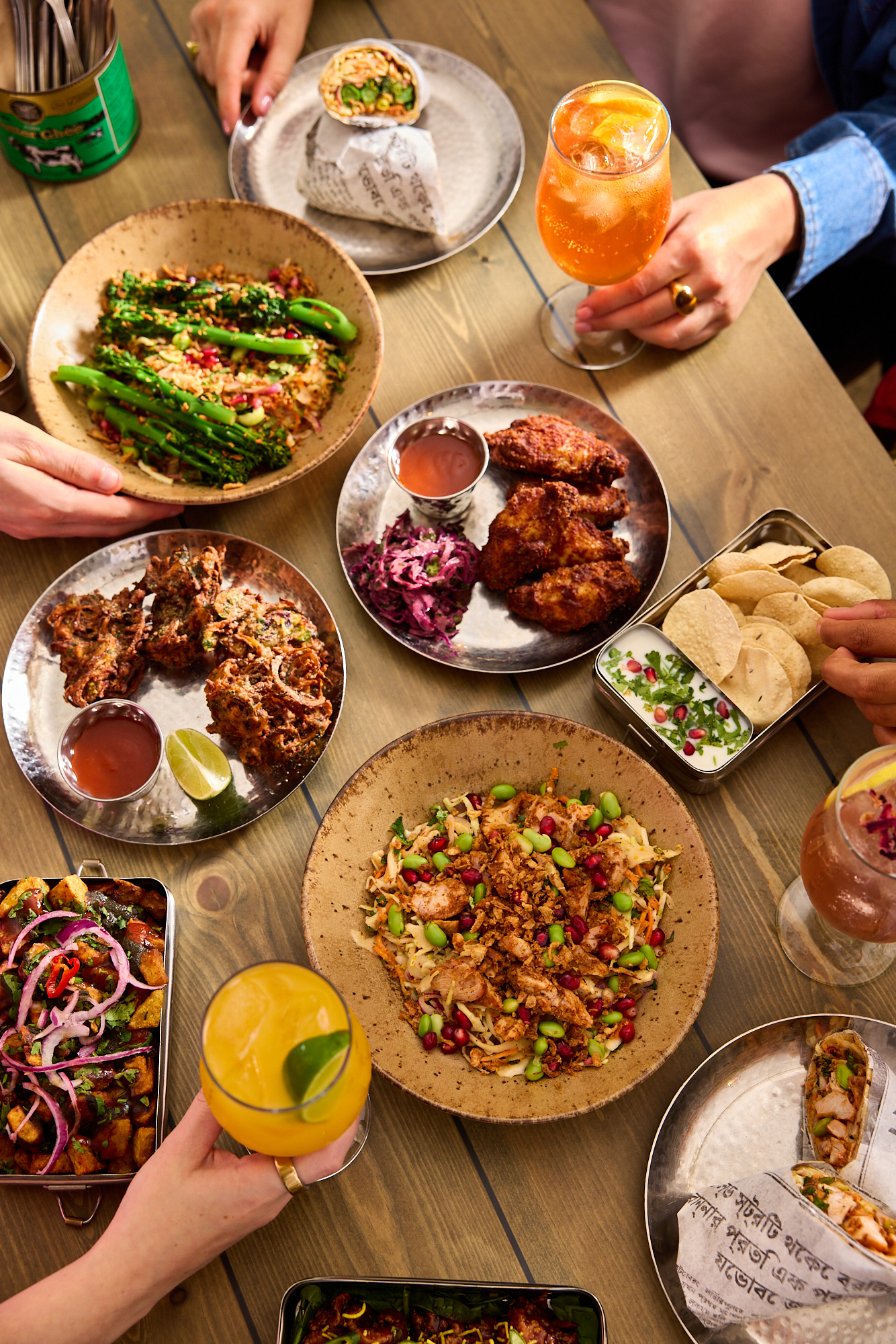
Menu style is one of the biggest drivers of atmosphere in any restaurant, and Indian food is particularly well suited to creating energy because so much of it is designed to be shared. When a table is covered in small plates of street food, chutneys, and fresh breads, the meal becomes an event rather than a transaction. That communal dynamic is central to the liveliest Indian dining experiences.
Street food menus, in particular, tend to generate a faster, more sociable rhythm. Dishes arrive quickly, flavours are bold and immediate, and there is always something new to try. Compare that with a traditional set menu format, where courses arrive in a fixed sequence and the pace is more controlled. Neither is wrong, but if atmosphere is what you are after, a menu built around sharing and variety will almost always deliver it.
The health profile of the food also matters more than people realise. When a menu is genuinely light, fresh, and vegetable-forward, people tend to eat more adventurously and order more dishes. That willingness to explore keeps the table lively and the meal moving. Real Indian food, rooted in home cooking rather than heavy sauces, has that quality built in.
Where can you find lively Indian restaurants in UK cities?
Lively Indian restaurants in the UK are most reliably found in city centres with a strong independent dining culture, particularly in areas where food is taken seriously and competition keeps standards high. Cities like Manchester, Leeds, Edinburgh, Bristol, Birmingham, and London all have neighbourhoods where the best Indian restaurants have become genuine social destinations rather than simply places to eat.
When searching for an Indian restaurant near me, it is worth looking beyond the obvious high streets. Some of the most atmospheric spots are tucked into market buildings, converted industrial spaces, or pedestrianised lanes where the foot traffic itself adds to the energy. Bold Street in Liverpool, Corn Street in Bristol, and the Corn Exchange in Manchester are good examples of settings where the location amplifies the experience.
City centre locations with late kitchens and a strong drinks offer also tend to draw a crowd that is there for the evening rather than a quick meal. That extended dwell time is part of what makes a room feel alive. If you are looking for fun restaurants near me, filtering by city centre locations with sharing menus is a reliable starting point.
What signs tell you a restaurant will be lively before you visit?
Before you visit, a few reliable signals indicate whether an Indian restaurant is likely to have the kind of atmosphere you are looking for. Reviews that mention noise, energy, and how long people stayed are more useful than star ratings alone. A restaurant where guests consistently mention losing track of time is usually doing something right.
- Booking demand: If tables are hard to get at peak times, that is a strong signal the room fills up. A half-empty restaurant on a Friday night rarely feels buzzing.
- Social media presence: Restaurants with an active, genuine presence on social platforms, particularly ones that show the room rather than just the food, tend to have a stronger sense of identity and community.
- Menu design: A menu built around sharing plates and street food dishes signals the kind of experience the kitchen is aiming for. If everything is designed to be passed around, the room will reflect that.
- Staff reviews: It sounds counterintuitive, but restaurants rated highly as workplaces tend to have teams that genuinely enjoy being there. That shows on the floor.
- Walk-past test: If you can see or hear the room from outside and it looks full and lively at 7pm on a weekday, trust that instinct.
Word of mouth remains one of the most reliable filters. A recommendation from someone whose taste you trust, particularly one that mentions the energy of the room rather than just the food, is hard to beat.
When is the best time to visit an Indian restaurant for the full atmosphere?
The best time to visit an Indian restaurant for a buzzing atmosphere is typically between 7pm and 9pm on a Thursday, Friday, or Saturday evening. This is when rooms are at their fullest, the kitchen is at full pace, and the energy in the room is at its highest. Arriving slightly earlier, around 6:30pm, can get you seated without a wait while still catching the room as it builds.
Sunday evenings are increasingly popular for Indian dining in UK cities, particularly for groups looking for something more relaxed than a Friday night but still sociable. Lunch on a Saturday can also be lively in city centre locations, especially near markets or shopping areas where footfall is high through the afternoon.
Midweek visits, particularly Monday and Tuesday, tend to be quieter. That is not necessarily a problem if you want a more relaxed meal, but if atmosphere is the goal, the weekend is your best bet. Some restaurants also host specific events or themed evenings during the week that can recreate that Friday-night energy on a quieter night, so it is worth checking what is on before you go.
Are lively Indian restaurants a good option for group dining?
Yes, lively Indian restaurants are an excellent option for group dining, and in many ways the format is better suited to groups than almost any other cuisine. Sharing menus mean everyone eats together rather than waiting for individual courses, dietary variety is usually well catered for, and the noise of a buzzing room means a large table does not feel self-conscious. Indian street food in particular is built for exactly this kind of occasion.
For larger groups, it is worth contacting the restaurant in advance rather than just booking a standard table. Many lively Indian restaurants offer semi-private or full venue hire options that give your group its own space while keeping you connected to the energy of the wider room. That balance of privacy and atmosphere is often the ideal setup for celebrations, work dinners, or big birthday meals.
Groups also benefit from menus that span a wide range of flavours and dietary requirements. A well-constructed Indian street food menu will typically include vegan, gluten-friendly, and meat dishes side by side, which removes the usual anxiety of catering for a mixed group. When the food arrives fresh and in waves, it keeps the table active and the conversation going, which is exactly what you want from a group night out. If you are searching for group dining near me, look for restaurants that have experience hosting larger tables and can offer a degree of flexibility on the menu.
How Mowgli helps you find the lively Indian dining experience you are looking for
Mowgli Street Food is built around exactly the kind of atmosphere this article describes: fresh Indian street food, shareable menus, warm and lively rooms, and a team that genuinely wants you to have a good time. Here is what makes it a strong answer to most of the questions above:
- Menus designed around sharing, with street chaat, heirloom curries, and dishes like Temple Dahl and Mother Butter Chicken arriving fresh every morning
- Full vegan and gluten-friendly options throughout, so mixed groups are well catered for without compromise
- Locations across 26 UK cities, including Manchester, Leeds, Edinburgh, Bristol, Birmingham, London, and more
- Three event hire options: full venue hire, semi-private hire, and private dining rooms, suitable for everything from birthday dinners to work celebrations
- A room designed to feel alive: swing seats, warm lighting, and a layout that keeps the energy moving
Whether you are planning a big group night out or just looking for a cool restaurant near me that delivers on atmosphere, find your nearest Mowgli and book a table.