How Christmas is celebrated in India
When people think of Christmas, their minds usually jump straight to snowy pine trees, cosy fireplaces, classic Christmas jumpers, and the good old roast dinner sitting in the middle of the table. But if you head over to India during December, the festive season looks, feels, and tastes completely different.
While Christians make up around two to three per cent of India’s population, that adds up to well over thirty million people celebrating in a country of over 1.4 billion. Add in the fact that millions of non-Christians join in for the lights, parties, and holiday cheer, and you get one of the most vibrant, colour-packed festive seasons on the planet.
And as Indian families have moved across the globe over the years, these brilliant holiday traditions have travelled with them. From paper star lanterns hanging in British windows to spice-infused festive dishes popping up across the UK, Indian Christmas culture has become a global favourite.
How Christmas came to India
To understand how India celebrates Christmas today, it helps to look back at how it all started. The story of Christianity in India goes back a lot further than most people realise. It goes all the way back to 52 AD.
Tradition says that Saint Thomas sailed across the Arabian Sea and landed on the tropical coast of South India. He brought early Christian teachings with him, establishing some of the oldest Christian communities in the world, known today as the Saint Thomas Christians or Syrian Christians.
Centuries later, in the late 1400s, Portuguese explorers arrived on the western coast and established Goa as a major hub. They brought Western Catholic customs, church architecture, and European baking techniques, blending them with local Indian spices and cooking styles. A bit further down the line, British, French, and Dutch influences added their own twists in places like Kolkata and Puducherry.
Over the centuries, these different cultures started to merge. India took global Christmas traditions, stripped away the cold weather elements, infused them with local flavour, and turned December into a sun-soaked, spice-kissed celebration.
How India celebrates Christmas
If you walk through the streets of an Indian neighbourhood in December, you will notice pretty quickly that the holiday decor has its own tropical personality and is quite different from what we know in the UK. Let’s look at some of the unique celebrations in India, as opposed to the UK.
A spin on the classic Christmas Tree
In many parts of India, traditional pine or fir trees aren’t readily available. But that doesn’t stop anyone from decorating! Families happily transform local trees into festive centrepieces.
In southern states like Kerala and Tamil Nadu, it’s normal to see banana trees, mango trees, or even palm trees wrapped in strings of bright fairy lights and colourful ribbons. Sometimes you’ll even see mango leaves, which are traditionally considered lucky in Indian culture, strung across doorways as festive decorations.
Paper star lanterns
If one item defines the look of an Indian Christmas, it is the giant paper star lantern. Starting in late November, markets in cities like Mumbai, Goa, and Kochi fill up with thousands of handmade paper stars in many different colours.
Families hang these brightly coloured stars outside their front doors, on balconies, and between houses. Walking down a residential street at night during December feels like walking under a canopy of glowing constellations.
Midnight Mass
Christmas Eve in India, like in much of the world, is a grand social event. Families dress up in their finest clothes, women often wearing vibrant red or gold silk sarees, and men in suits or traditional kurtas, and head out to Midnight Mass.
Churches across the region are packed, decorated with marigold flowers, glowing candles, and nativity scenes. The services feature stunning carol singing, often translated into local languages, accompanied by traditional drums and instruments alongside church organs. Not too dissimilar to what we see in other regions all around the world.
How Indian Christmas traditions went global
As members of the Indian culture settled across the UK, North America, Australia, and beyond, they brought these rich holiday customs with them. Today, you can see the influence of Indian festive culture popping up worldwide in December.
The global light show
The tradition of hanging bright paper stars and stringing warm lights across balconies has travelled everywhere. In cities across the UK, from London and Manchester to Bristol and Birmingham, you will often spot beautiful paper star lanterns glowing in townhome windows alongside traditional British Christmas trees. It brings a slice of tropical warmth to cold, rainy British winter nights.
Reimagining the festive gathering
In the UK, the standard way to celebrate Christmas with friends or work colleagues has long been the formal three-course dinner. But as people have embraced different cultures, the Indian way of celebrating, built around sharing plates, casual mingling, and communal eating, has become hugely popular.
People are moving away from stiff, formal arrangements in favour of warm spaces wrapped in fairy lights where plates are passed around, and everyone digs in together.
Spicing up the winter menu
Perhaps the biggest global shift has happened on the plate. People have realised that winter is the best time for warm, aromatic spices. Instead of relying solely on gravy and roasted vegetables, hosts around the world are adding Indian flavour profiles into their festive feasts.
What food will you find on an Indian Christmas dinner table
In India, food is the beating heart of every single celebration, and Christmas is no exception. But unlike the heavy, single-plate roast dinner common in Western households, an Indian festive meal is a dynamic, multi-dish affair designed to feed a crowd.
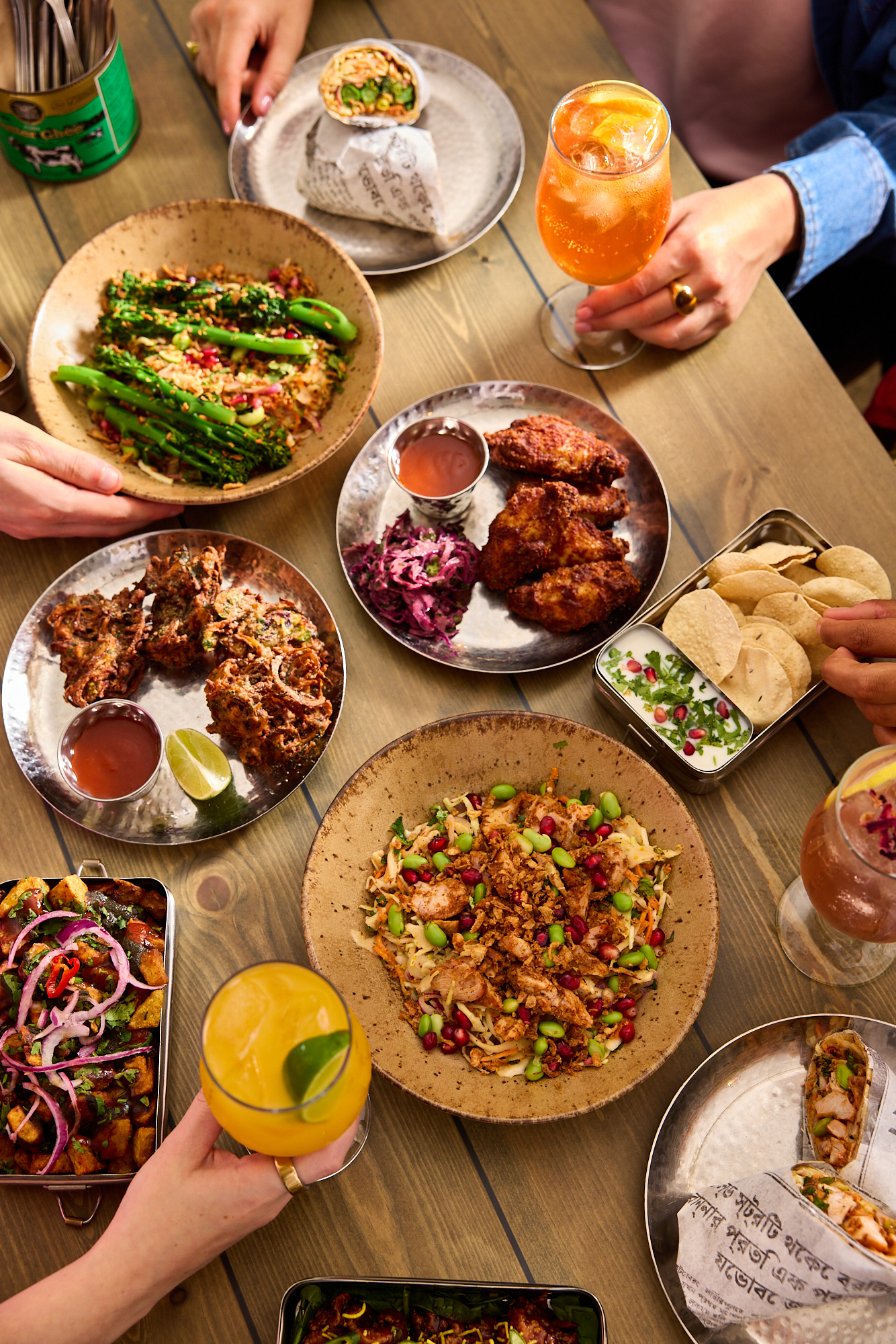
After Midnight Mass on Christmas Eve, or during the main feast on Christmas Day, tables are piled high with curries, street-food plates, fluffy rice, and warm breads. It is all about variety, contrast, and balance. You get rich meats, slow-simmered lentils, crispy fried bites, and sweet, zingy chutneys all sitting side by side.
When you look at the classic dishes served during these festive gatherings, you see a direct connection to the simple, comforting street food and home-style dishes served in top Indian kitchens today.
The starters
No festive Indian gathering begins with a dull bread basket. Instead, celebrations kick off with chaat, the iconic indian street food snacks designed to wake up your palate. Chaat is built around a balance of sweet, sour, crisp, spicy, and cool elements.
Think of crisp pastry shells filled with spiced chickpeas, cool yoghurt, and sweet tamarind chutney. You pop the entire shell into your mouth in one go, resulting in a sudden explosion of flavour. It’s a great party starter because it gets people talking immediately.
The mains
When it comes to mains, Indian street food is the king of variety. Instead of a single centrepiece, an Indian Christmas spread features several complementary dishes so everyone gets a little bit of everything:
- Charred tandoori Meats: Succulent chicken marinated in citrus, yoghurt, and warm tandoori spices, then grilled until smoky and charred. It offers all the juicy satisfaction of festive poultry, but with a vibrant, punchy flavour profile.
- Sticky sweet-and-savoury dishes: Sweet glazes are very popular during the holidays. Chicken pieces tossed in a sweet, sticky molasses reduction hit those same comforting notes as cranberry sauce or glazed ham, but with a delicious spicy kick.
- Slow-cooked curries: Rich, aromatic curries, simmered slowly with cardamom, cloves, and fried onions until the meat falls apart at the touch of a fork.
Christmas feasts for vegetarians
A festive table in India is never just about the meat. In fact, some of the most celebrated dishes on the table are actually plant-based. Some of the fan favourites include:
- Temple-style lentil dahl: Yellow lentils tempered with toasted cumin, mustard seeds, and garlic. It acts as a soothing, earthy base for the whole meal.
- Tea-steeped chickpeas: Whole chickpeas simmered in black tea, ginger, and warm spices, creating a dark, rich, deeply savoury dish that even the biggest meat lovers reach for.
- Crispy potato dishes: Potato dishes tossed with turmeric, fenugreek, and mustard seeds provide that essential crispy carb every holiday dinner needs.
- Fluffy rice and warm breads: Basmati rice flecked with herbs, alongside puffed, golden Puri breads, used to scoop up every last drop of sauce from the table.
Bringing the Indian festive spirit to Mowgli this Christmas season
If all this talk of paper stars, warm spices, and sharing feasts has you craving a different kind of festive celebration this Christmas, Mowgli is the place to be.
We serve the kind of food Indian families eat in their own kitchens and share during big family celebrations, far removed from heavy, oily takeaway sauces or the predictable routine of a standard roast dinner.
Because Indian food naturally celebrates plant-based ingredients, hosting your Christmas party or get-together at Mowgli means nobody in your group gets left behind. Vegans, vegetarians, and gluten-free guests get to dig into a flavour-packed feast that feels just as indulgent and thoughtful as the meat dishes on the table.
Whether you are planning an office Christmas party, a family reunion, or a casual December catch-up with close friends, taking a page out of India’s holiday playbook is an exciting way to celebrate Christmas this year.
Our festive diaries fill up quickly months in advance. So make sure to book your Christmas party table ahead of time to make sure you don’t miss out!