Things to Do in Leeds: A Local’s Guide to the City Centre
Leeds doesn’t shout about itself the way some cities do. It doesn’t need to. Beneath the everyday hum of trams, trains and Saturday shoppers is a city built on wool money and Victorian ambition, one that’s spent the last twenty years quietly becoming one of the best places in the north of England to spend a day out. Whether you’re visiting for the first time or you’ve lived here for years and fancy rediscovering it, this guide covers the parts of Leeds city centre worth your time — the markets, the museums, the architecture, and the streets that reward a slow wander rather than a rushed itinerary.
Start in the Victorian Arcades
The easiest way to understand Leeds is to look up. Much of the city centre’s character comes from its network of covered Victorian arcades, built during the boom years of the late 1800s when Leeds was one of the wealthiest manufacturing cities in the country. Wander through the arcades around Briggate and you’ll find ornate ironwork, stained glass and mosaic floors that wouldn’t look out of place in a much grander European city. These arcades now house a mix of independent boutiques, jewellers and cafés, and they’re free to walk through, which makes them a natural first stop if you’re getting your bearings.
From here it’s a short walk to Kirkgate Market, one of the largest indoor markets in Europe and genuinely worth an hour of anyone’s time. This is where Marks & Spencer started life as a penny bazaar stall back in 1884, and the market has kept that same appetite for variety ever since — butchers, fishmongers, fabric stalls, greengrocers and a proper mix of street food traders all under one roof. It’s not a polished tourist attraction; it’s a working market that locals actually use, which is exactly why it’s worth visiting.
Millennium Square and the museums
Millennium Square sits at the civic heart of the city, flanked by Leeds Art Gallery and the Leeds City Museum. The gallery holds one of the best collections of twentieth-century British sculpture outside London, largely thanks to its connection to Henry Moore, who studied in Leeds. Entry is free, and it’s small enough to see properly in under an hour without museum fatigue setting in. Next door, the City Museum covers the city’s natural history, social history and its role in the industrial revolution, and it’s a good option if you’re visiting with children or simply want context for everything else you’re seeing in the city.
A ten-minute walk away, the Royal Armouries Museum holds the national collection of arms and armour and is one of the few genuinely world-class free museums outside the capital. It sits down by the waterfront, which gives you a good excuse to follow the River Aire along the redeveloped Leeds Dock area, where old industrial warehouses have been turned into bars, restaurants and apartments overlooking the water.
Leeds Town Hall and the civic quarter
You can’t really talk about Leeds architecture without mentioning the Town Hall. Completed in 1858 and opened by Queen Victoria herself, its columned front and clock tower are as close as Leeds gets to a single defining landmark. It’s still a working civic building and concert venue today, home to the Leeds International Concert Season, and the building alone is worth a photo stop even if you’re not attending an event.
Close by, Leeds Central Library is a Grade II listed building dating from 1884 and one of the more underrated interiors in the city — ornate ceilings, reading rooms that feel like they belong in a different century, and free to wander into if libraries are your thing.
Shopping, from Victorian arcades to modern malls
Leeds has long had a reputation as one of the best shopping cities outside London, and the contrast is part of the appeal. On one hand you’ve got the Victoria Quarter, home to Harvey Nichols’ first store outside London and some of the most beautiful arcade architecture in the country. On the other, Trinity Leeds offers a fully modern shopping experience with a glass-roofed atrium and well over a hundred shops, restaurants and cinema screens under one roof. Between the two sits Briggate, the main pedestrianised shopping street that connects most of the city centre together.
Green space and a change of pace
If you need a break from pavements, Leeds has more green space than most visitors expect. Roundhay Park, a short bus ride from the centre, is one of the largest city parks in Europe, with a lake, woodland and enough space to genuinely forget you’re in a city at all. Closer in, the paths along the River Aire give you a quieter, waterside route through town, particularly around the Calls and Brewery Wharf, where old mills have been converted into bars and restaurants with outdoor seating in the warmer months.
For something further out but still an easy day trip, Kirkstall Abbey is one of the best-preserved medieval abbey ruins in the country, set in its own park with a visitor centre, and it’s completely free to explore. Harewood House and Temple Newsam, both a short drive from the centre, offer grander stately-home days out if you have more time to spare.
Live music, sport and evenings out
Leeds has a genuinely strong live music scene, built on venues like the O2 Academy and the First Direct Arena, which opened in 2013 and has hosted everything from major touring artists to sporting events. If you’re into football, a stadium tour at Elland Road gives you a look behind the scenes of one of English football’s most storied clubs, even outside match days.
Once the shops close, the city centre doesn’t slow down much. The area around Call Lane and the Calls has become the go-to for evening drinks and a wider night out, with a mix of cocktail bars, craft beer spots and late-night venues packed into a compact, walkable stretch by the river.
A city shaped by its students
Leeds is home to three universities and one of the largest student populations in Europe, and that energy is baked into the city centre in ways that are easy to miss if you’re only passing through. It’s why there’s such a strong vintage and independent retail scene tucked around the Corn Exchange and Call Lane, why the live music and comedy circuit stays busy outside of term-time festivals, and why the city supports such a broad, affordable range of places to eat and drink. The Corn Exchange itself, a striking domed building dating from 1863, has shifted from a grain trading hall to a home for independent shops and studios, and it’s worth stepping inside even if you’re not buying anything, purely for the architecture.
That same student energy also explains why Leeds punches above its weight for festivals and one-off events. Millennium Square hosts an outdoor screen and a rolling programme of markets and events throughout the year, from Christmas markets in December to open-air film screenings in summer, and it’s worth checking what’s on before you visit, since timing a trip around one of these can turn an ordinary day out into something more memorable.
Getting around the city centre
Leeds city centre is genuinely walkable, which is part of what makes it such a good day-out destination. Most of the attractions in this guide sit within a fifteen-minute walk of Leeds train station, and the pedestrianised stretch of Briggate makes it easy to string together shopping, museums and food without needing public transport at all. If you do want to venture further out to Roundhay Park, Kirkstall Abbey or Headingley, the city’s bus network is frequent and inexpensive, and taxis are easy to find around the station and Call Lane in the evenings.
Frequently asked questions about visiting Leeds
Is Leeds worth visiting for a day trip? Yes. Leeds city centre is compact enough to cover the main sights — the markets, arcades, museums and riverside — in a single day, while still leaving time for a proper sit-down meal in the evening.
What is Leeds best known for? Leeds grew wealthy on the wool and textile trade in the 1800s, which is why so much of the city centre’s most impressive architecture, from the arcades to the Town Hall, dates from that period. Today it’s better known as a shopping destination, a student city, and increasingly, a genuinely excellent food city.
Are most attractions in Leeds free? A lot of them are. Leeds Art Gallery, Leeds City Museum, the Royal Armouries, Kirkstall Abbey and Millennium Square are all free to enter, which makes Leeds a relatively affordable city break compared with London or Edinburgh.
Where to eat after a day exploring
Leeds’ food scene has grown up alongside everything else the city has to offer. What used to be a fairly traditional mix of pubs and chain restaurants has, over the last decade, turned into one of the more interesting food cities in the north, with a strong independent café culture, a thriving street food scene built around venues like Trinity Kitchen, and a genuinely excellent spread of Indian restaurants that draw on Punjabi, Gujarati, Bangladeshi and South Indian cooking traditions. Curry has been part of Leeds’ food identity for decades, and the city’s appetite for bold, spice-forward cooking shows no sign of slowing down.
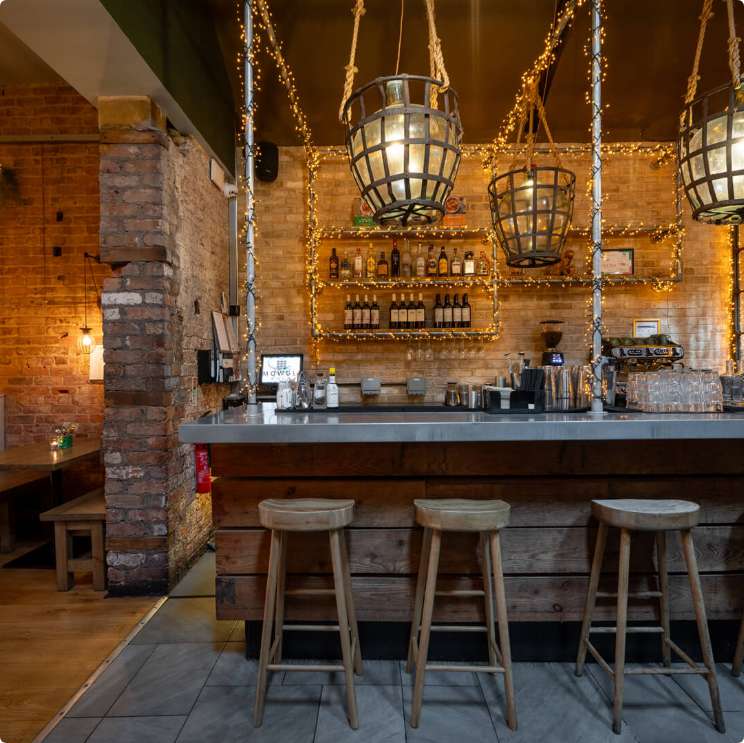
If a day spent walking the arcades, the market and the riverside has worked up an appetite, Mowgli Street Food on Boar Lane is a five-minute walk from the train station and right in the middle of everything covered in this guide. It’s an easy, no-fuss way to end a day in the city — sharing plates, bold spicing, and a genuinely warm atmosphere with vegetarian, vegan and non-gluten options on the menu. Book a table at Mowgli Leeds to round off your visit.