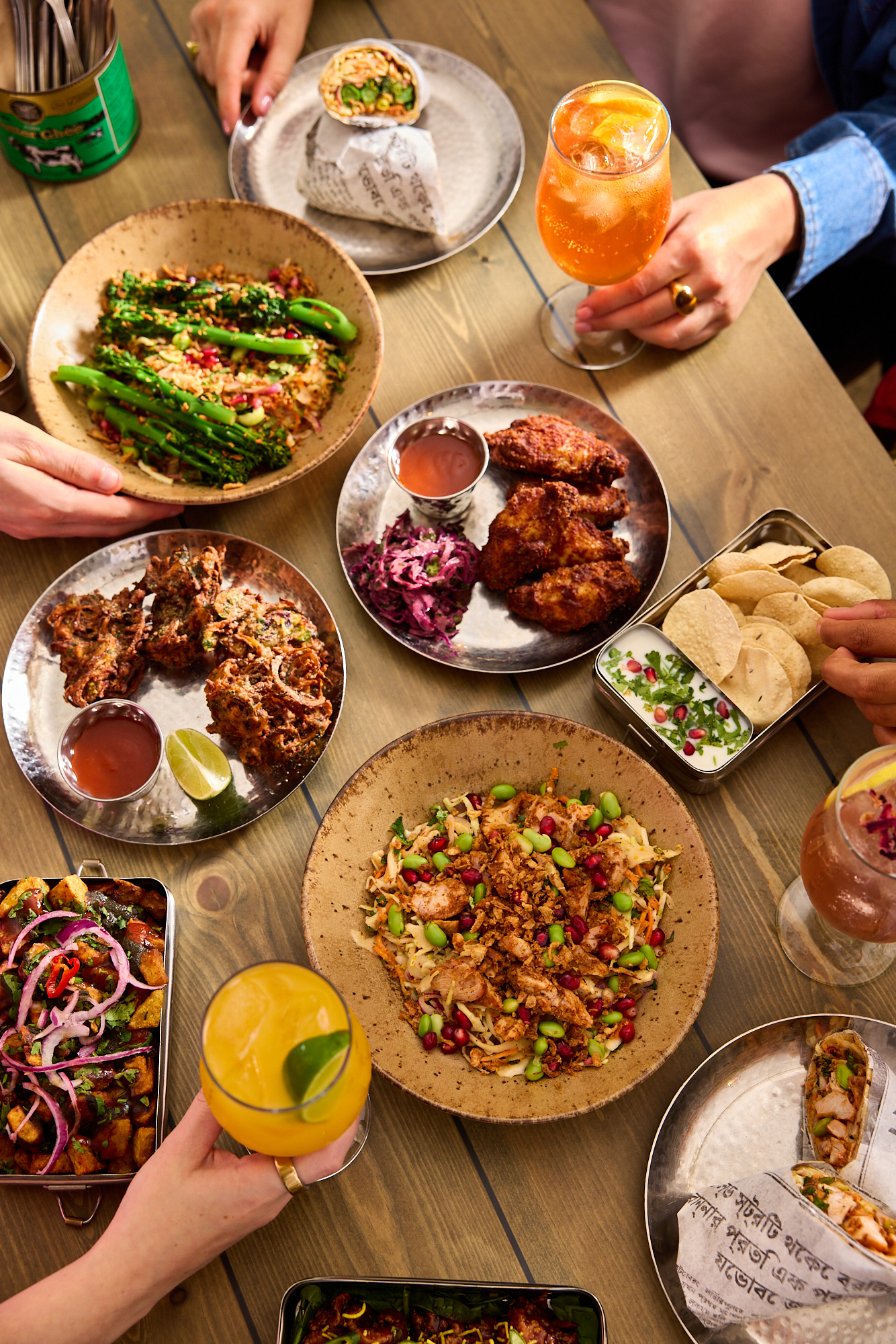
What makes an Indian restaurant feel more like a party than a meal?
Indian street food dining feels more like a party than a meal because the food is built for sharing, the flavours are bold enough to spark conversation, and the whole experience is designed around connection rather than formality. Unlike sit-down restaurant formats where everyone orders their own plate and retreats into their own world, Indian street food culture places communal plates at the centre of the table and lets the energy build from there. The questions below unpack exactly why that happens and what makes this style of dining so hard to replicate elsewhere.
What makes Indian street food dining so naturally social?
Indian street food dining is naturally social because it was never designed to be a solitary activity. Street food culture in India grew up in markets, temple courtyards, and busy roadside stalls where food was fast, affordable, and eaten standing up among strangers. That communal DNA is still present in every plate of chaat or bowl of dal served today.
The format itself removes the barriers that make restaurant dining feel stiff. There is no single centrepiece dish to wait for, no formal sequence of courses, and no pressure to pace yourself against someone else’s meal. Instead, a table fills up with small plates arriving at different moments, and everyone reaches, tastes, passes, and reacts. The conversation follows the food naturally.
There is also something about the flavour intensity of Indian street food that gets people talking. When a dish lands on the table with the tang of tamarind, the heat of green chilli, or the warmth of toasted cumin, people respond out loud. That shared reaction is the beginning of a good night.
How does sharing plates change the energy of a meal?
Sharing plates shift the energy of a meal from individual consumption to collective experience. When everyone at the table is eating the same things, reacting to the same flavours, and deciding together what to order next, the meal becomes a conversation rather than a transaction. The table becomes livelier, more spontaneous, and genuinely more fun.
There is a practical dimension to this too. Sharing plates mean more variety, which means more to talk about. One person discovers they love the Temple Dal, a red lentil dish simmered until tender and finished with toasted cumin, coriander, and lemon. Someone else goes straight back for a second helping of the Mother Butter Chicken, tandoori pieces in a rich, spiced tomato and yoghurt sauce finished with butter. That back-and-forth of discovery and recommendation keeps the energy at the table moving throughout the evening.
Groups that share plates also tend to stay longer. The meal has a natural rhythm of its own, with new dishes arriving and the table replenishing rather than winding down after a single course. That extended time together is exactly what makes a meal feel like more than just eating.
What role do spices and bold flavours play in the atmosphere?
Bold spices and vivid flavours act as a catalyst for atmosphere. They create sensory moments that people respond to instinctively and out loud, which keeps the energy at the table alive in a way that milder food simply does not. A dish that surprises you with its depth or brightness becomes something worth talking about immediately.
Indian cuisine works with a wide range of aromatics, from the smoky warmth of cumin to the brightness of fresh coriander and the slow heat of dried chillies. These are not background notes. They are the point of the dish, and when they are used well, they create a sequence of reactions that keeps the table engaged from the first bite to the last.
There is also a visual and aromatic dimension to this. The smell of slow-cooked lamb falling apart in a sauce of onion, plum, and chickpeas, or the sight of a richly spiced curry arriving at the table, creates anticipation before anyone has even picked up a fork. That anticipation is part of what makes the meal feel like an event rather than just dinner.
Why do Indian restaurants feel different from other casual dining spots?
Indian restaurants built around street food culture feel different from other casual dining spots because they carry a sense of warmth and informality that is structural rather than stylistic. The food is designed to be shared, the menus are built around variety and exploration, and the atmosphere reflects a tradition of hospitality that is genuinely welcoming rather than performed.
Most casual dining formats are built around individual plates and a clear beginning, middle, and end. Indian street food dining does not work that way. The table fills up gradually, the food arrives in waves, and the meal has a looser, more generous rhythm. That structure naturally creates a more relaxed and sociable experience.
The physical environment also plays a role. Spaces designed around swing seats, warm lighting, and a lively open layout encourage a different kind of behaviour than a restaurant with booths and dim mood lighting. When the room itself feels energetic, guests tend to match it.
What should you order to get the full street food experience?
To get the full Indian street food experience, order across the menu rather than sticking to one or two dishes. The point is variety and discovery, so a table that has chaat alongside a slow-cooked curry alongside a fresh dal will have a much more complete experience than one that plays it safe with familiar choices.
A good starting point is to anchor the table with one or two dishes that have real depth and richness, then build around them with lighter, brighter plates. The Mowgli House Lamb, slow-cooked until it falls apart in a sauce of onion, plum, and chickpeas, works well as that anchor. Around it, a bowl of Temple Dal and something from the street chaat section adds contrast and keeps the table interesting from start to finish.
For groups who want to keep things lighter, the menu has strong vegan options and dishes that are fresh and bright rather than heavy. The key is to order more than you think you need and let the table decide what to revisit. That is how street food is meant to work.
How Mowgli helps you find a great group dining experience near you
Mowgli Street Food is built around exactly the kind of dining described above: bold Indian street food, sharing plates, and a room that feels alive. Whether you are looking for a fun restaurant near you for a birthday, a casual group dinner, or something a bit different from the usual options, Mowgli makes it easy to find a spot and plan your visit. Here is what helps:
- 27 locations across the UK, from Edinburgh and Glasgow to London, Bristol, and beyond, so there is likely a Mowgli near you
- Full venue hire, semi-private hire, and private dining rooms available for groups who want to make a night of it
- A menu built for sharing, with street chaat, slow-cooked curries, fresh dal, and strong vegan options all on the same table
- A lively, informal atmosphere with swing seats and warm lighting that suits groups of all sizes
- Event enquiries welcome even at locations not listed as available, just get in touch through the website
If you are looking for Indian restaurants near me or somewhere with real energy for a group, find your nearest Mowgli and book a table. And if you are planning something bigger, take a look at the event hosting options to see what is possible.
Related Articles
- Where Can You Book a Restaurant for a Group Celebration in Glasgow?
- Why shared experiences beat physical gifts this Christmas
- Where Can You Book a Group Meal Near Ecclesall Road in Sheffield?
- How do you pick the best Indian dishes for sharing with cocktails?
- The Leeds Food Scene: Markets, Food Halls and Where to Eat