What’s the best Indian food to order for a birthday celebration?
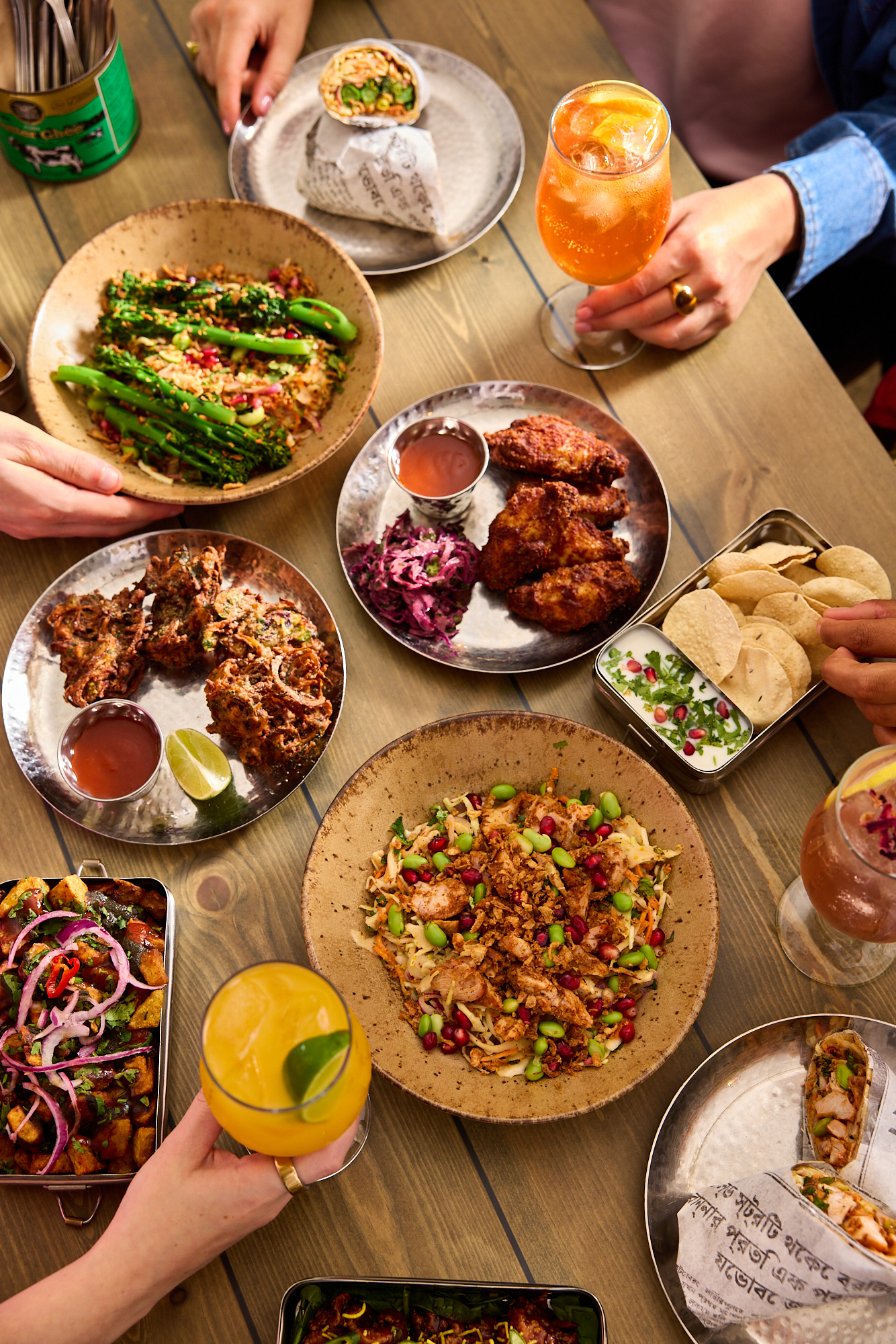
The best Indian food for a birthday celebration centres on dishes built for sharing: rich curries, fresh street chaat, soft breads, and vibrant sides that let everyone dig in together. Indian food is one of the few cuisines where the more dishes you order, the better the meal gets, which makes it a natural fit for a group celebration. Below, you’ll find answers to the most common questions about ordering Indian food for a birthday, from how many dishes to choose to what works for guests who’ve never tried Indian food before.
What Indian dishes work best for sharing at a birthday?
The best Indian dishes for sharing at a birthday are slow-cooked curries, street chaat, tandoori wraps, and lentil dishes that hold their flavour well across a table. Look for dishes with depth and variety, things that contrast in texture and spice level, so guests can mix and match across the spread rather than being locked into a single plate.
A good sharing spread for a birthday typically combines a few key categories. A rich, slow-cooked curry like butter chicken or a braised lamb dish gives the table something indulgent and crowd-pleasing. A lentil dish, such as a temple dahl made from red lentils simmered with toasted cumin, coriander, and lemon, adds warmth and substance without being heavy. Street chaat brings freshness and brightness, cutting through the richer dishes with sharp, tangy flavour. Breads and wraps give guests something to scoop and dip with, which naturally encourages the kind of relaxed, communal eating that makes a birthday dinner feel celebratory rather than formal.
The key is variety across heat, texture, and richness. Aim for at least one mild, one medium, and one bolder dish so every guest finds something that suits them, without the table feeling like it’s been ordered from a single flavour note.
How many dishes should you order for a birthday group?
For a birthday group eating Indian food in a sharing style, a good rule of thumb is roughly one dish per person, plus one or two extra for variety. So a table of six would do well with seven or eight dishes across curries, sides, and street food, with bread on the side. This ensures nobody goes short, and there’s always something new to try.
For smaller groups of four to six, three or four main dishes, one or two sides, and a couple of bread options gives everyone plenty without the table becoming overcrowded. For larger birthday parties of eight or more, scale up gradually rather than ordering one of everything on the menu. Choosing dishes in complementary pairs, a rich curry alongside a lighter lentil, a creamy sauce next to something with a bit of heat, keeps the spread balanced and interesting.
It’s also worth thinking about pace. Indian sharing meals work best when dishes arrive together rather than in staggered courses, so the table can graze freely and guests can combine flavours as they go. If you’re booking a group dining event, it’s worth asking the restaurant about how they time shared plates for larger parties.
What are the best Indian food options for health-conscious guests?
Indian food is genuinely one of the healthier global cuisines when ordered thoughtfully. Lentil dishes, vegetable-based chaat, and tandoori-cooked proteins are all naturally lower in saturated fat and high in plant-based nutrients. Many Indian dishes are vegan by default, and the use of fresh spices means flavour doesn’t depend on cream or butter.
For health-conscious guests, lentil dishes are an excellent anchor for the meal. Red or black lentils simmered with aromatic spices are high in protein and fibre, filling without being stodgy. Street chaat, made with chickpeas, fresh herbs, and tangy tamarind, is light and bright. Tandoori dishes, where meat or vegetables are cooked in a clay oven, use far less oil than pan-fried alternatives and let the spicing do the work.
It’s a common misconception that Indian food is automatically heavy or calorie-dense. Real Indian home cooking, the kind rooted in everyday family meals rather than restaurant excess, is often naturally balanced. Dishes built around legumes, fresh vegetables, and whole spices can be genuinely nourishing, which is part of what makes Indian food such a good fit for groups with mixed dietary preferences. A birthday table doesn’t have to choose between indulgence and eating well.
Which Indian dishes suit guests who are new to Indian food?
For guests who are new to Indian food, the best starting points are mild, familiar-textured dishes with approachable flavour profiles. Butter chicken is widely considered the most accessible Indian curry, with its rich tomato and yoghurt base and gentle warmth. Lentil dishes and tandoori wraps are also excellent entry points because they’re recognisable in format even if the spicing is new.
The goal is to give first-timers something that feels welcoming rather than challenging. A slow-cooked lamb curry that falls apart in the sauce, finished with onion and chickpeas, tends to land well because the texture is comforting and the flavour builds gradually. Breads like naan or roti give guests something familiar to anchor the meal, and they’re useful for moderating how much sauce or spice lands on each bite.
Street chaat can be a brilliant introduction too, because the portions are small and the flavours are distinct enough to be interesting without being overwhelming. Encouraging new guests to try a small amount of several dishes rather than committing to one is usually the best approach. Indian food rewards curiosity, and a birthday meal is a relaxed, low-pressure setting to explore it for the first time.
Should you go for a set menu or order à la carte for a birthday?
For a birthday group, a set menu tends to work better than ordering à la carte when the group is large or has varied preferences. A set menu removes the decision fatigue of coordinating individual orders across a big table, ensures variety is built in from the start, and often represents better value per head. À la carte works well for smaller, more adventurous groups who want full control over the spread.
The main advantage of a set menu for a birthday is simplicity. When you’re trying to coordinate a group of eight or more people, taking the ordering process off the table entirely means more time for conversation and celebration. A well-designed set menu for Indian food will typically include a mix of street food starters, one or two curries, a vegetarian option, and bread, which covers most bases without requiring guests to navigate an unfamiliar menu independently.
À la carte gives you more flexibility to tailor the meal to the group’s specific tastes, which can be worth it for smaller gatherings where everyone knows what they like. The risk is that without a clear structure, groups can under-order on variety or accidentally double up on similar dishes. If you’re going à la carte for a birthday, it helps to designate one person to coordinate the order rather than trying to reach consensus across the whole table.
What makes an Indian restaurant the right choice for a birthday celebration?
Indian restaurants are a strong choice for birthday celebrations because the food is designed to be shared, the flavours are bold and memorable, and the atmosphere in a good Indian restaurant tends to be lively and social rather than hushed and formal. The sharing format naturally creates a sense of occasion without requiring a set-piece dining experience.
Beyond the food itself, Indian restaurants tend to accommodate groups well. The menu depth means there’s almost always something for vegetarians, vegans, and guests with dietary requirements, which reduces the stress of finding somewhere that works for everyone. The dishes are also naturally suited to a relaxed, extended meal where the table grazes across courses rather than eating in a rigid sequence.
A birthday dinner works best when the setting matches the energy of the group. Indian street food restaurants, in particular, tend to have a warmth and informality that makes guests feel at ease from the moment they arrive, which is exactly the right mood for a celebration. Good food, shared plates, and a room that feels alive make for a birthday that people actually remember.
How Mowgli helps with planning a birthday celebration
Mowgli Street Food is built for exactly this kind of occasion. With 27 restaurants across the UK, from Manchester and Leeds to London, Edinburgh, and Bristol, there’s likely a Mowgli near you. Here’s what makes it a strong choice for a birthday group:
- Three hire options: full venue hire for exclusive use, semi-private hire for a lively but contained space, and private dining rooms for more intimate gatherings
- A menu designed for sharing: from Temple Dahl and Mowgli House Lamb to Mother Butter Chicken and street chaat, the food travels well across a table
- Vegan and gluten-friendly options throughout: no need to worry about catering for guests with different dietary needs
- A welcoming, social atmosphere: swing seats, fairy lights, and bold food make it a setting that feels like a celebration rather than just a meal out
- Flexible bookings: even restaurants not listed as event venues may be available for special occasions upon request
If you’re looking for Indian restaurants near you for a birthday, Mowgli is worth a look. Find your nearest restaurant and enquire about availability for your group at mowglistreetfood.com/restaurants.