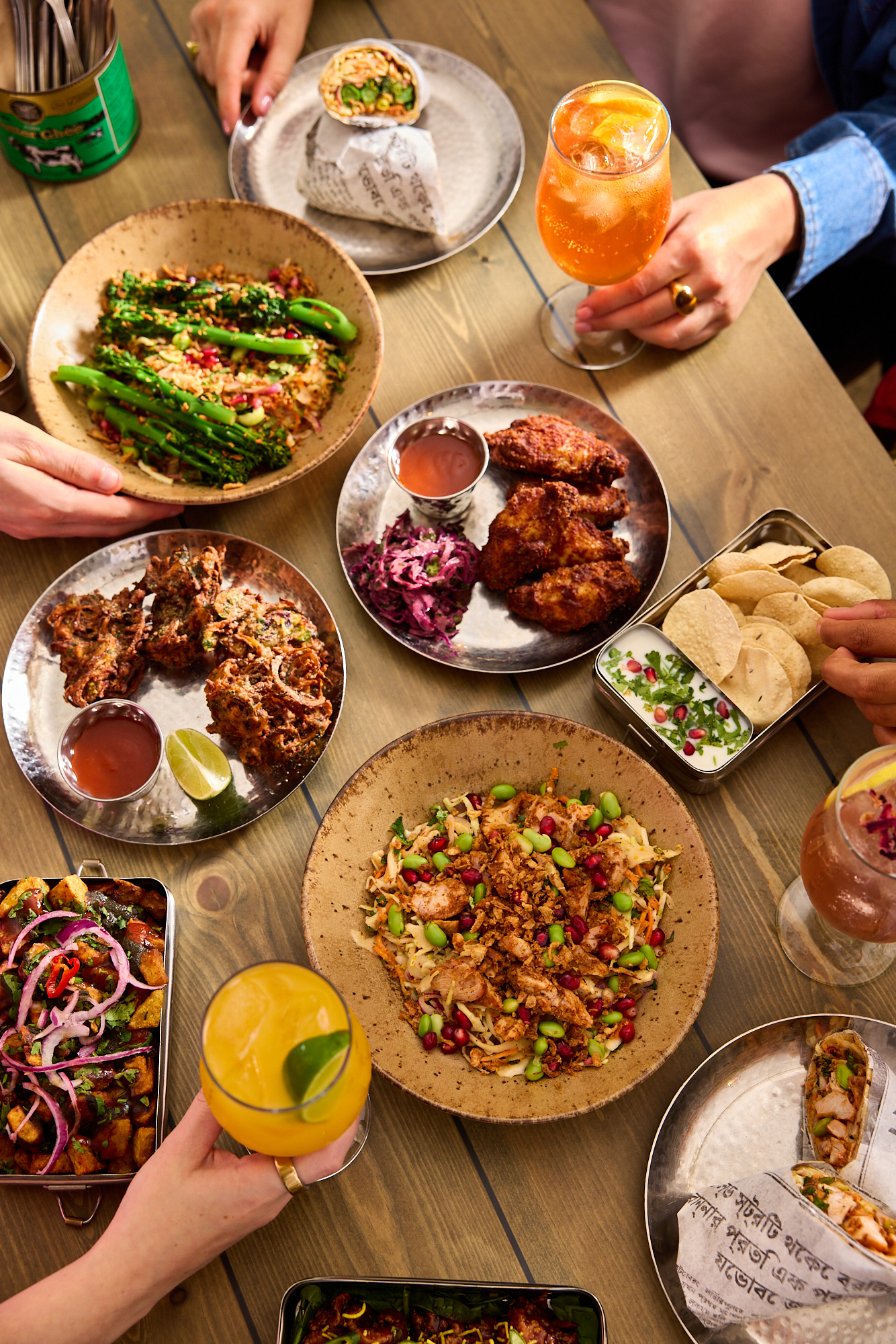
Why do Indian sharing plates make the perfect group dining experience?
Indian sharing plates make the perfect group dining experience because they turn a meal into something communal, generous, and genuinely fun. Instead of everyone ordering their own dish and eating in parallel, sharing plates bring people together around the table in the truest sense. Below, we answer the most common questions about group dining with Indian food, from how many dishes to order to where to find the best spread in the UK.
What makes sharing plates better for groups than individual dishes?
Sharing plates create a more social, flexible, and enjoyable meal than individual orders. When dishes arrive at the centre of the table, conversation flows more naturally, everyone gets to try more variety, and the meal becomes a shared experience rather than a series of parallel ones. For groups, that difference matters enormously.
With individual dishes, you commit to one choice and stick with it. With sharing plates, the table builds the meal together. Someone orders the lamb, someone else goes for the lentils, and suddenly you have a spread that covers far more ground than any single person could have managed alone. There is something genuinely generous about that dynamic.
Sharing plates also take the pressure off. Nobody has to make the perfect call on a menu they may not know well. If something is not quite to your taste, there is always something else on the table. That flexibility makes group dining feel lighter and more relaxed, which is exactly what a good night out should feel like.
Why is Indian cuisine particularly suited to sharing?
Indian cuisine is built for sharing because that is how it has always been eaten. Across India, meals are served as a collection of dishes placed at the centre of the table, with everyone helping themselves. The variety of flavours, textures, and cooking styles within a single Indian meal makes sharing the only way to do it proper justice.
A well-ordered spread of Indian food will typically include something rich and slow-cooked, something bright and fresh, something with a little heat, and something cooling to balance it all out. No single dish can carry all of that. The cuisine is designed to work as an ensemble, with each dish playing a different role in the overall meal.
Street food traditions reinforce this further. Indian street food has always been about small, bold bites eaten on the move or gathered around a stall. Dishes like chaat are made to be tasted rather than sat over, and that spirit translates directly to the sharing table. The food is vibrant, unapologetically flavourful, and made to be passed around.
How many sharing dishes should a group order?
A good rule of thumb for Indian sharing plates is two to three dishes per person, depending on portion size and appetite. For a group of four, that means roughly eight to twelve dishes across the table, giving everyone plenty of variety without anyone going hungry or the table becoming unmanageable.
The exact number depends on a few things worth thinking through before you order:
- Portion size: Some dishes are more substantial than others. A slow-cooked lamb or a rich butter chicken will go further than a lighter chaat or a side of dhal.
- Group appetite: A group that has come straight from work will eat differently to one that has been grazing all afternoon.
- Variety over volume: It is better to order a wider range of dishes in moderate quantities than to over-order on a few. Variety is the whole point.
When in doubt, order a little less than you think you need and see how the table goes. Most good restaurants are happy to bring out additional dishes as you go, which keeps the meal feeling lively rather than overwhelming from the start.
What types of Indian dishes work best as sharing plates?
The dishes that work best as Indian sharing plates are those with bold, distinct flavours that complement rather than repeat each other. A strong sharing spread should include something slow-cooked and rich, something fresh and light, a bread or rice to anchor the meal, and at least one dish with a little heat or brightness to keep things interesting.
Some reliable categories to build from:
- Slow-cooked curries and stews: Dishes like a house lamb simmered with onion, plum, and chickpeas, or a butter chicken finished with spiced tomato and yoghurt, bring richness and depth to the table. These are the dishes people come back for.
- Lentil dishes: A well-made dhal, like Temple Dahl with toasted cumin, coriander, and lemon, is one of the most underrated sharing dishes there is. It is fresh, bright, and pairs beautifully with almost everything else on the table.
- Street chaat: Light, punchy, and designed to be eaten in a few bites, chaat adds texture and contrast to a heavier spread.
- Tandoori dishes and wraps: Smoky, charred, and full of flavour, these work well as something to pick at between the larger dishes.
The key is balance. If everything on the table is rich and heavy, the meal becomes overwhelming. Aim for a mix of textures and intensities, and let the dishes talk to each other.
Are Indian sharing plates a good option for mixed dietary groups?
Yes, Indian sharing plates are one of the best options for groups with mixed dietary needs. Indian cuisine naturally includes a wide range of vegan, vegetarian, and gluten-friendly dishes, often as the main event rather than an afterthought. A well-ordered spread can accommodate meat-eaters, vegans, and those avoiding gluten without anyone feeling like they have been given a compromise.
Many of the most celebrated dishes in Indian cooking are plant-based by tradition. Lentil dhals, vegetable curries, and chaat dishes are not alternatives to the real menu. They are the menu. That means vegan and vegetarian diners at a sharing table are eating from the same pool of genuinely great food as everyone else.
For groups that include people with gluten sensitivities, it is worth checking with the restaurant before ordering, as some dishes and sauces may contain wheat. Most good Indian restaurants will be happy to guide you through the options. The variety within Indian cuisine means there is almost always a route through for every dietary need without the meal feeling restricted.
Where can you find the best Indian sharing plates in the UK?
The best Indian sharing plates in the UK are found in cities with a strong independent restaurant scene, from Manchester and Leeds to London, Bristol, and Edinburgh. If you are searching for an Indian restaurant near me that specialises in sharing-style street food, look for places that cook fresh each day and build their menus around Indian home cooking rather than the traditional Anglo-Indian curry house format.
When choosing a restaurant for group dining, a few things are worth looking for:
- A menu built around sharing rather than individual plates
- Dishes cooked fresh rather than batch-produced in advance
- A range of options that works for different dietary needs without a separate “vegan menu” bolted on as an afterthought
- A lively, social atmosphere that suits a group rather than a hushed, formal setting
The best group dining experiences tend to happen in places where the food and the room are designed to work together. Good sharing plates deserve a table that feels worth gathering around.
How Mowgli helps you get group dining right
Mowgli Street Food is built around exactly the kind of meal described in this article: fresh, flavour-packed Indian street food served in the spirit of sharing, in lively restaurants across the UK. Here is what makes it a strong choice for groups:
- Dishes cooked fresh each morning, from slow-cooked heirloom curries to bright, light street chaat
- A menu with full vegan and gluten-friendly options woven throughout, not added on the side
- Restaurant spaces designed for social dining, with full venue hire, semi-private hire, and private dining rooms available for group events and celebrations
- Locations in 26 cities and towns across the UK, from London and Manchester to Edinburgh, Bristol, and beyond
Whether you are planning a casual catch-up or something more organised, find your nearest Mowgli and see what a proper sharing spread looks like.