Why is Cardiff’s dining scene growing so fast in 2026?
Cardiff’s dining scene is growing fast because the city has reached a tipping point where rising footfall, a younger urban population, and a genuine appetite for diverse, quality food have all converged at once. Independent operators and established restaurant groups alike are recognising Cardiff as one of the most commercially exciting food cities in the UK right now. The questions below unpack exactly what is driving that momentum and where to find the best of it.
What’s driving Cardiff’s restaurant boom right now?
Cardiff’s restaurant boom is being driven by a combination of demographic shifts, city centre investment, and a dining public that is increasingly confident and curious about what it eats. The city’s population of students, young professionals, and culturally engaged residents has grown steadily, and that audience demands more from restaurants than a safe, predictable meal out.
City centre regeneration has played a significant role. Areas around St Mary Street, Church Street, and the Cardiff Bay waterfront have seen sustained investment in commercial and leisure space, giving restaurateurs the physical infrastructure to open and scale. At the same time, Cardiff benefits from a strong events calendar, with major sporting fixtures, live music, and festivals bringing consistent footfall that supports a wide range of hospitality businesses throughout the year.
There is also a cultural confidence at work. Cardiff has shed any lingering reluctance to position itself alongside cities like Bristol, Leeds, or Edinburgh as a genuine food destination. Local food media, social sharing, and word of mouth have all accelerated that shift, making it easier for new openings to build an audience quickly.
Which cuisines are leading Cardiff’s food scene growth?
Indian, East Asian, and plant-forward cuisines are leading Cardiff’s food scene growth, reflecting broader national trends while also responding to the specific tastes of Cardiff’s diverse and food-literate dining public. These are not passing trends but sustained shifts in how people in Cardiff want to eat.
Indian street food in particular has moved well beyond the traditional curry house format. Diners are increasingly drawn to the kind of food that reflects how people in India actually eat at home and on the street: lighter, brighter, herb-led dishes rather than heavy sauces built for a different era. This shift has opened the door for operators who can deliver that authenticity with real skill.
East Asian cuisines, from Japanese ramen to Korean barbecue, have also found a strong and loyal following in Cardiff, as has the broader movement toward plant-based eating. Restaurants that can serve genuinely satisfying vegan food without making it feel like a compromise are thriving, because the demand is there and the competition to meet it well is still relatively low.
How does Cardiff’s dining scene compare to other UK cities?
Cardiff’s dining scene punches above its weight relative to its size, offering a depth and variety of independent restaurants that rivals cities with larger populations. Compared to Birmingham, Manchester, or Leeds, Cardiff is still building its critical mass, but the pace of change in 2026 means that gap is closing faster than many expected.
Where Cardiff genuinely leads is in the character of its food culture. The city has a strong independent streak, with fewer of the identikit, chain-heavy high streets that can flatten a food scene elsewhere. That independence creates space for operators with a distinct point of view to find their audience without competing solely on price or volume.
Bristol is probably the most useful comparison point: a similarly sized city with a reputation for food that took years to build but is now well established. Cardiff appears to be on a comparable trajectory, with the added advantage of lower operating costs and a city centre that is genuinely walkable and socially connected. For anyone tracking UK restaurant cities to watch, Cardiff belongs firmly on that list.
What areas of Cardiff have the most exciting food offerings?
The most exciting food in Cardiff is concentrated in the city centre, particularly around Church Street, St Mary Street, and the Victorian and Edwardian arcades that run between them. These covered arcades, a distinctive feature of Cardiff’s urban fabric, have become home to some of the city’s most interesting independent food businesses.
Cardiff Bay has developed a separate identity as a destination for waterfront dining, with a mix of established operators and newer arrivals taking advantage of the setting. It draws a slightly different crowd from the city centre, leaning toward longer, more relaxed meals rather than quick lunches or casual drop-ins.
Roath and Canton, two inner-city neighbourhoods, have built reputations as residential food hubs where independent cafes, delis, and small restaurants serve local communities with real personality. These areas are less about destination dining and more about the kind of everyday food culture that signals a city’s food scene has genuine roots rather than just a glossy surface.
Why are healthy and plant-based restaurants growing in Cardiff?
Healthy and plant-based restaurants are growing in Cardiff because the city’s core dining demographic, broadly aged 25 to 45 and health-conscious without wanting to sacrifice flavour or experience, is actively seeking food that reflects those values. This is not a niche preference but a mainstream shift in how a significant portion of Cardiff’s diners approach eating out.
The demand is being met by operators who understand that plant-based food has to earn its place on the table through taste, not just principle. Dishes built around lentils, chickpeas, fresh herbs, and bold spicing can be deeply satisfying and genuinely exciting, and the restaurants that demonstrate this are finding loyal audiences quickly.
There is also a values dimension to this growth. Diners who care about what they eat tend to care about where their food comes from, how it is made, and what the restaurant stands for beyond the plate. Operators who can speak honestly to those concerns, without overclaiming or resorting to marketing language, are building the kind of trust that turns first-time visitors into regulars.
Where should you eat in Cardiff for authentic global flavours?
For authentic global flavours in Cardiff, the city centre arcades and Church Street area offer the strongest concentration of restaurants serving food with genuine culinary roots rather than approximations built for a cautious audience. Cardiff’s best global restaurants tend to be run by people with a direct connection to the food they serve, and that shows in the cooking.
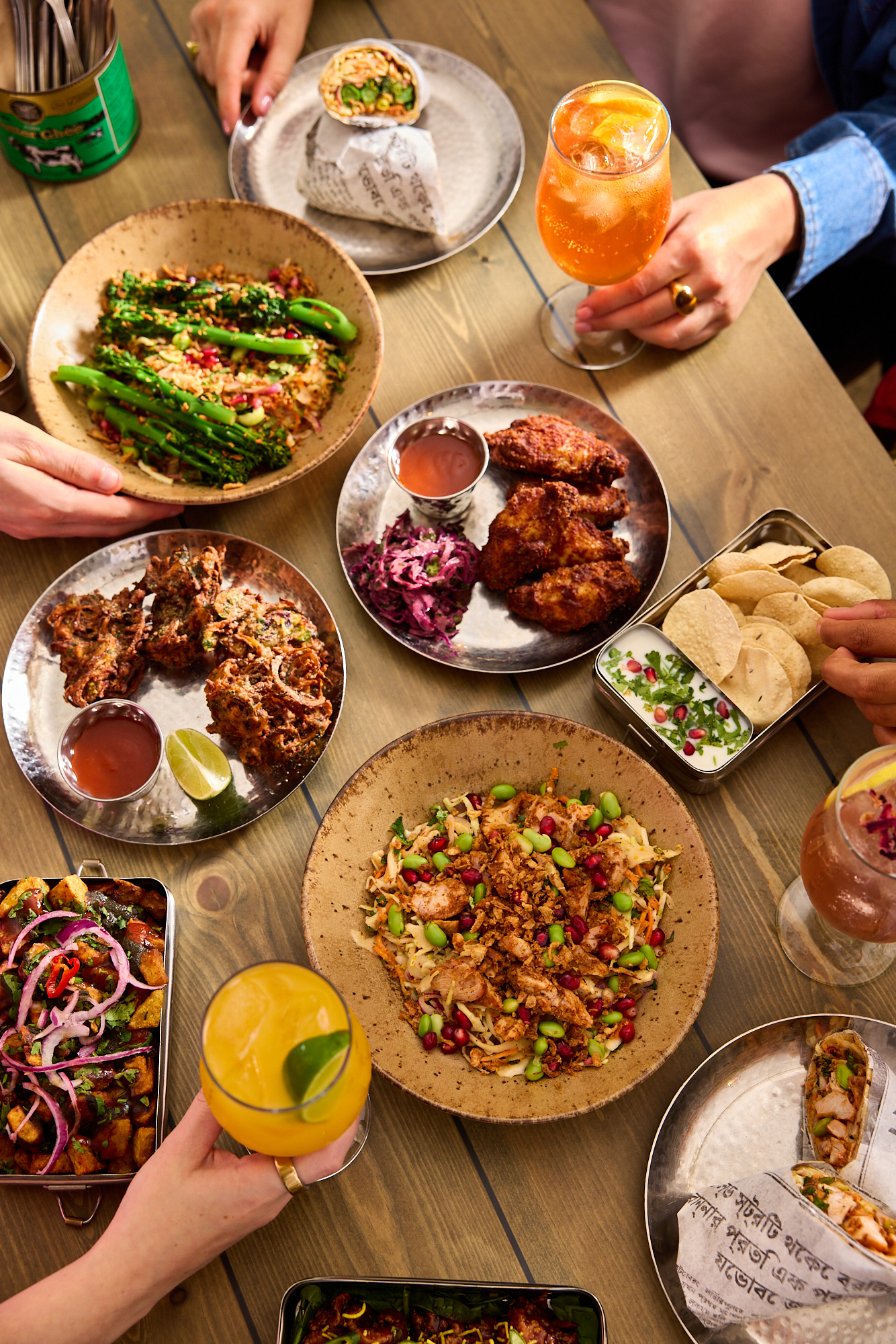
Indian street food is one of the most rewarding choices in Cardiff right now. Mowgli Street Food authentic Indian restaurant, located at Unit C, 5 to 10 Church Street, brings the kind of food that reflects real Indian home cooking and street culture: dishes like Temple Dahl, slow-simmered with toasted cumin and finished with lemon, or Mowgli House Lamb, an heirloom recipe cooked with onion, plum, and chickpeas until it falls apart. This is food that is fresh, light, and full of flavour without leaning on the heavy sauces that defined an older generation of Indian restaurants.
Beyond Indian food, Cardiff has strong options across East Asian, Middle Eastern, and Latin American cuisines, particularly in the independent-heavy neighbourhoods of Roath and Canton. The common thread among the best of them is specificity: restaurants that know exactly what they are cooking and why, rather than trying to cover every base at once.
How Mowgli Street Food brings authentic Indian flavours to Cardiff
Mowgli Street Food is a natural answer to what Cardiff’s dining scene is increasingly asking for: food that is healthy, plant-forward, genuinely flavourful, and rooted in a real culinary tradition rather than a reinvented one. Here is what Mowgli offers Cardiff diners:
- Fresh daily cooking — dishes are prepared each morning in the restaurant, not reheated or batch-produced off-site
- Sharing plates and street food bites — designed for the social, informal style of eating that Cardiff’s younger dining public gravitates toward
- Strong vegan and non-gluten options — including set menus for both dietary requirements.
- Heirloom recipes — dishes like Mowgli House Lamb and Temple Dahl carry real family history, not invented backstories
- Event and private dining hire — the Cardiff restaurant offers full venue hire, semi-private hire, and private dining rooms for groups and special occasions, bookable through the Mowgli events page
If you are looking for somewhere to eat in Cardiff that reflects everything the city’s food scene is moving toward, swing by and see what’s on. You can find the Cardiff restaurant and every other UK location on the Mowgli restaurants page.
Related Articles
- What's the best Indian dish to order after a night out?
- What makes an Indian restaurant feel more like a party than a meal?
- How do you pick the best Indian dishes for sharing with cocktails?
- Why is Bristol considered one of the UK's best food cities?
- When is the best time to explore Leeds' restaurant scene?