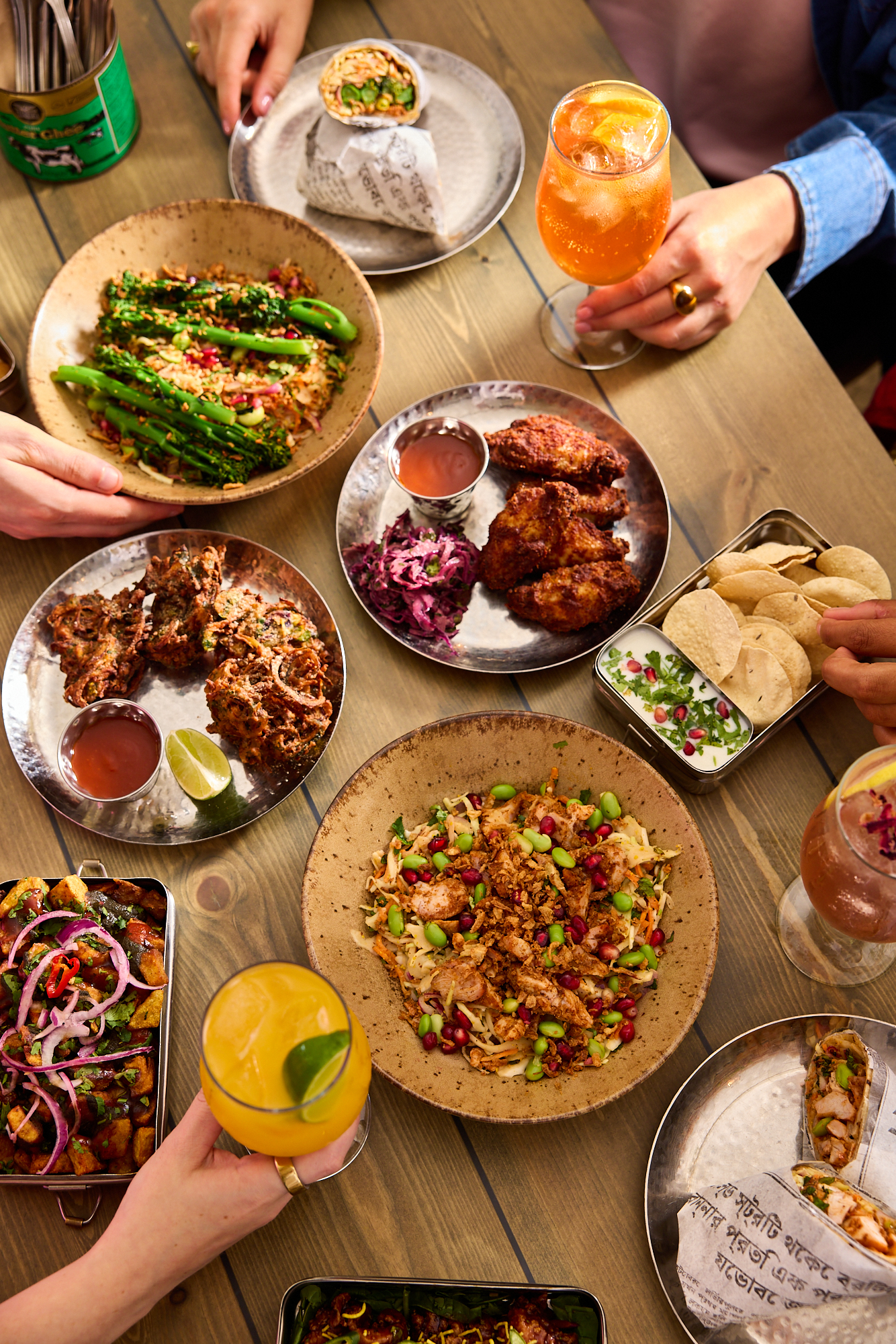
What is an Indian feasting menu and what does it include?
An Indian feasting menu is a shared set menu designed for groups, built around multiple dishes brought to the table together so everyone eats from the same spread. Rather than ordering individually, the whole table shares a curated selection of starters, mains, sides, and sometimes desserts. Below, we unpack everything you need to know about how feasting menus work, what they include, and when they are the right choice for your occasion.
What dishes are typically included in an Indian feasting menu?
An Indian feasting menu typically includes a mix of street food bites or chaat to start, followed by two or three main curries, a lentil dish, rice or bread, and a selection of sides and chutneys. The dishes are chosen to complement each other, covering a range of flavours, textures, and spice levels across the spread.
The beauty of a feasting menu is in the variety it puts on the table at once. You might find a slow-cooked lamb dish sitting next to a bright, sharp chaat, with a rich butter chicken and a simple, warming dal rounding things out. At Mowgli, for example, the Temple Dahl is made from red lentils simmered until tender and finished with toasted cumin, coriander, and lemon, while the Mowgli House Lamb falls apart after slow cooking with onion, plum, and chickpeas. These are the kinds of dishes that anchor a proper Indian feast.
Bread, usually a soft flatbread or tandoori-style option, is almost always part of the mix, as are rice and a few condiments to sharpen or cool each mouthful. The overall effect is a table that feels generous and alive, with something different to reach for at every turn.
How does sharing food work in Indian dining culture?
In Indian dining culture, sharing food is the default, not the exception. Dishes are placed at the centre of the table and eaten communally, with everyone helping themselves throughout the meal. There is no fixed order of starter, then main, then dessert in the Western sense. Food arrives and is enjoyed as it comes, with conversation woven through the whole experience.
This approach to eating is deeply rooted in the idea that a meal is a social event, not just a transaction. Sharing from the same dishes creates a sense of togetherness that individual plating simply cannot replicate. The more people at the table, the wider the variety of dishes that can be ordered, which is part of why Indian feasting menus tend to be more satisfying the bigger the group.
It also means there is no pressure to choose just one thing. You taste a little of everything, and the meal builds naturally across the table rather than arriving in a single bowl in front of you.
How many people does an Indian feasting menu serve?
Most Indian feasting menus are designed for a minimum of two people, but they work best for groups of four or more. The larger the group, the more dishes can be included, which means a broader range of flavours and a more satisfying spread across the table.
For smaller groups of two to four, a feasting menu will usually cover three to five dishes. For larger parties of six or more, the menu expands accordingly, often adding extra mains, additional sides, and more variety in the street food or chaat selections. Many restaurants set a per-head price and scale the number of dishes to match the group size, so the ratio of food to people stays consistent.
If you are booking a private dining event or a group celebration, a feasting menu is often the most practical and enjoyable way to feed everyone without the complexity of individual orders.
Are Indian feasting menus suitable for vegetarians and vegans?
Yes, Indian feasting menus are well suited to vegetarians and vegans. Indian cuisine has a long tradition of plant-based cooking, and many of the most beloved dishes on a feasting menu, including lentil dals, chickpea curries, and vegetable chaats, contain no meat or dairy at all. Restaurants with a thoughtful menu will always have strong vegan and vegetarian options to anchor a feast.
At Mowgli, a significant portion of the menu is naturally vegan or can be adapted, reflecting the reality that real Indian home cooking has always leaned heavily on pulses, vegetables, and spices rather than meat. The Temple Dahl, for instance, is a vegan dish by nature, built on red lentils and finished with warming spices. A feasting menu can be composed entirely of plant-based dishes without any sense of compromise.
If you are dining with a mixed group of meat-eaters and vegans, a feasting menu is actually one of the most practical formats, because the variety built into the spread means there is always something for everyone on the table without the need to order separately.
What’s the difference between a feasting menu and a tasting menu?
The key difference between a feasting menu and a tasting menu is the style of dining they create. A tasting menu is a chef-led sequence of small, individually plated courses designed to be eaten in a specific order, usually in a fine-dining context. A feasting menu is communal, informal, and generous, with dishes shared across the table rather than presented one by one to each guest.
Tasting menus are about precision and progression. Each course is a considered statement, often with wine pairings, and the pace is controlled by the kitchen. Feasting menus are about abundance and togetherness. The food lands on the table and the group digs in together, with the conversation and the sharing as much a part of the experience as the food itself.
In terms of price, tasting menus in fine-dining settings can be significantly more expensive, often reflecting the labour and craft involved in each individual plate. Feasting menus tend to offer strong value because the per-head cost covers a wide variety of dishes, and the sharing format means less goes to waste.
For a lively group occasion, a feasting menu almost always wins. For a more intimate, course-by-course culinary experience, a tasting menu serves a different purpose entirely.
When is an Indian feasting menu the right choice?
An Indian feasting menu is the right choice when you are eating with a group and want the meal itself to be part of the occasion. Birthdays, work celebrations, family get-togethers, and casual nights out with friends all suit the feasting format well, because the shared dishes give the table something to gather around and talk about.
It is also the right choice when your group has a mix of preferences or dietary needs. Because a feasting menu covers a broad range of dishes, it naturally accommodates different tastes without anyone having to negotiate or compromise. Meat-eaters, vegetarians, and those eating vegan can all find something to reach for.
If you are short on time or simply want to avoid the friction of everyone studying a menu and ordering individually, a feasting menu removes that friction entirely. The food is decided, the variety is built in, and the focus shifts to the people around the table rather than the logistics of the meal.
Where a feasting menu is less ideal is for a quiet one-to-one dinner where individual choices feel more personal, or in a setting where the occasion calls for a more formal, course-by-course structure.
How Mowgli brings the feast to your group
Mowgli Street Food offers a genuine Indian feasting experience across its restaurants throughout the UK, with options that work whether you are planning a casual group dinner or a full private event. Here is what is available:
- Full venue hire for exclusive use of an entire restaurant, complete with swing seats and the full Mowgli atmosphere
- Semi-private hire for groups who want some privacy while staying connected to the energy of the restaurant
- Private dining rooms for more intimate occasions, with ambient lighting and a relaxed, rustic feel
- Set feasting menus built around Mowgli’s street food dishes, including vegan and gluten-friendly options, so every guest is looked after
- Restaurants across more than 25 UK locations, from Manchester and Edinburgh to London, Bristol, and beyond
If you are planning a group meal or a special event, get in touch with the Mowgli events team to find out what is available at your nearest restaurant. The team responds within 48 hours to talk through spaces, menus, and what the occasion calls for.