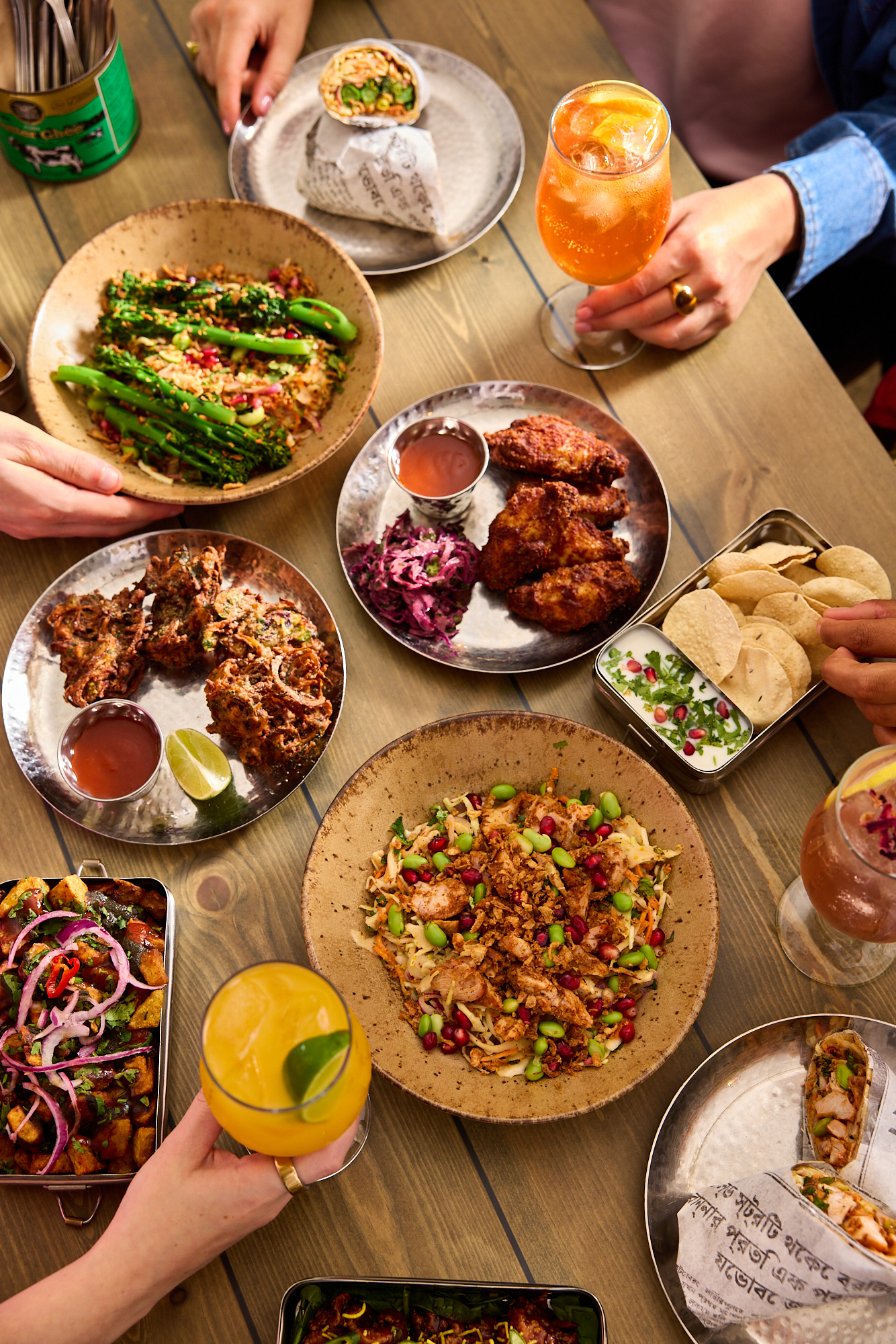
The ultimate Indian sharing feast is built around variety, balance, and rhythm. Aim for a mix of textures and heat levels — something bright and fresh alongside something slow-cooked and rich, a few light bites alongside something more substantial. The best sharing tables feel generous without being overwhelming, and the food arrives in a way that keeps the conversation going. Below, we answer the questions that actually help you plan it well.
What dishes work best for an Indian sharing feast?
The best dishes for an Indian sharing feast are those that travel well across the table and reward a second scoop. Think slow-cooked lentils, tender meat dishes that fall apart rather than need cutting, street chaat that delivers a sharp, tangy hit, and wraps that can be torn and passed around. Variety is what makes a sharing table sing.
A well-rounded Indian sharing spread usually includes at least one pulse-based dish, one meat or protein dish, one street food bite, and a bread or wrap element. Lentils are a cornerstone of Indian home cooking for good reason — they are filling, deeply spiced, and naturally vegan. A dish like Temple Dahl, made from red lentils simmered until tender and finished with toasted cumin, coriander, and lemon, does exactly what a sharing table needs: it anchors everything else without dominating.
Alongside that, a slow-cooked meat dish adds richness. Mowgli House Lamb, simmered with onion, plum, and chickpeas until it falls apart, is the kind of heirloom recipe that makes the whole table lean in. Pair it with something lighter and sharper, like street chaat, and you have a table that covers every register of flavour.
How many dishes should you order for an Indian sharing meal?
For an Indian sharing meal, a good rule of thumb is three to four dishes for two people, scaling up by roughly one to two dishes per additional guest. This keeps the table full without waste. The goal is abundance that feels generous, not a pile-up that leaves everyone too full to enjoy the last few plates.
The key is not just quantity but composition. A table of four might order two substantial dishes, one street food plate, one vegetable or pulse dish, and bread on the side. That spread gives everyone something to return to without any single dish running out too fast. If your group includes people with different appetites or dietary preferences, lean slightly heavier on the plant-based options — they tend to be lighter and go further.
It is also worth ordering in stages if the restaurant allows it. Start with smaller, sharper dishes that wake up the palate, then bring in the richer, slower-cooked plates. This approach mirrors the way food is eaten across much of India, where the meal unfolds rather than arrives all at once.
What’s the difference between Indian street food and restaurant curry dishes?
Indian street food is fast, bright, and built for eating on the move — think tangy chaat, spiced wraps, and bold single bites. Traditional restaurant curry dishes are slower and richer, built around long-cooked sauces and layered spice. Both are worth having at a sharing table, but they play very different roles in the meal.
Street food dishes tend to be lighter and more acidic. Chaat, for example, combines crunchy textures with tamarind, yoghurt, and fresh herbs — it is designed to deliver a sharp, immediate hit. These dishes work brilliantly as openers because they stimulate appetite rather than satisfy it.
Curry dishes, by contrast, are built on depth. A Mother Butter Chicken — tandoori chicken pieces simmered in a spiced tomato and yoghurt sauce, finished with butter — takes time to develop its flavour, and that richness is part of what makes it satisfying. It is the kind of dish that earns its place at the centre of the table.
The best Indian sharing feasts use both. Street food opens the table and keeps things lively. The slower, richer dishes give the meal its substance and warmth. Treating them as opposites rather than complements is where most people go wrong when planning a group spread.
Which Indian sharing dishes are best for vegan and health-conscious diners?
Indian cuisine is one of the most naturally vegan-friendly food traditions in the world, and many of its most flavourful dishes contain no meat or dairy at all. For health-conscious diners, the best choices are pulse-based dishes, vegetable preparations, and lighter street food plates that deliver bold flavour without heaviness.
Lentil dishes are a reliable anchor for any vegan or health-focused sharing table. Temple Dahl is a strong example — high in plant protein, low in fat, and finished with spices that make it anything but bland. Chaat-style dishes tend to be naturally light too, relying on fresh herbs, tamarind, and yoghurt (easily swapped for a vegan alternative) rather than heavy sauces.
For groups that include both meat-eaters and vegan or health-conscious diners, the practical answer is to order generously from the plant-based side of the menu and let the meat dishes supplement rather than dominate. Indian food is one of the rare cuisines where this approach works without anyone feeling like they are compromising. The vegan dishes are not an afterthought — they are often the most interesting plates on the table.
How do you structure the order of dishes in an Indian sharing feast?
Structure an Indian sharing feast by moving from lighter and sharper to richer and more substantial. Start with street food bites and chaat to open the palate, move into the main event with slow-cooked curries and pulse dishes, and finish with something sweet or cooling. This rhythm keeps the meal feeling alive from start to finish.
The opening round should be quick and punchy. Street food plates, crispy bites, and tangy chaat are designed to be eaten fast and enjoyed loudly. They set the tone for a table that is sharing, talking, and passing things around rather than eating in silence.
The middle of the meal is where the richer dishes come in. Slow-cooked lamb, butter chicken, or a deeply spiced dahl work best when the palate is already warmed up. These are the dishes people come back to, so make sure there is enough to go around twice.
Bread and rice are best ordered alongside the main dishes rather than at the start. They serve as vehicles for the sauces and slow-cooked elements, and ordering them too early can fill people up before the best plates arrive. Keep the table moving, keep passing things across, and let the meal find its own pace.
What drinks pair well with Indian sharing food?
The best drinks for Indian sharing food are those that cool, cleanse, or complement spice rather than fighting it. Mango lassi, sparkling water, light lager, and crisp white wines all work well. The goal is a drink that refreshes between bites and lets the food stay at the front of the experience.
For non-alcoholic options, a mango lassi is the classic choice — the natural sweetness and creaminess of yoghurt softens heat and provides a moment of calm between sharper dishes. Sparkling water with a squeeze of lime does the same job more simply. Both are worth having on the table throughout the meal.
For those who want alcohol, light lagers and pilsners are the most forgiving pairing with spiced food because they do not compete. A crisp, unoaked white wine — something with good acidity, like a Pinot Grigio or a dry Riesling — can also work well alongside lighter, more aromatic dishes. Avoid anything too tannic or heavy, as red wines with strong tannins tend to amplify heat rather than balance it.
The drink that does not work at a sharing feast is the one that demands attention. The food is the point. Whatever you are drinking should make it easier to eat more, not distract from it.
How Mowgli helps you build the perfect Indian sharing feast
Mowgli Street Food is built around exactly this kind of table — generous, shared, and full of flavour from the first plate to the last. Whether you are planning a casual catch-up or a larger group celebration, Mowgli makes it easy to eat well together. Here is what you can expect:
- A menu that spans street chaat, slow-cooked curries, and plant-based dishes — everything you need to build a balanced sharing spread
- Full vegan and gluten-friendly options, so every guest is genuinely catered for
- Fresh food cooked each morning in every restaurant, so the flavour is always there
- Group and event hire options across all locations, including full venue hire, semi-private hire, and private dining rooms for more intimate occasions
- Restaurants in cities across the UK, from Manchester and Edinburgh to London, Bristol, and beyond
If you are looking for a fun restaurant near you that is made for sharing, swing by your nearest Mowgli and let the table do the rest.