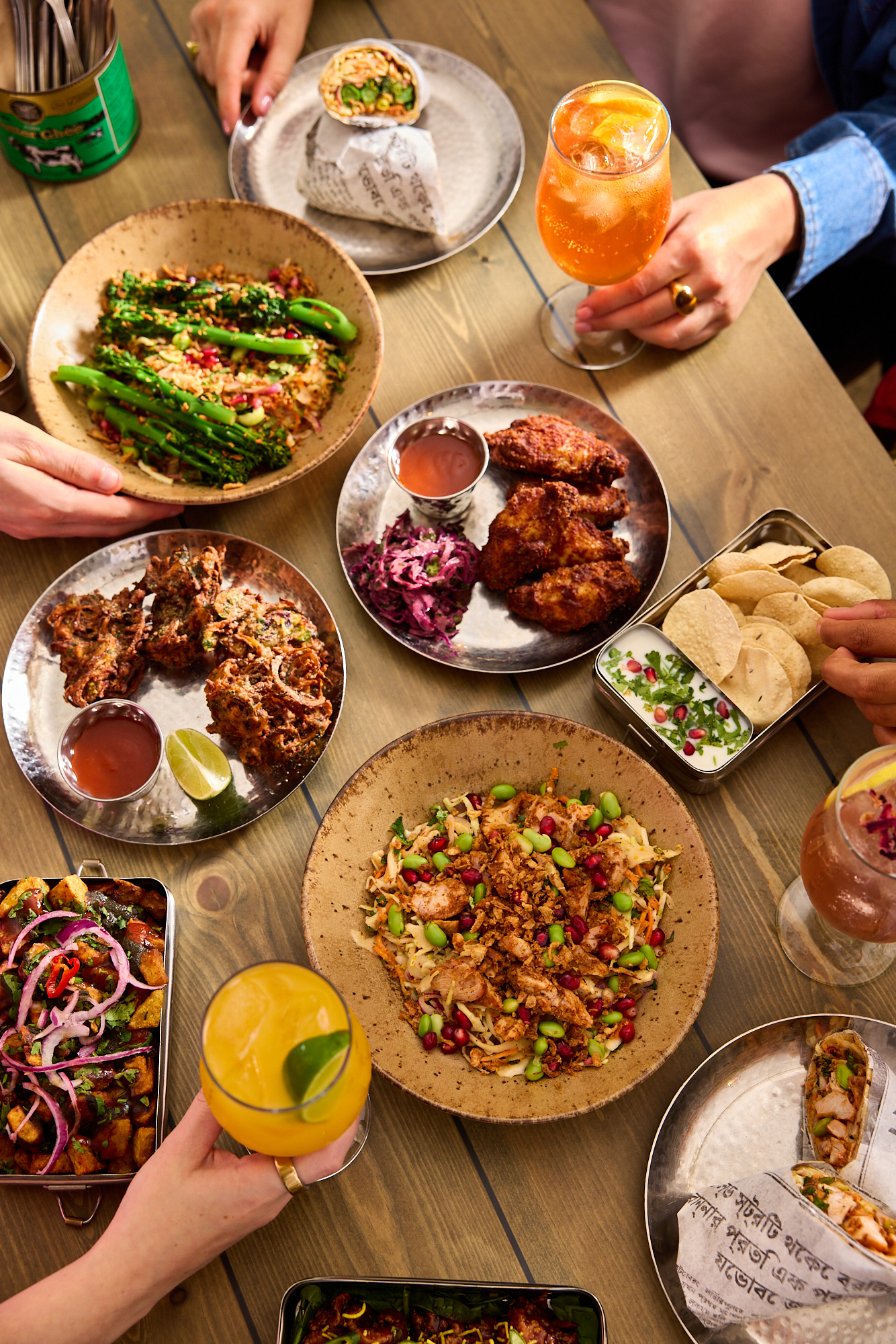
Indian food is ideal for group nights out because it is built around sharing. The cuisine’s structure, with multiple dishes served together at the table, means everyone eats together, tries more, and has a better time. Add a menu that genuinely caters to vegans, meat-eaters, and the health-conscious all at once, and Indian food becomes one of the most practical and enjoyable choices for any group. Here is a closer look at exactly why it works so well.
Why do sharing plates make Indian food perfect for groups?
Sharing plates make Indian food perfect for groups because the cuisine is designed that way from the ground up. In Indian home cooking and street food culture, meals are not served as individual portions but as a spread of dishes placed at the centre of the table. Everyone helps themselves, tries a bit of everything, and eats together. That communal rhythm is what makes group dining feel like an occasion rather than just a meal.
When a group orders together, the table ends up with a far wider range of flavours than any single person would choose alone. One person might pick a slow-cooked lamb dish, another a bright, tangy chaat, and someone else a rich lentil dahl. Shared between four or six people, those dishes create a meal that is genuinely varied and exciting. Nobody is stuck with just one thing, and the conversation flows naturally around what everyone is tasting.
There is also something socially warm about sharing food: passing dishes, topping up each other’s plates, recommending the thing you just tried. It encourages the kind of easy, relaxed interaction that makes a group night out memorable rather than just functional.
What types of Indian dishes work best for a group table?
The dishes that work best for a group table are those that balance well with each other: something rich and slow-cooked, something light and fresh, something with a bit of heat, and a good dahl or vegetable dish to anchor the spread. A well-ordered group table should feel like a complete meal, not a collection of random choices.
A slow-cooked meat dish is usually the centrepiece. Something like a lamb heirloom curry, simmered with onion, plum, and chickpeas until it falls apart, carries the kind of depth that rewards a table of people sharing it. Alongside that, a butter chicken, rich and spiced with a tomato and yoghurt base, gives guests something familiar and deeply satisfying.
Street food dishes are brilliant additions to a group spread. Chaat, with its layers of texture and sharpness, cuts through richer dishes and keeps the table feeling lively. Temple dahl, made from red lentils simmered with toasted cumin, coriander, and lemon, is the kind of dish that holds the whole table together. It is fresh, bright, and works with almost everything else on the table.
Tandoori dishes, wraps, and anything designed to be picked up and shared add an informal energy that suits group dining well. The key is variety: aim for a mix of textures, heat levels, and cooking styles so that every person at the table finds something they love.
How does Indian street food differ from a traditional curry house night out?
Indian street food is a fundamentally different experience from a traditional curry house night out. Where the classic curry house tends toward rich, heavy Anglo-Indian dishes designed for the British palate, street food draws from the way Indian people actually eat every day: fresh, fast, bold, and built for sharing in informal settings. The atmosphere, the menu, and the pace of the meal all feel different.
Traditional curry houses have their place, but they often follow a familiar formula: poppadoms, starters, a main with rice or naan, and dessert. Street food restaurants break from that structure entirely. Dishes arrive as they are ready, the menu spans everything from light chaat to aromatic curries, and the environment tends to be louder, livelier, and more social.
The food itself is also lighter. Real Indian cooking is often naturally vegan, high in vegetables and legumes, and relies on fresh herbs and spices for flavour rather than heavy cream or ghee. That makes it a better fit for groups who want to eat well without feeling weighed down at the end of the night. The zing and freshness of street food is a long way from the curry-house stereotype, and for groups looking for something fun and genuinely flavourful, that difference matters.
Is Indian food a good option for groups with dietary restrictions?
Yes, Indian food is one of the best options for groups with mixed dietary needs. The cuisine has a long tradition of plant-based cooking, and many classic Indian dishes are naturally vegan or vegetarian without any adaptation. That means groups with vegans, vegetarians, and meat-eaters at the same table can all eat well from the same menu, which is not something every cuisine can offer.
Gluten-friendly options are also widely available at Indian street food restaurants. Many dishes are based on lentils, chickpeas, rice, and vegetables rather than wheat, so guests avoiding gluten have genuine choices rather than a single token option.
For health-conscious diners, Indian street food works particularly well. Dishes like Temple dahl or a fresh chaat are naturally low in calories and high in protein and fibre. Some restaurants even offer dedicated lighter options, such as a low-calorie tiffin, for guests who want to keep an eye on what they eat without compromising on flavour. That range means nobody in the group has to settle, which is exactly what you want when you are booking a table for six or eight people with different requirements.
What should a group order at an Indian restaurant for the best experience?
For the best group experience at an Indian restaurant, order more dishes than you think you need and make sure they cover a range of styles. A good rule is to choose one dish per person and then add one or two extra to the table. That gives everyone plenty to try without anything going to waste.
Build the order around contrast. If you order a rich, slow-cooked meat dish, balance it with something light and sharp, like a street chaat or a lemon-finished dahl. Add a tandoori dish for texture, and consider something with a bit of heat alongside something milder so that guests with different tolerances are both well served.
Do not overlook the smaller dishes. Chaats and street snacks are often the most talked-about part of the meal because they are bold, immediate, and unlike anything most people eat regularly. They also make great conversation starters, which matters on a group night out.
Finally, think about drinks alongside the food. Indian spices work well with certain beers, and a lassi or a fresh juice can be a nice counterpoint to something particularly fiery. The meal should feel like an experience, not just a series of dishes, and the order you put together is a big part of making that happen.
Which UK cities have the best Indian restaurants for group bookings?
Several UK cities stand out for Indian restaurant options that genuinely suit group bookings. Manchester, Birmingham, Leeds, London, Edinburgh, Bristol, and Glasgow all have strong Indian dining scenes with restaurants that offer private or semi-private hire options, making them well suited to larger groups looking for something beyond a standard table booking.
Manchester has a particularly vibrant food culture, and the Corn Exchange location in the city centre is a natural fit for group nights out. Birmingham’s food scene is well established, and the city has long been associated with some of the best Indian cooking in the UK. London offers options across the city, from Charlotte Street in the West End to Westfield Stratford, giving groups flexibility depending on where they are based.
Edinburgh and Glasgow are increasingly popular choices for group dining, with both cities offering Indian street food restaurants in central locations that are easy to reach after work or before a night out. Bristol, Newcastle, Sheffield, and Nottingham also have strong options for groups looking for Indian restaurants near them with the right atmosphere and menu for a shared table.
The key thing to look for when booking for a group is not just the food but the space. A restaurant with a lively atmosphere, a shareable menu, and the option to hire a section of the venue privately will always deliver a better group experience than one that simply seats you at a large table in the middle of the main room.
How Mowgli helps with group dining near you
Mowgli Street Food is built for exactly this kind of night out. With 27 restaurants across the UK, from Brighton to Glasgow and Bristol to Edinburgh, there is likely a Mowgli near you. Here is what makes it work for groups:
- A menu designed for sharing, with street chaats, slow-cooked curries, tandoori dishes, and fresh dahls that work together as a spread
- Three hire options across all locations: full venue hire, semi-private hire, and private dining rooms, so groups of any size can find the right setup
- Genuine dietary range, with vegan, vegetarian, and gluten-friendly dishes throughout the menu, not just as afterthoughts
- A lively, social atmosphere with swing seats, fairy lights, and bold food that makes the evening feel like an occasion
- Fresh food cooked every morning in each restaurant, so what arrives at the table is bright, flavourful, and made with care
Whether you are planning a birthday, a work night out, or just a big table with friends, Mowgli is worth a look. Find your nearest restaurant and book your event directly through the website.
Related Articles
- How do you turn a casual dinner into a proper night out?
- What makes an Indian restaurant have "good vibes" for a younger crowd?
- Why is sharing plates the best way to eat Indian food with friends?
- What Indian dishes work best for a laid-back evening with drinks?
- How do you find hidden gem restaurants in Nottingham?