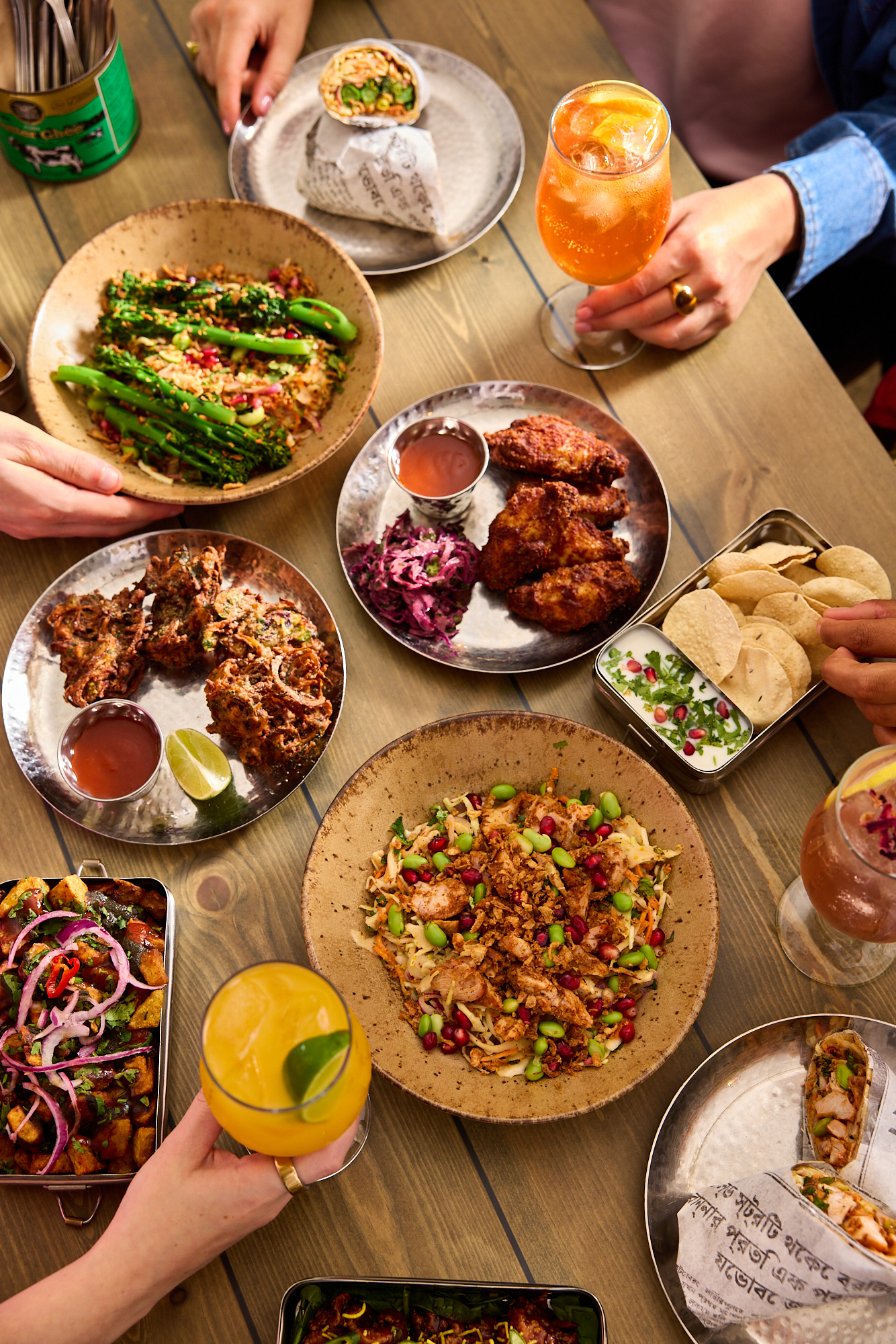
The best drinks to pair with spicy Indian food are those that cool and complement rather than amplify heat. Chilled lager, off-dry white wine, mango lassi, and sparkling water all work well because they either contain fat, sweetness, or carbonation to temper the burn of chilli. The right pairing makes the food taste better and the meal more comfortable to eat. Below, we work through the most common questions people have about drinks and spicy Indian food.
Why do spicy dishes need specific drink pairings?
Spicy dishes need specific drink pairings because capsaicin, the compound that makes chilli hot, is not washed away by water. It binds to heat receptors on your tongue, and certain drinks are far better at neutralising or distracting from that sensation than others. The wrong drink can intensify the heat; the right one lets the flavour of the food come through.
Indian street food in particular layers spice with complexity. Dishes like slow-cooked lamb with plum and chickpea, or tandoori chicken in a rich tomato and yoghurt sauce, carry deep, aromatic heat rather than blunt, aggressive chilli. A drink that clashes with that complexity flattens the whole experience. The goal is to find something that cools the palate between bites without stripping out the flavour you came for.
Does alcohol make spicy food hotter or cooler?
Alcohol can make spicy food feel hotter, particularly at higher concentrations. Ethanol is a solvent that dissolves capsaicin and spreads it more readily across the mouth. High-ABV spirits and strong ales can therefore amplify the burn rather than soothe it. Lower-alcohol drinks, especially cold and slightly sweet ones, tend to be far more effective at managing heat.
This does not mean you should avoid alcohol with Indian food entirely. It means the choice of drink matters. A cold lager at around 4 to 5% ABV, served well chilled, is a very different experience from a room-temperature glass of red wine at 14%. The cold temperature helps, the lower alcohol helps, and the carbonation provides a brief physical distraction from the heat on the tongue.
Dairy-based alcoholic drinks, such as a cream-based cocktail or a milk stout, can also help because the fat in dairy is one of the most effective capsaicin neutralisers available. But these are niche choices. Most people find that simple, cold, and slightly sweet drinks do the job well.
What are the best beers to drink with Indian food?
The best beers to drink with Indian food are cold, light lagers and wheat beers. These styles are low in bitterness, refreshing, and cold enough to provide genuine relief between bites. Hoppy IPAs and bitter ales, despite being popular, can amplify the perception of heat because bitterness and spice compete on the palate.
Kingfisher, the Indian lager, has become a default pairing for good reason. It is mild, clean, and cold, and it does not fight with the spices in the food. Cobra lager works similarly. Both are brewed to be food-friendly rather than flavour-forward, which is exactly what you want alongside a plate of street chaat or a fragrant curry.
Wheat beers, particularly German hefeweizens or Belgian witbiers, are another strong option. Their slight sweetness and citrus notes complement the brightness of dishes finished with lemon or coriander. The carbonation also helps to cleanse the palate. If you prefer something with a bit more character, a mango or fruit-infused craft lager can echo the fruity notes in dishes like slow-cooked lamb with plum.
Which wines pair well with spicy Indian dishes?
Off-dry white wines pair best with spicy Indian dishes. A small amount of residual sugar in the wine counteracts the heat of chilli and balances the saltiness of spiced food. Riesling, Gewürztraminer, and Pinot Gris from Alsace are particularly well suited because they combine that gentle sweetness with aromatic complexity that mirrors Indian spicing.
Dry, tannic red wines are generally a poor match. Tannins interact badly with chilli heat, making the wine taste harsh and the food taste hotter. If you want a red, go for something light and low-tannin, such as a chilled Beaujolais or a Pinot Noir. These have enough fruit to sit alongside spiced food without clashing.
Sparkling wines, including Prosecco and Champagne, are underrated with Indian food. The acidity cuts through rich dishes like butter chicken, and the bubbles refresh the palate. A dry Prosecco alongside a plate of street food is a genuinely good combination. Avoid anything heavily oaked or very high in alcohol, as both traits tend to amplify heat rather than ease it.
What non-alcoholic drinks go best with Indian food?
The best non-alcoholic drinks with Indian food are mango lassi, sparkling water, sweet chai, and fresh lime soda. These options either contain dairy fat, carbonation, or natural sweetness, all of which help manage chilli heat and complement the flavours in the food. They are also traditional accompaniments in Indian food culture for exactly this reason.
- Mango lassi: A blend of yoghurt, mango, and a little sugar. The dairy fat neutralises capsaicin, and the mango sweetness balances heat beautifully.
- Fresh lime soda: Sparkling water with lime juice and a pinch of salt or sugar. Bright, refreshing, and very effective at cutting through rich, spiced dishes.
- Sparkling water: Simple but effective. The carbonation provides physical relief from heat and cleanses the palate between bites.
- Masala chai: Warm, milky, and spiced with ginger and cardamom. Best suited to lighter dishes or as a drink to round off the meal.
- Coconut water: Naturally sweet and hydrating, with a mild flavour that does not compete with bold spicing.
Still water is the least effective option, despite being the most instinctive reach when something feels too hot. Because capsaicin does not dissolve in water, drinking it spreads the heat around the mouth rather than washing it away. Sparkling water is a marginal improvement, but anything with fat, sweetness, or acidity will work considerably better.
Should you drink milk or dairy with very spicy food?
Yes, dairy is one of the most effective remedies for very spicy food. Milk, yoghurt, and cream all contain casein, a protein that binds to capsaicin molecules and removes them from the heat receptors on your tongue. Full-fat milk works better than skimmed milk because the fat content also helps to dissolve and carry away the capsaicin.
This is why raita, the yoghurt-based condiment served alongside many Indian dishes, has been a staple of Indian food culture for centuries. It is not just a flavour addition. It is a practical tool for managing heat, and it works. A spoonful of yoghurt alongside a very spicy dish is more effective than any amount of water.
As a drink, cold whole milk is genuinely useful if you have eaten something hotter than expected. It is not the most elegant choice at a restaurant table, but it works. Mango lassi gives you the same dairy benefit in a form that feels far more appropriate to the occasion, and the sweetness of mango adds an extra layer of heat relief on top of the casein effect.
How Mowgli helps with finding the right food and drink experience
If you are looking for a place where the food is worth thinking carefully about what to drink alongside it, Mowgli is a good place to start. The menu is built around real Indian home cooking rather than the kind of heavy, sauce-led dishes that dominated British Indian restaurants for decades. The food is fresh, layered, and genuinely interesting to eat.
- Dishes cooked fresh each morning in every restaurant, from slow-simmered lentils to tandoori wraps
- Full vegan and gluten-friendly options across the menu
- Lively, social settings designed for sharing plates with friends or family
- Private and semi-private event hire options available across all locations, ideal for group dining
- 27 restaurants across the UK, from Edinburgh and Glasgow to Brighton and Bristol
Whether you are after a casual lunch or a group dinner near you, Mowgli has a spot worth visiting. Swing by and find out what Indian food actually tastes like when it is done properly.
Related Articles
- Where can you find spicy snacks that go perfectly with drinks?
- What makes an Indian restaurant have "good vibes" for a younger crowd?
- Why is Indian dining becoming the go-to for younger diners?
- How does London's food scene compare to other UK cities?
- When is the best time to explore Leeds' restaurant scene?