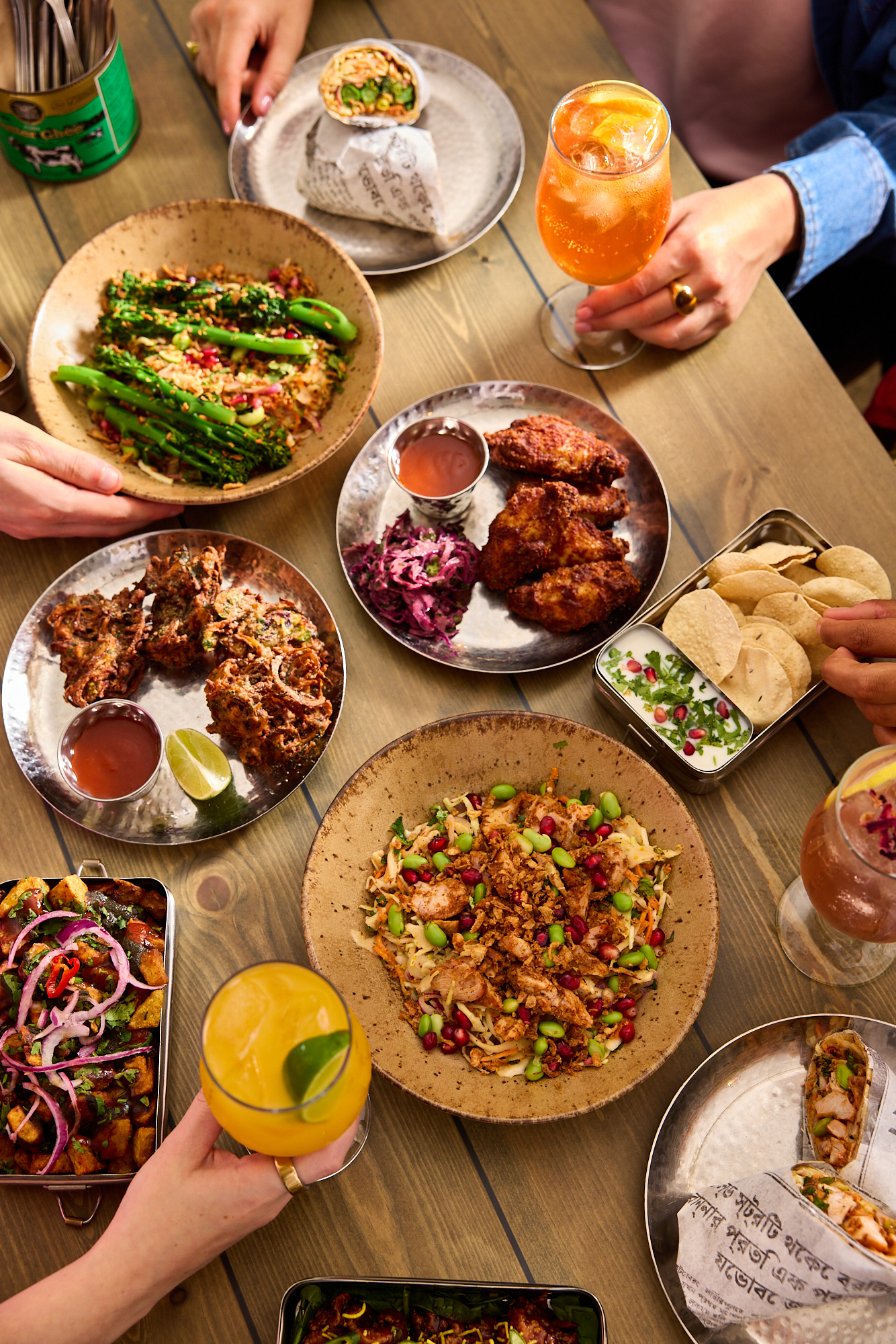
What is the difference between street food and casual dining in the UK?
Street food and casual dining are two distinct formats, though they often overlap in modern UK restaurant culture. Street food is defined by bold, quick, informal eating – dishes designed to be grabbed, shared, and enjoyed without ceremony. Casual dining sits in the middle ground between fast food and fine dining, offering table service, a broader menu, and a more relaxed sit-down experience. The key difference is in pace, format, and intention: street food is built around the dish itself, while casual dining is built around the occasion.
In practice, the best street food restaurants in the UK have taken the spirit of street eating – freshness, flavour, informality – and brought it indoors, creating something that feels genuinely different from a traditional restaurant meal. The questions below unpack what separates these two formats and why it matters for how and where you eat.
How did street food and casual dining develop differently in the UK?
Street food in the UK has roots in market stalls, pie sellers, and seaside vendors stretching back centuries, while casual dining as a recognised format emerged more recently, gaining real momentum in the 1990s and 2000s alongside the growth of mid-market restaurant chains. The two formats evolved from entirely different starting points: one from the street, one from the dining room.
Street food culture accelerated significantly in the 2010s, driven by food markets in cities like London, Manchester, and Bristol, where independent traders brought global flavours to curious urban crowds. At the same time, casual dining chains expanded rapidly across UK high streets, offering a reliable, comfortable alternative to fast food. The result was two parallel tracks: street food becoming more sophisticated and finding permanent homes, and casual dining becoming more adventurous in its menus. Today, the boundary between them is genuinely blurred, but the DNA of each format remains distinct.
What defines the street food experience versus a casual dining meal?
The street food experience is defined by immediacy, informality, and the primacy of the dish itself. Food is typically bold, shareable, and built around a single strong idea rather than a multi-course structure. Casual dining, by contrast, centres on the full meal occasion: starters, mains, desserts, table service, and a longer stay.
Street food prioritises the smash-and-grab zing of fresh herbs, spices, and textures. Dishes are designed to deliver flavour quickly and directly, without the scaffolding of formal dining. Casual dining tends to offer more comfort and structure, with attentive service and a wider menu designed to accommodate a range of preferences over a longer sitting.
In practice, the best street food restaurants have taken these qualities indoors. The atmosphere is livelier, the plates are made for sharing, and the menu is tighter and more intentional. You are not choosing between twelve curries – you are choosing between dishes that each have a clear identity and a reason to exist.
Is street food healthier than casual dining?
Street food is not automatically healthier than casual dining, but the best street food traditions – particularly those rooted in Indian, Middle Eastern, and South Asian cooking – are built on vegetables, pulses, fresh herbs, and spices rather than heavy sauces and processed ingredients. When those traditions are respected, street food can be significantly lighter and more nutritious than a typical casual dining meal.
Indian street food is a particularly strong example. Dishes like spiced lentils, chickpea chaats, and vegetable-forward small plates are naturally high in protein and fibre, often vegan, and low in the kinds of fats associated with richer restaurant cooking. The real Indian food that street food restaurants draw on is a long way from the cream-heavy, portion-inflated dishes that defined Anglo-Indian restaurants for decades.
Casual dining menus, meanwhile, vary enormously. A well-constructed casual dining menu can be just as health-conscious, but the format does not inherently push in that direction the way street food culture does. If you are looking for lighter, plant-forward eating without giving up on flavour, street food restaurants are often the better starting point.
Why is Indian street food different from traditional Anglo-Indian restaurant food?
Indian street food reflects how people actually eat in India: fresh, fast, flavourful, and often plant-based. Traditional Anglo-Indian restaurant food, by contrast, was developed in the UK over decades to suit British palates, resulting in richer, creamier dishes with milder spicing and larger portions. The two share some ingredients but represent fundamentally different cooking philosophies.
Anglo-Indian cuisine – the tikka masalas, kormas, and balti dishes that defined the British curry house – is not inauthentic in the sense of being dishonest, but it is a product of adaptation rather than tradition. Indian street food and home cooking draw on regional recipes, seasonal produce, and the kind of everyday cooking that has been passed down through families for generations.
The difference shows up clearly on the plate. Indian street food tends to be lighter, brighter, and more varied. You might find slow-simmered black lentils finished with toasted cumin and lemon, or a lamb dish cooked down with plum and chickpeas until it falls apart – dishes with a clear lineage and a specific flavour identity, rather than a generic curry sauce adapted for mass appeal. This is the cooking that Mowgli Street Food was built to bring to the UK high street.
Which format suits sharing plates and group dining better?
Street food dining suits sharing plates and group eating far better than traditional casual dining. Street food menus are typically designed around multiple small dishes ordered collectively, which mirrors the way food is shared in Indian, Middle Eastern, and East Asian dining cultures. Casual dining menus are usually structured around individual portions, which can make genuine sharing feel more awkward and expensive.
When you eat in a street food restaurant with a group, the rhythm of the meal changes. Dishes arrive as they are ready, the table fills up with different flavours and textures, and conversation flows around the food rather than pausing for it. That social, communal dynamic is harder to achieve when everyone has their own starter and main course arriving on a schedule.
For group occasions – whether a birthday, a work lunch, or a catch-up with friends – a street food format tends to create a more generous and relaxed atmosphere. If you are looking for event or group dining options, street food restaurants are often better equipped for it, with flexible seating and menus that scale naturally to larger tables.
Where can you find authentic street food dining experiences in UK cities?
Authentic street food dining experiences in the UK are concentrated in major urban centres, particularly in cities with strong food culture and diverse populations. London, Manchester, Birmingham, Leeds, Bristol, Edinburgh, Glasgow, Liverpool, Newcastle, and Nottingham all have well-established street food scenes, ranging from outdoor markets to permanent restaurant venues.
If you are searching for restaurants near me with a genuine street food identity rather than a casual dining menu dressed up in street food language, it is worth looking for places that cook fresh daily, keep their menus tight and intentional, and draw on real culinary traditions rather than adapted versions. The best Indian restaurant options in cities like London, Manchester, Birmingham, Edinburgh, Glasgow, Leeds, Nottingham, Liverpool, Bristol, and Newcastle are increasingly those that have moved away from the Anglo-Indian template entirely.
Food markets remain a good entry point for exploring street food in any city, but permanent street food restaurants across the UK offer a more consistent experience with the same quality standards every visit. In cities like Manchester, street food has moved well beyond the market stall into full restaurant venues that retain the informality and flavour intensity of the original format.
How Mowgli Street Food answers the street food vs. casual dining question
Mowgli sits in a category of its own: a permanent restaurant with the soul of street food. It was built to bring the honest, fresh, flavour-driven cooking of Indian streets and homes to UK cities, without the formality of casual dining or the compromises of the traditional curry house. Here is what that looks like in practice:
- Dishes cooked fresh every morning in each restaurant, using herbs, spices, and whole ingredients rather than pre-made sauces
- A sharing-plate format designed for groups, with a menu that covers everything from street chaats to slow-cooked heirloom curries
- Genuinely healthy options, including vegan and gluten-friendly dishes, without sacrificing flavour or satisfaction
- A lively, welcoming atmosphere that suits casual catch-ups, group meals, and everything in between
- 27 locations across the UK, from London and Manchester to Edinburgh, Glasgow, Bristol, Birmingham, Leeds, Liverpool, Newcastle, and Nottingham
If you are looking for vibrant restaurants near you that offer something more honest and more flavourful than a standard casual dining experience, Mowgli is worth a visit. Find your nearest Mowgli restaurant and see what Indian street food actually tastes like.